


Category: Blog
White Gold vs. Platinum: Which is Best for Your Engagement Ring?
Deciding between white gold vs. platinum is one of the last — and most confusing — choices in buying an engagement ring. Sitting side by side in a showroom the two look almost identical: both are bright, silvery and cool-toned. So why does one often cost half as much again as the other?
The answer is that they only look the same on day one. Over five, ten and twenty years of daily wear they behave in completely different ways, need different maintenance and age into different finishes. Neither is objectively better. This guide explains exactly how they differ so you can choose the one that suits your hand, your habits and your budget.

White Gold vs. Platinum: The Short Answer
Platinum is a naturally white, dense precious metal used at about 95% purity; it never changes colour and needs no plating, but costs roughly 30–60% more. White gold is a gold alloy plated with rhodium to appear white; it is harder and more affordable, but the plating wears and needs renewing every one to two years.
Composition and Purity
Platinum is a naturally white metal, used in jewelry at very high purity — most commonly PT950, meaning 95% pure platinum with 5% of another platinum-group metal such as ruthenium, iridium or cobalt. Because so little alloy is present, platinum is genuinely hypoallergenic for almost everyone.
White gold is not a metal in its own right. It is yellow gold (58.3% in 14k, 75% in 18k) alloyed with white metals — palladium, silver, zinc and, in older or cheaper alloys, nickel. The resulting metal is a pale warm grey, so it is electroplated with a microscopically thin layer of rhodium to create the bright white finish you actually see.
That single structural difference — white all the way through versus white on the surface — drives almost every other difference between them.
Weight and Feel
Platinum is dramatically denser than gold. At roughly 21.4 g/cm³, it is about 60% heavier than 14k gold and around 40% heavier than 18k for an identical design. Pick up two identical rings and you can feel it instantly.
Whether that is a benefit is entirely personal. Many people read the weight as substance and quality. Others find a heavy ring tiring on a slim finger, or dislike it in a wide band. If you have never worn a platinum ring, it is worth trying one on before committing — it is the difference most people notice first and describe least accurately from photographs.
Durability: They Wear in Opposite Ways
This is the most misunderstood part of the comparison, because “harder” and “more durable” are not the same thing.
White gold: harder surface, but it loses metal
White gold, particularly 14k, is harder than platinum. It resists scratching better and holds crisp engraved detail well. But when gold does abrade, the metal is genuinely removed — a gold ring worn for thirty years is measurably lighter and thinner than it was when new. Prongs become slimmer over time and eventually need re-tipping.
Platinum: softer surface, but it keeps its metal
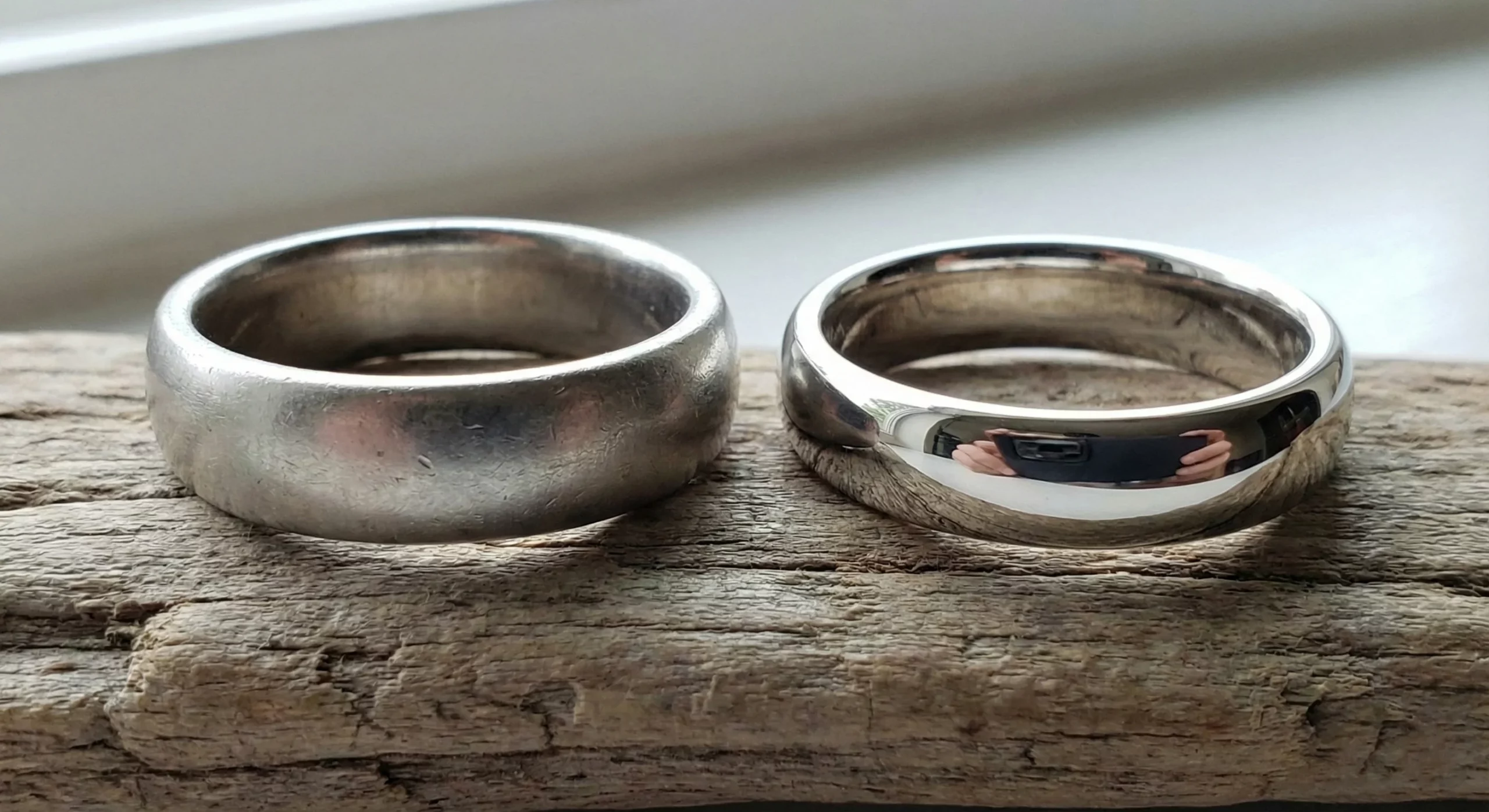
Platinum scratches more easily, but here is the key point: it is displaced rather than removed. The metal pushes aside into a tiny ridge instead of flaking away. A platinum ring loses almost no mass over decades, which is why platinum prongs are widely considered the most secure long-term way to hold a valuable stone. Platinum also work-hardens as it is worked and worn, and it does not become brittle with repeated repairs.
Patina: a feature or a flaw
Those thousands of tiny displaced scratches accumulate into a soft, satin sheen jewelers call patina. Some people love it — it reads as lived-in and antique, and it suits vintage-inspired and nature-inspired designs beautifully. Others prefer a mirror finish, in which case a polish every few years restores it completely. Either way, the colour never changes: platinum that has never been polished is still exactly as white as the day it was made.
Maintenance and Long-Term Cost
The purchase price is not the whole picture. White gold carries a recurring cost that platinum does not.
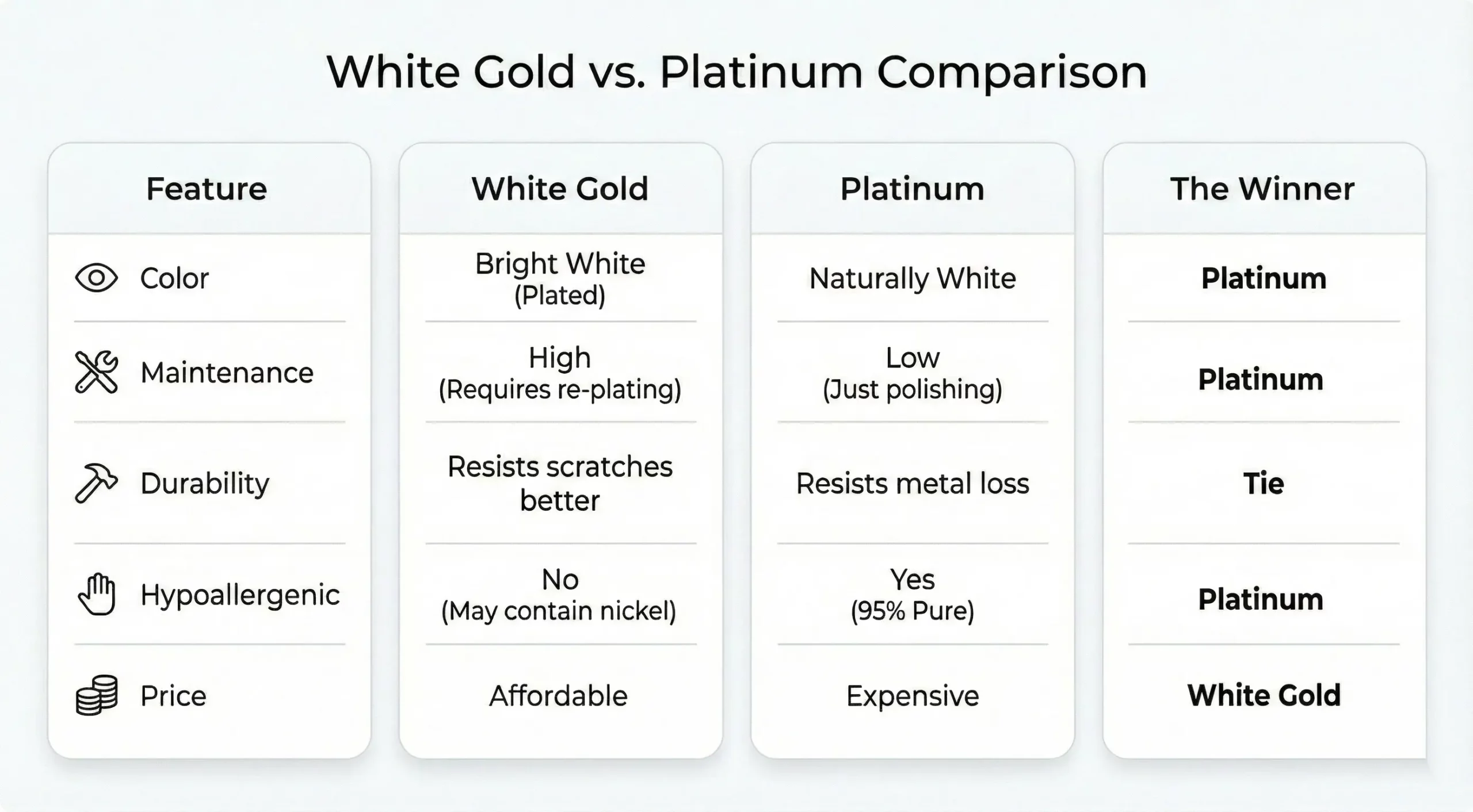
| White gold | Platinum | |
|---|---|---|
| Colour over time | Warms as rhodium wears | Never changes |
| Required upkeep | Re-plating every 1–2 years | Optional polish every few years |
| Typical upkeep cost | $50–$120 per re-plating | $40–$80 per polish, if wanted |
| Cost over 10 years | Roughly $300–$700 in re-plating | Often $0–$200 |
| Metal loss with wear | Gradual thinning | Negligible |
| Prong security long-term | Good; re-tipping eventually needed | Excellent |
| Resizing & repair | Straightforward, most jewelers | Requires specialist equipment and skill |
| Skin sensitivity | Depends on alloy — ask for nickel-free | Hypoallergenic |
Over a lifetime the gap narrows considerably. Platinum’s premium is paid once; white gold’s is paid in instalments. If you know you will not keep up with re-plating appointments, that is a genuine argument for platinum — a neglected white gold ring simply turns warm, while a neglected platinum ring just looks softly matte.
Why Platinum Costs More
- Density. The same ring design requires substantially more grams of metal in platinum.
- Purity. You are buying 95% precious metal rather than 58% or 75%.
- Workmanship. Platinum melts at a much higher temperature and behaves differently on the bench. It requires dedicated tools, separate polishing wheels to avoid contamination, and a more experienced setter — all of which raise labour cost.
- Waste and recovery. Platinum filings and scrap are harder to recycle in-house, so more of the metal cost is absorbed into the piece.
In practice, expect a platinum version of the same design to cost roughly 30–60% more than 14k white gold, with the gap widest on heavy or wide bands. For context on how gold karat affects price, see 14k vs. 18k Gold.
Allergies and Sensitive Skin
Platinum is the safest choice available. At 95% purity with platinum-group alloys, there is essentially nothing in it that commonly triggers contact dermatitis.
White gold depends entirely on its recipe. Nickel-alloyed white gold is a known allergen — the European Union restricts nickel release in prolonged skin contact to 0.5 µg/cm² per week for exactly this reason. Modern palladium-based white gold contains no nickel and is well tolerated by most people. Note also that a fresh rhodium layer acts as a barrier, so a nickel reaction sometimes appears only once the plating has worn through. If you have a known metal sensitivity, ask specifically what the white alloy contains.
Which Suits Which Ring Style?
- Delicate solitaires and thin bands: platinum’s strength lets a very fine band and slender prongs hold a large stone securely for decades.
- Micro-pavé and halo settings: platinum holds tiny stones exceptionally well, though many jewelers execute pavé beautifully in white gold too. If in white gold, expect re-plating to be more fiddly around the small stones.
- Vintage and Art Deco designs: platinum is the historically authentic choice — the great Deco pieces were made in it — and it takes fine millegrain and filigree superbly.
- Nature-inspired, textured and organic designs: both work, but a matte or hammered white gold surface hides plating wear better than a high polish does.
- Wide or heavy men’s bands: white gold keeps the weight and the price manageable; platinum can feel very substantial.
Matching a Wedding Band
You can wear platinum and white gold together, and plenty of people do — visually they are near enough identical. The practical caveat is that the harder white gold band will slowly abrade the softer platinum one where they sit against each other. If the two rings will be worn touching every day, matching metals is the lower-maintenance route. Our guide to engagement rings vs. wedding bands vs. eternity rings covers how the pieces are meant to work together.
The Verdict
Choose white gold if:
- Budget matters and you would rather put the difference into the centre stone
- You love a bright, mirror-white finish and do not mind a maintenance appointment every year or two
- You prefer a lighter ring on the finger
- Your design has crisp engraving or fine detail that benefits from a harder metal
Choose platinum if:
- You want a ring you can genuinely forget about — no plating, no colour change
- You have sensitive skin or a known nickel allergy
- You are setting a significant diamond and want the most secure long-term prongs
- You like the weight, or you like the way patina ages
- You are buying a piece intended to be passed down
Frequently Asked Questions
Is platinum worth the extra money?
If you value zero maintenance, maximum stone security and a metal that never changes colour, yes. If you are comfortable with a re-plating appointment every year or two, white gold gives you the same look today for meaningfully less, and the savings can buy a better diamond.
Can you tell platinum and white gold apart by looking?
When both are freshly polished, essentially no. Over time platinum develops a soft satin patina while white gold warms toward yellow — at that point the difference becomes obvious. Look for the hallmark: PT950 or PLAT versus 14K/585 or 18K/750.
Does platinum scratch more than white gold?
Yes, it scratches more easily — but it loses almost no metal doing so. White gold resists scratching better yet thins over the years. Different kinds of durability, not different amounts.
Does platinum ever turn yellow?
No. Platinum is white throughout, so there is no plating to wear off and no warmer metal underneath. It can look duller as patina develops, which a polish resolves.
Which is better for a very thin or delicate band?
Platinum. Its density and resistance to metal loss let a jeweler make a finer band and slimmer prongs that will still be strong in twenty years.
Is platinum harder to resize?
It requires higher temperatures, specialist tools and a jeweler experienced with the metal, so it usually costs more and takes a little longer. It is entirely routine at a workshop set up for it.
Which holds resale value better?
Both are recycled for their metal content, and platinum’s higher purity generally means more recoverable value per gram. In practice the design, condition and centre stone drive resale far more than the metal choice.
Making the Choice
There is no wrong answer in the white gold vs. platinum debate — only a better fit for how you live. If you want a ring that stays white forever and never needs an appointment, platinum earns its premium. If you want the same look today at a lower price and are happy with occasional upkeep, white gold is a beautiful and entirely legitimate choice.
Every Camellia Jewelry ring is handcrafted to order in your choice of metal, so you can see the same design costed in 14k white gold, 18k white gold or platinum before you decide. Browse our engagement ring collection, our vintage-inspired designs, or read Why Is My White Gold Turning Yellow? to understand the maintenance side in full.
Sources and further reading: Platinum Guild International; World Gold Council — About gold jewellery; ECHA — Substances restricted under REACH (nickel release).


Why is My White Gold Turning Yellow? (And How to Fix It)
Noticing your white gold turning yellow is a small moment of panic. You look down at a ring you have worn every day — often an engagement ring — and there is a warm, brassy tint creeping across the underside of the band and around the base of the prongs. The first thought is almost always the same: did I buy fake gold?
You did not. What you are seeing is the single most normal thing that happens to white gold, it happens to every piece eventually, and it is completely reversible. Here is exactly why it occurs, how long it should take, and what a proper fix involves.

Why Does White Gold Turn Yellow?
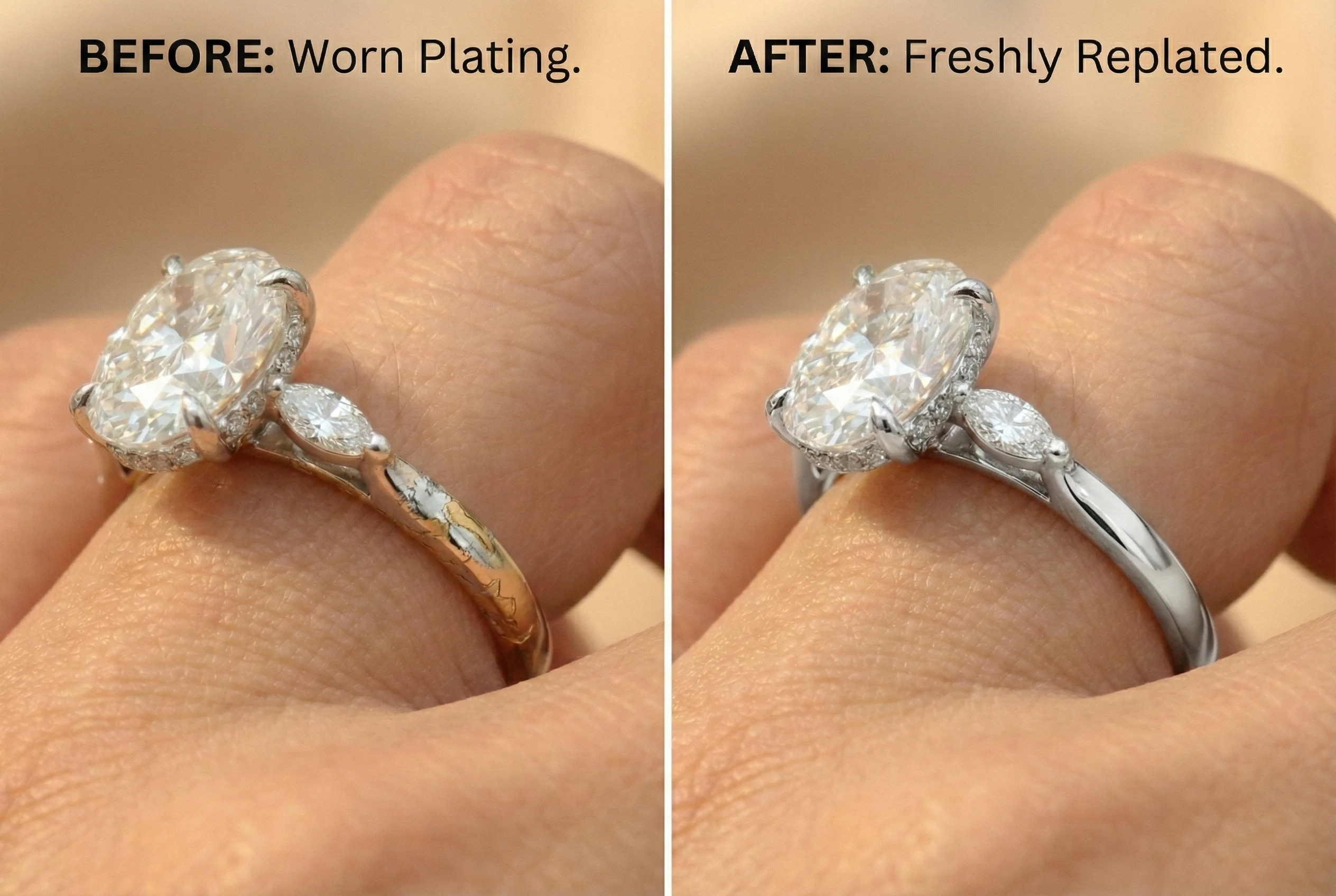
White gold turns yellow because the thin layer of rhodium plating on its surface gradually wears away, revealing the naturally warm, greyish-yellow gold alloy underneath. It is normal wear, not a defect or a sign of poor quality, and it is fixed by professional re-plating — commonly called rhodium dipping.
The Science: There Is No Such Thing as Naturally White Gold
Gold is yellow. That is a property of the element itself, and nothing can change it. To make “white” gold, refiners alloy pure yellow gold with white metals — historically nickel, and increasingly palladium, along with silver, zinc and copper in small amounts.
The result is genuinely lighter than yellow gold, but it is not the bright, icy white you see in a jewelry case. Raw white gold alloy is closer to a pale, slightly warm grey — something like unpolished steel with a champagne cast. In 14k it reads greyer; in 18k, because there is more yellow gold in the mix, it reads warmer still.
To get that showroom brilliance, finished white gold is electroplated with rhodium, a rare member of the platinum group. Rhodium is exceptionally reflective, extremely hard, and does not tarnish — which is why it has been the industry standard finish for white gold for decades. You can read about the element itself at the Royal Society of Chemistry.
The catch is thickness. A typical jewelry rhodium layer is only around 0.75 to 1.0 microns — roughly one-hundredth the thickness of a human hair. It is a finish, not a structural layer. Like the tread on a tyre or the sole of a shoe, it is designed to be replaced.
How Long Should Rhodium Plating Last?
Longevity depends almost entirely on friction, which means it depends on where the piece sits on your body.
| Type of jewelry | Typical time before re-plating | Why |
|---|---|---|
| Engagement ring worn daily | 9–18 months | Constant contact with skin, surfaces, keyboards, bags |
| Wedding band worn daily | 12–24 months | Similar wear, usually less surface detail to catch |
| Ring worn occasionally | 3–5 years | Far less friction |
| Bracelet | 2–4 years | Rubs against desks and sleeves |
| Pendant or necklace | 5+ years | Minimal abrasion |
| Earrings | Often a decade or more | Almost no friction |
The wear pattern is also predictable: the underside of a ring band goes first, because that is the part pressed against your finger and against everything you hold. The top of the ring, which you actually look at, often stays bright for another year. If you are seeing yellow underneath but white on top, that is textbook rhodium wear rather than a quality problem.
What Makes It Happen Faster?
- Body chemistry. Skin acidity varies enormously between people. Someone with acidic perspiration can wear through plating in six months while a colleague with the identical ring goes three years.
- Chlorine and bleach. Pools, hot tubs and household cleaners attack both the plating and the gold alloy beneath it. This is the fastest way to ruin a white gold ring.
- Hand sanitizer and frequent hand-washing. Alcohol gels and detergents strip the natural oils that slightly buffer the surface, and the sheer frequency of contact accelerates abrasion.
- Cosmetics and perfume. Sprayed directly onto the hand or wrist, they leave residues that dull and, over time, degrade the finish.
- Over-polishing at home. Polishing cloths and pastes are abrasive by design. Using them enthusiastically on white gold removes the rhodium far faster than daily wear does.
- Manual work and the gym. Gripping metal, tools or weights concentrates friction on exactly the part of the band that yellows first.
- Karat and alloy. 18k white gold shows the change more warmly than 14k, simply because there is more yellow gold beneath the plating.
Is My Ring Fake? How to Check
Yellowing proves nothing about authenticity — it is a symptom of solid white gold behaving exactly as it should. Gold-plated base metal, by contrast, tends to wear through to a dull grey or coppery colour and often causes green marks on the skin.
To confirm what you own, look inside the band for a hallmark: 14K or 585, 18K or 750. In the United States, the FTC’s Jewelry Guides require karat fineness to be marked with equal prominence to the word “gold”, so a legitimate piece will carry one of these stamps. If you still have the appraisal or grading paperwork, the metal will be specified there too.
The Fix: Rhodium Dipping, Step by Step
Re-plating is routine bench work, not a repair, and most jewelers turn it around in a day or two.
- Stone check. A good jeweler inspects and, if necessary, tightens the setting first — there is no point plating a ring with a loose stone.
- Polishing. The piece is polished to remove scratches and any remaining plating. Skipping this step is why cheap re-plating jobs look patchy.
- Deep cleaning. Ultrasonic and electro-cleaning remove every trace of oil; rhodium will not bond to a contaminated surface.
- Electroplating. The ring is suspended in a rhodium solution and a low electrical current bonds a fresh microscopic layer to the gold.
- Rinse and final inspection. The piece is neutralised, rinsed, dried and checked under magnification.
What It Costs
Rhodium itself is a genuinely precious metal and its price is volatile, but because the layer is measured in microns, only a tiny quantity is used. Most jewelers charge roughly $50 to $120 for a standard ring, with the higher end reflecting extra polishing, stone tightening or intricate settings that must be masked. Many jewelers — ourselves included — offer re-plating at a reduced rate or free for pieces they made.
Questions Worth Asking Your Jeweler
- Will the setting be checked and tightened before plating?
- What plating thickness do you apply? (Around 1 micron is a good standard; heavier “double dips” last longer on rings.)
- Will heat-sensitive stones be protected or removed first?
- Does the price include polishing, or is that extra?
An Important Caution for Certain Stones
Plating involves chemicals, electricity and mild heat. Pearls, opals, emeralds, tanzanite and any porous or fracture-filled stone can be damaged in the process. Antique pieces and rings with coloured accent stones should be masked or have the stones removed first. Always tell your jeweler exactly what is set in the piece.
Can You Re-Plate White Gold at Home?
No — and this is one of the few areas where the DIY answer is unambiguous. Home plating kits use acidic solutions and electrical current, and without professional polishing and cleaning the result is a thin, patchy finish that flakes. Worse, an improperly prepared surface can trap contaminants under the plating. It costs less to have it done properly than to have a botched job stripped and redone.
How to Slow It Down
- Remove rings before swimming, showering and cleaning
- Take rings off at the gym and for manual work
- Apply lotion, perfume and sunscreen before putting jewelry on
- Clean gently with warm water and mild soap rather than polishing compounds — see our guide to cleaning jewelry safely at home
- Store pieces separately so harder stones cannot abrade the finish
- Ask for a slightly heavier plating on rings you wear daily
Alternatives if You Would Rather Not Maintain It
| Option | Maintenance | Trade-off |
|---|---|---|
| Rhodium-plated white gold | Re-plate every 1–2 years | Brightest white finish; ongoing upkeep |
| Palladium white gold, unplated | Occasional polish only | Naturally soft grey-white; no plating to lose, but not “icy” |
| Platinum | Optional polish every few years | Never changes colour; heavier and more expensive |
| Let it go warm | None | Free; many people grow to like the softer antique tone |
If maintenance is the deciding factor, platinum is the genuine zero-plating answer — it is white all the way through and never needs re-coating. We compare the two directly in White Gold vs. Platinum. If you are still deciding on the gold itself, 14k vs. 18k Gold covers how karat affects colour, hardness and skin sensitivity.
Frequently Asked Questions
How much does it cost to make white gold white again?
Typically $50–$120 for a standard ring, including polishing. Complex settings, pavé work or rings that need stones tightened first sit at the higher end.
How often does white gold need rhodium plating?
Every 12 to 24 months for a ring worn daily; far less often for earrings, pendants and occasional pieces. Your own body chemistry is the biggest variable.
Will cleaning my ring fix the yellow tint?
No. Cleaning removes dirt and restores sparkle, but yellowing is the metal beneath the plating showing through. Only re-plating restores the white finish.
Does 14k or 18k white gold turn yellow faster?
Both lose plating at a similar rate, but 18k looks warmer when it does, because there is more pure yellow gold in the alloy. 14k tends to reveal a greyer tone.
Can rhodium plating wear off in a few months?
Yes, and it does not mean you were sold a poor-quality ring. Highly acidic skin, frequent hand sanitizer, chlorine exposure or manual work can wear a micron of rhodium in well under a year.
Is rhodium plating safe for sensitive skin?
Rhodium itself is hypoallergenic and actually acts as a barrier between your skin and any nickel in the alloy underneath. Ironically, that means a nickel-sensitive person may notice irritation only once the plating wears through — a good reason to choose a nickel-free palladium white gold or platinum.
Should I re-plate a ring before proposing or a wedding?
Yes — it is a simple way to make an older or inherited ring look new. Allow one to two weeks, as jewelers are busiest before wedding season.
The Bottom Line
White gold turning yellow is chemistry, not a defect. The metal is an alloy that is naturally warm-grey; the bright white you fell in love with is a rhodium finish designed to be renewed. Treat re-plating the way you treat servicing a watch — a small, predictable piece of upkeep that keeps something valuable looking the way it should.
A fresh dip makes the metal crisp again and, because the diamonds are polished and cleaned at the same time, the whole ring reads brighter. If you would like your Camellia piece refreshed, or you are considering a new one, explore our handcrafted engagement rings and wedding bands, or read about our custom ring process.
14k vs 18k Gold: Which is Better for Your Jewelry?
Choosing between 14k vs 18k gold is usually the first real decision you face when buying fine jewelry — and it is the one that trips up the most people. The instinct is simple: a higher number must be better. In practice, the higher karat is better at some things and measurably worse at others, and the right answer depends on your lifestyle, your skin, the colour of gold you love and how the piece will be worn.
This guide breaks down what actually changes between the two alloys: composition, hardness, colour, allergy risk, price and resale value — so you can choose with confidence rather than by number alone.
14k vs 18k Gold: The Short Answer
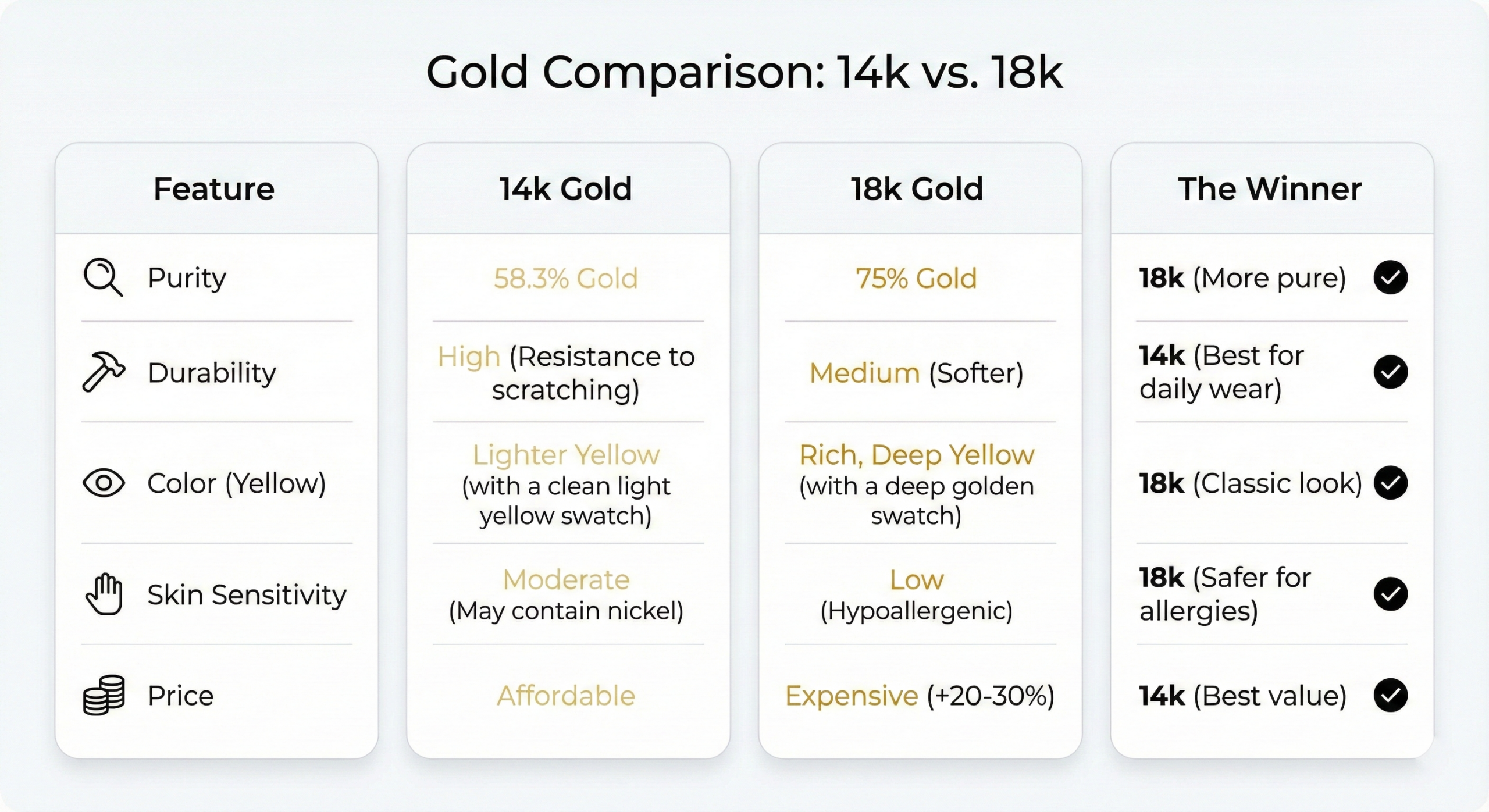
18k gold is 75% pure gold, giving it a richer colour and a lower risk of skin reactions. 14k gold is 58.3% pure gold, which makes it noticeably harder, more scratch-resistant and roughly 25–35% less expensive. For a ring worn every day, 14k is usually the more practical choice; for colour, purity and sensitive skin, 18k wins.
What Karat Actually Measures
Karat (spelled karat for purity, carat for gemstone weight) describes how much of an alloy is pure gold, expressed in twenty-fourths. Pure gold is 24k.
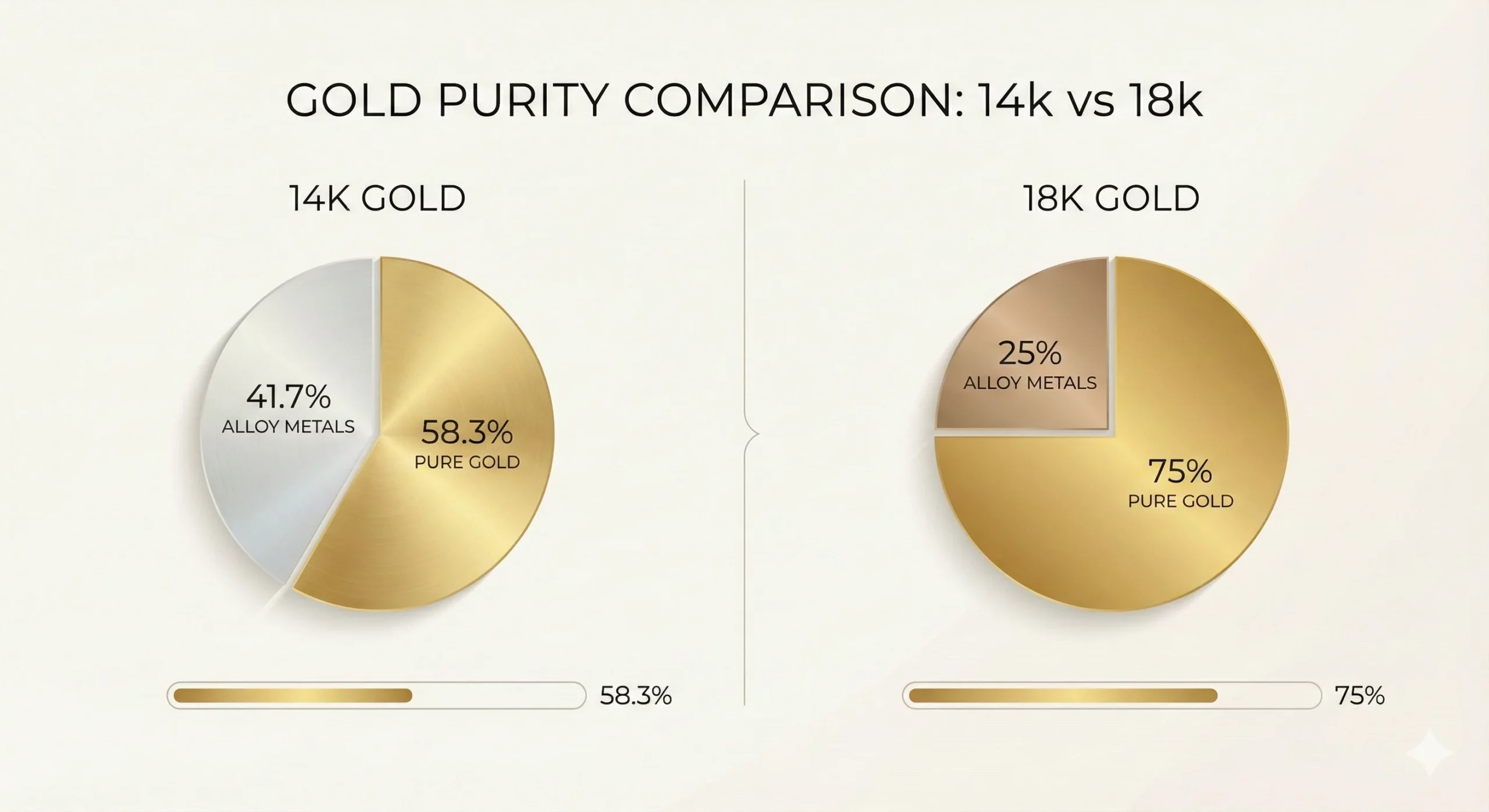
- 24k gold: 99.9% pure — far too soft for jewelry that is worn.
- 18k gold: 75% pure gold, 25% alloy metals. Stamped 18K or 750.
- 14k gold: 58.3% pure gold, 41.7% alloy metals. Stamped 14K or 585.
- 10k gold: 41.7% pure gold — the legal minimum to be called “gold” in the United States.
The remaining percentage is a deliberate recipe of copper, silver, zinc, nickel or palladium. That recipe is what gives gold its colour and its working properties — and it is the reason two rings that both say “gold” can behave completely differently on your finger.
| Karat | Pure gold | European fineness mark | Typical use |
|---|---|---|---|
| 24k | 99.9% | 999 | Bullion, ceremonial pieces |
| 22k | 91.7% | 916 | Traditional South Asian & Middle Eastern jewelry |
| 18k | 75.0% | 750 | Fine and luxury jewelry, European standard |
| 14k | 58.3% | 585 | Everyday fine jewelry, US bridal standard |
| 10k | 41.7% | 417 | Budget and fashion jewelry |
In the United States, the Federal Trade Commission’s Jewelry Guides require the karat fineness to appear immediately before the word “Gold” with equal prominence — which is why a legitimate piece is always marked “14K Gold” rather than simply “Gold”. You can read more about global gold standards at the World Gold Council.
Durability: Why the Lower Karat Is Tougher
This is the part that surprises people. Because 14k gold contains more alloy metal, it is significantly harder than 18k gold. Hardness translates directly into everyday resilience: 14k resists scratching, holds a crisp edge on engraved or milgrain detail, and is far less prone to the slow bending that turns a round shank into an oval.
Softness is not the same as fragility — an 18k ring will not break — but it does mark more easily and thin faster in the places that rub against a desk, a steering wheel or a kettlebell. It also means prongs in 18k need checking a little more often, especially on a ring worn 24 hours a day.
Choose 14k if you work with your hands, lift weights, rarely take the ring off, or want the crispest possible detail in a vintage-style or nature-inspired design.
Colour: Can You Actually See the Difference?
It depends entirely on which colour of gold you choose.
Yellow Gold — a clear difference
18k yellow gold has a deep, warm, buttery tone that reads as unmistakably “gold” across a room. 14k yellow gold is lighter and slightly cooler, closer to a soft honey. Side by side the difference is obvious; alone on a hand it is subtle. If the rich, saturated look of traditional gold is what you picture, 18k is worth the premium.
White Gold — virtually identical
Both 14k and 18k white gold are finished with a layer of rhodium, which is what creates that bright, icy white. Since you are looking at the rhodium rather than the gold beneath it, the two are nearly indistinguishable when new. This makes 14k the sensible choice in white gold: you get the harder metal and pay less, with no visible compromise. When the plating eventually wears, 14k white gold reveals a slightly greyer tone and 18k a slightly warmer one — see Why Is My White Gold Turning Yellow? for the full explanation.
Rose Gold — a subtle difference
Rose gold gets its colour from copper. Because 14k has more room for alloy, 14k rose gold is pinker and more coppery, while 18k rose gold is softer and peachier. Many people prefer 14k here precisely because the colour is stronger — and the extra copper also makes 14k rose gold the hardest of the common gold alloys.
Skin Sensitivity and Nickel
If you have reacted to costume jewelry or a watch back, this section matters more than price. Nickel is one of the most common contact allergens in the world, and it has traditionally been used to whiten and harden white gold.
Because 14k contains roughly 42% alloy metals versus 25% in 18k, a nickel-bearing 14k alloy can release more nickel against the skin. That is why 18k is generally the safer choice for sensitive skin.
The more important question, though, is not the karat but the recipe. In the European Union, REACH restricts nickel release from items in prolonged skin contact to 0.5 µg/cm² per week (and 0.2 µg/cm² per week for piercing posts). Many quality manufacturers — including us — now use palladium-based white gold, which contains no nickel at all. If you know you are nickel-sensitive, ask specifically for a nickel-free or palladium white gold alloy, or move to platinum, rather than relying on karat alone.
Price: How Much More Does 18k Cost?
An 18k piece contains about 29% more pure gold than the same piece in 14k, so the metal cost rises accordingly. In finished jewelry the difference typically lands somewhere between 25% and 40%, depending on how much metal the design uses. A delicate solitaire band shows a small difference; a wide, heavy signet or a substantial nature-inspired ring shows a large one.
It is worth putting that in context. On a bridal purchase, the metal is rarely the biggest line item — the centre stone usually is. Many buyers choose 14k for the setting specifically to move budget into a better diamond, which is almost always the more visible upgrade.
| Priority | Better choice | Why |
|---|---|---|
| Everyday durability | 14k | Harder alloy, resists scratches and bending |
| Richest yellow colour | 18k | 75% gold gives a deeper, warmer tone |
| Sensitive skin | 18k (ideally palladium white) | Fewer base metals, lower nickel exposure |
| Best value per dollar | 14k | 25–40% less for the same design |
| White gold specifically | 14k | Rhodium finish makes the two look the same |
| Rose gold with strong colour | 14k | More copper produces a pinker hue |
| Long-term metal value | 18k | More pure gold content per gram |
| Fine engraving & milgrain | 14k | Holds crisp detail longer under wear |
Resale and Intrinsic Value
Gram for gram, 18k is worth more as metal because it simply contains more gold. If you think of jewelry partly as a store of value, that is a genuine argument for 18k. In reality, though, the resale value of a finished piece of fine jewelry is driven far more by design, brand, condition and the quality of its stones than by the karat of the metal. Buying 18k purely as an investment rarely works out; buying it because you love the colour almost always does.
Which Should You Choose for an Engagement Ring?
Choose 14k gold if:
- The ring will be worn every single day, including at work and at the gym
- You want white gold — the visual difference is negligible
- You want a strong, pink rose gold
- You would rather put the savings toward a larger or better-quality centre stone
- Your design has fine engraving, milgrain or delicate botanical detail
Choose 18k gold if:
- You love the deep, saturated colour of classic yellow gold
- You have known metal sensitivities
- The piece is an occasion or heirloom item rather than a daily workhorse
- You value the higher pure-gold content and the European 750 standard
- You are pairing it with a high-value stone and want the finest possible materials throughout
Caring for Both
Both alloys respond to the same care: keep them away from chlorine and bleach, remove them before the gym and household cleaning, and clean them regularly with warm water and mild soap. Because 18k is softer, it benefits from a slightly gentler touch and a professional prong check roughly every six months. Our step-by-step guide to cleaning gold and diamond jewelry at home covers the safe method in detail.
Frequently Asked Questions
Is 18k gold worth the extra money?
For yellow gold, sensitive skin, or a piece you consider an heirloom — yes. For white gold, or for a ring that will take daily punishment, the extra cost buys colour and purity you may not see and durability you actively lose. Decide based on the colour you want and how the piece will live.
Does 14k gold tarnish or turn your finger green?
Solid 14k gold does not tarnish. Occasional green marks on skin come from the copper in the alloy reacting with acidic sweat, lotions or cleaning products — it is harmless, more common in humid climates, and usually resolved by cleaning the piece and keeping it away from chemicals.
Which is better for daily wear, 14k or 18k?
14k, in most cases. It is measurably harder, resists scratching and deformation better, and costs less to replace or repair. This is why 14k has become the default for American bridal jewelry.
Can you tell 14k and 18k apart just by looking?
In yellow gold, usually yes when they are side by side. In white gold, essentially never, because both are rhodium-plated. In rose gold, the difference is a subtle shift in how pink the metal reads.
Is 18k gold hypoallergenic?
Not automatically, but it is lower risk. Hypoallergenic depends on whether the alloy contains nickel, not on the karat. A nickel-free 14k palladium white gold can be gentler on the skin than a nickel-bearing 18k. Always ask what the white alloy is made of.
Can I mix 14k and 18k in a stacked set?
Yes, and many people do. Be aware that the harder 14k band will slowly wear the softer 18k one where they rub, so expect the 18k piece to need refinishing sooner. Matching karats in a stacking set is the lower-maintenance option.
The Verdict
There is no universally “better” karat — only a better fit. 14k gold is the pragmatic choice: harder, more affordable and visually identical in white gold. 18k gold is the luxurious one: purer, warmer in colour and kinder to sensitive skin. Decide which of those qualities you will notice every day, and the choice makes itself.
At Camellia Jewelry every ring is handcrafted to order, so you can choose 14k or 18k in yellow, white or rose gold on almost any design. Browse our handcrafted engagement rings, explore vintage-inspired styles, or read White Gold vs. Platinum if you are weighing a precious-metal upgrade.
How to Clean Gold Diamond Jewelry at Home
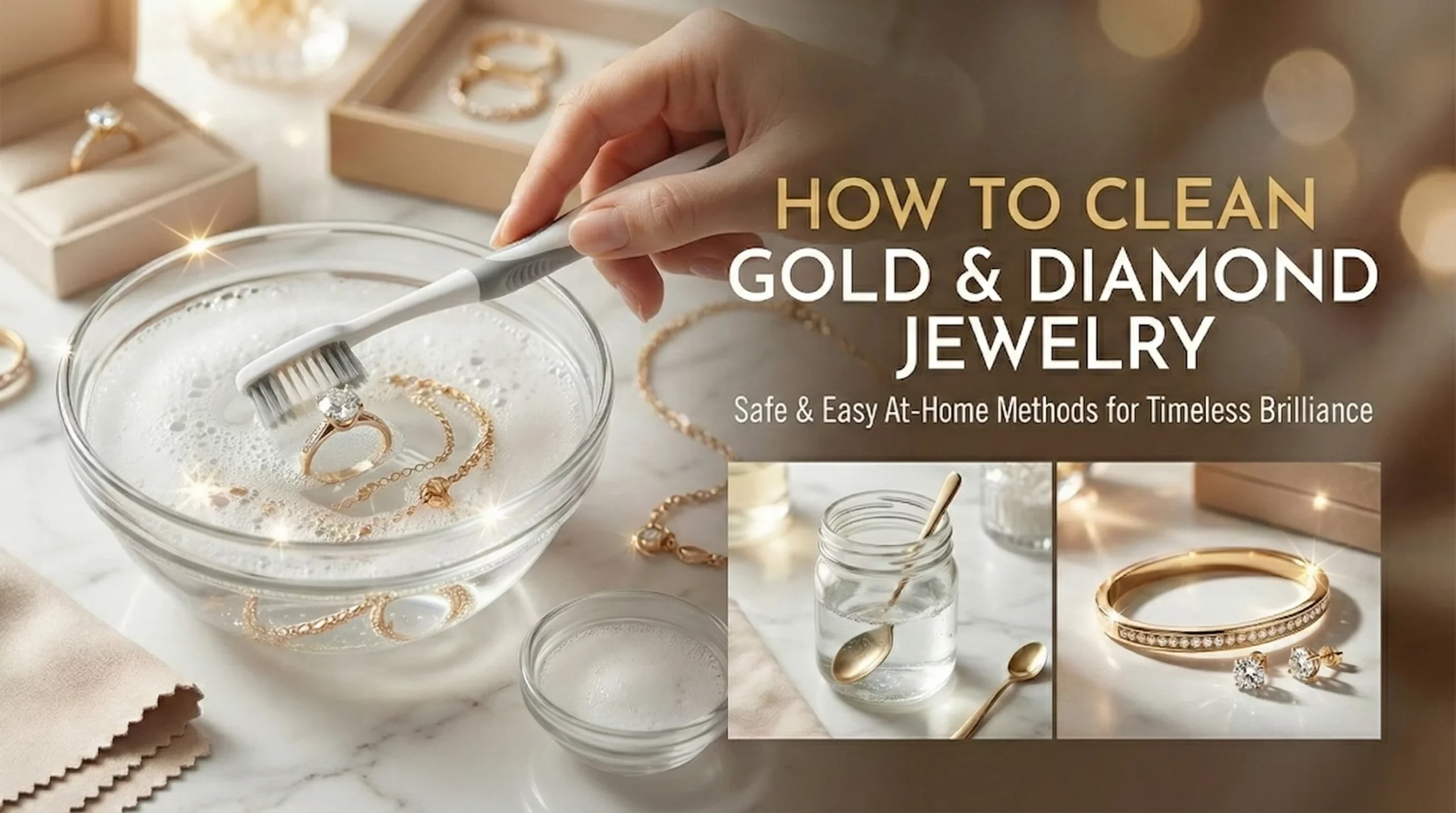
The Complete Guide: How to Clean Gold Diamond Jewelry at Home
Fine jewelry is rarely just an accessory. An engagement ring, an anniversary band or an heirloom pendant carries a story — and, usually, a significant financial value. Yet within a few months of daily wear, that same piece can start to look flat and lifeless. The culprit is almost never damage. It is a microscopic film of hand cream, sunscreen, soap residue, body oil and household dust that settles on the gold and, more importantly, underneath the diamond.
That film matters more than most people realize. A diamond sparkles because light enters through the table, bounces off the internal facets and returns to your eye. When the underside of the stone (the pavilion) is coated in grease, light is absorbed instead of reflected — and a beautifully cut stone can look as dull as a piece of glass. The good news: in most cases a ten-minute cleaning at your kitchen counter restores the brilliance completely.
Below you will find the method professional jewelers actually recommend, the mistakes that cause irreversible damage, and a realistic maintenance schedule for gold and diamond jewelry.
What Is the Safest Way to Clean Gold and Diamond Jewelry at Home?
The safest way to clean gold diamond jewelry at home is to soak it for 15–20 minutes in a bowl of warm water with a few drops of mild dish soap, gently brush it with a soft toothbrush — paying special attention to the back of the stone — rinse in lukewarm water over a plugged drain, and pat dry with a lint-free cloth.
This method is recommended because it is chemically gentle. It removes oils and grease without touching the metal’s structure, without abrading the polish, and without stressing the stone. The Gemological Institute of America (GIA) recommends a similar routine, including a soft toothbrush reserved exclusively for jewelry and particular attention to the underside of the diamond, where oils collect fastest.
What You Will Need
- A small bowl (never work directly over an open sink)
- Warm water — comfortable to the touch, never boiling
- A few drops of mild, dye-free liquid dish soap
- A soft-bristle toothbrush kept only for jewelry
- A lint-free cotton or microfiber cloth
- Optional: a small strainer for rinsing small items safely
Step-by-Step: The Home Cleaning Process
- Prepare the solution. Fill a small bowl with warm water and add a few drops of mild dish soap. Avoid soaps with moisturizers, exfoliating grains or heavy dyes — they leave a residue of their own.
- Soak. Place the jewelry in the bowl and leave it for 15 to 20 minutes. Soaking is the step most people skip, and it is the one that does most of the work: it softens hardened oils so the brush barely has to scrub.
- Brush gently. Remove one piece at a time. Using the soft toothbrush, work around the setting, between the prongs, along the gallery and especially across the back of the diamond. Use light pressure — you are lifting residue, not polishing metal.
- Rinse. Rinse under a gentle stream of lukewarm water to remove every trace of soap. Plug the drain first, or rinse the piece inside a small strainer. More rings are lost down drains than are damaged by cleaning.
- Dry completely. Pat dry with a lint-free cloth and allow the piece to air-dry for a few minutes before storing. Trapped moisture under a stone can leave water spots and, over time, encourage tarnish on the alloy metals.
- Inspect while it is clean. A freshly cleaned ring is the easiest time to check prongs, look for a loose stone and spot thinning metal on the shank.
Common Cleaning Mistakes That Cause Real Damage
Most “jewelry cleaning hacks” circulating online were written for costume jewelry, not for fine gold and diamonds. These are the ones worth avoiding:
- Bleach and chlorine. Gold’s worst enemy. Chlorine attacks the alloy metals in karat gold and can cause stress-corrosion cracking — a failure that often appears first in the thin prongs holding your diamond. GIA explicitly warns against chlorine-based household products. This includes swimming pools and hot tubs.
- Toothpaste. Toothpaste is a mild abrasive designed to scrub enamel. On 14k and especially softer 18k gold it leaves a haze of fine scratches that permanently dulls the finish.
- Baking soda and salt pastes. Same problem: abrasive particles plus soft precious metal equals micro-scratching.
- Boiling water. Sudden temperature swings cause thermal shock. Diamonds with existing feathers, and most colored gemstones, can fracture.
- Over-polishing with a cloth. Polishing cloths remove a microscopic layer of metal each time. On rhodium-plated white gold, aggressive polishing strips the plating faster than daily wear does.
- Ammonia on anything but plain gold and diamond. Ammonia-based solutions work well on solitaire diamonds set in gold, but they should be kept away from pearls, opals, emeralds and any treated or porous stone.
Are Ultrasonic Cleaners Safe at Home?
Ultrasonic cleaners are excellent on a plain diamond in a sturdy gold setting — and genuinely risky on almost everything else. The vibration that shakes dirt loose can also shake a loose stone out of its setting, and the heat plus the cleaning solution can damage treated or porous gems.
GIA advises keeping the following out of an ultrasonic cleaner:
| Category | Examples | Why it is unsafe |
|---|---|---|
| Fracture-filled stones | Clarity-enhanced diamonds, oiled or resin-filled emeralds | The filling is not permanent and can be damaged or removed |
| Organic gems | Pearls, coral, amber, jet, ivory, shell cameos | Porous — damaged by heat and cleaning chemicals |
| Heat-sensitive gems | Tanzanite, opal, moonstone, sunstone, iolite, kunzite, fluorite, topaz, turquoise, zircon, lapis lazuli, malachite | Susceptible to heat and rapid temperature change |
| Phenomenal stones | Star ruby, star sapphire | Should not be used; even transparent ruby and sapphire require caution |
| Fragile settings | Antique, filigree, tension-set or pavé pieces | Vibration can loosen small stones and delicate metalwork |
If you are not certain what is in your piece — and with vintage and inherited jewelry you often cannot be — the safe answer is soap and water at home, and an ultrasonic or steam clean at your jeweler, who can inspect the setting first.
How Often Should You Clean Gold Diamond Jewelry?
Frequency depends far more on how you live than on the piece itself.
| How you wear it | Home cleaning | Professional check-up |
|---|---|---|
| Engagement ring, worn daily | Every 1–2 weeks | Every 6 months |
| Wedding or eternity band, worn daily | Every 2–4 weeks | Every 6–12 months |
| Earrings and pendants, worn often | Every 4–6 weeks | Once a year |
| Occasion pieces | Before and after each wear | Every 1–2 years |
| Hands-on work, gym, gardening, healthcare | Weekly | Every 4–6 months |
Home cleaning restores sparkle. It does not replace a professional inspection, which is the only reliable way to catch a worn prong or a thinning shank before a stone is lost.
Home Cleaning vs. Professional Cleaning
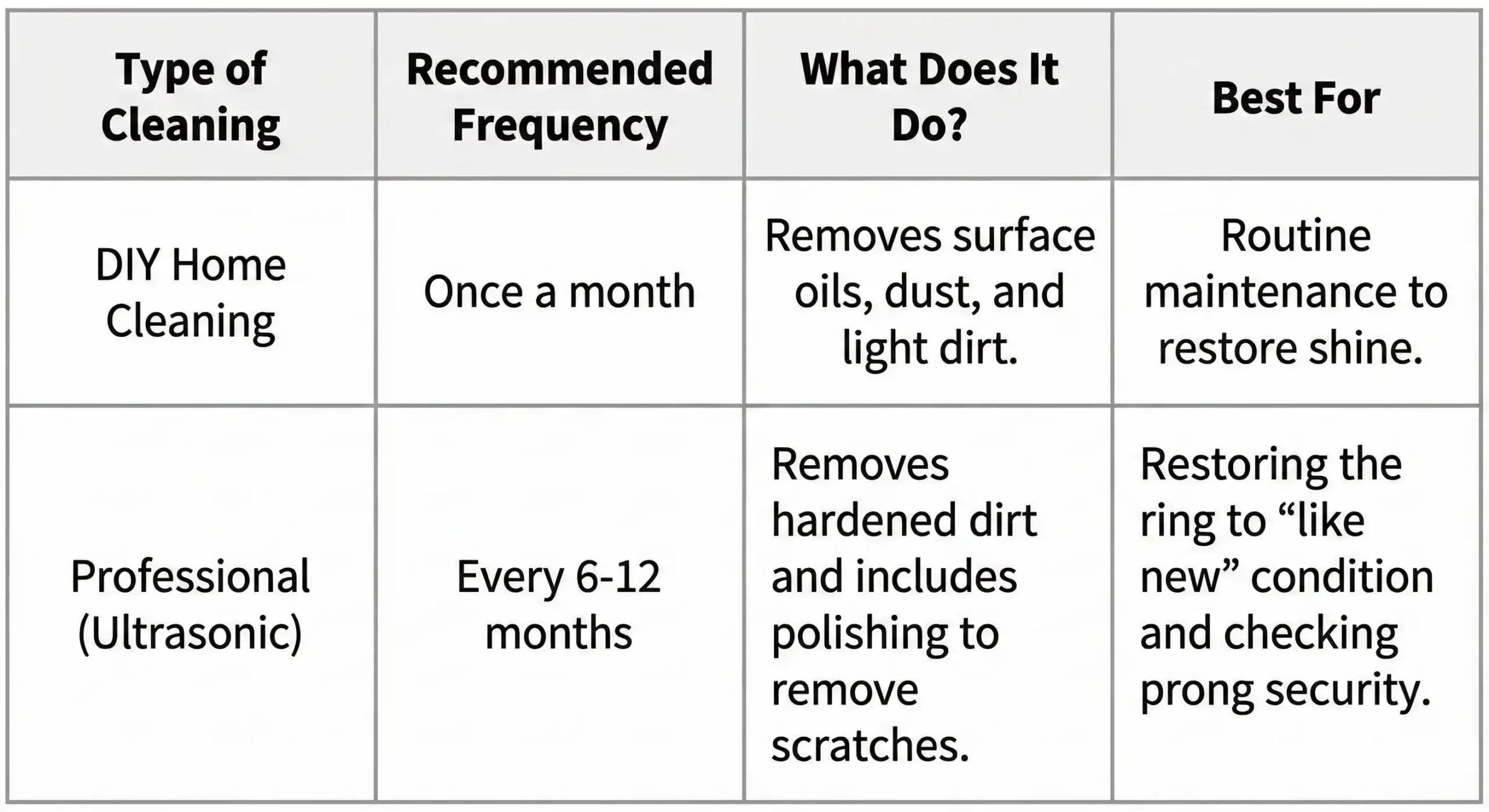
A jeweler’s service does three things your kitchen cannot: ultrasonic and steam cleaning reach into places a brush cannot, magnified inspection reveals wear you cannot see, and any tightening or re-tipping of prongs happens on the spot. Most reputable jewelers — including us — offer cleaning and inspection for their own pieces at no charge. It is the cheapest insurance in fine jewelry.
Seven Habits That Keep Jewelry Cleaner for Longer
- Last on, first off. Apply perfume, hairspray, sunscreen and lotion first; put jewelry on last. Reverse the order at night.
- Remove it at the gym. Sweat is mildly acidic, and gripping a bar or dumbbell is one of the most common ways a ring shank gets bent out of round.
- Never swim in it. Chlorine and salt water both attack karat gold alloys; cold water also shrinks fingers, which is how rings disappear at the beach.
- Take it off for cleaning and gardening. Household cleaners, solvents and soil are harsher on gold than anything else in a normal week.
- Store pieces separately. Diamond is the hardest natural material on Earth, which means your diamond ring will happily scratch your gold chain. Use individual pouches or a partitioned box.
- Check the prongs monthly. Hold the ring next to your ear and tap it gently. A faint rattle means a loose stone — stop wearing it and see a jeweler.
- Keep the receipt and the report. An up-to-date appraisal and grading report make insurance claims dramatically simpler.
Special Case: White Gold That Looks Yellow
If your white gold ring has developed a warm, yellowish tint — usually starting on the underside of the band — cleaning will not fix it. White gold is a gold alloy finished with a thin layer of rhodium, and that layer gradually wears away with friction, revealing the naturally warmer alloy underneath. The fix is a quick professional re-plating, not a stronger cleaner. We explain the whole process in Why Is My White Gold Turning Yellow?
When to Stop Cleaning and Call a Jeweler
- You can see or feel movement in the center stone
- A prong looks bent, flattened or shorter than the others
- The band has a visible thin spot or a hairline crack
- The piece is antique, filigree or contains an unidentified colored stone
- The stone still looks cloudy after a proper soak — this can indicate an internal issue rather than surface dirt
Frequently Asked Questions
Can I clean my diamond ring with vinegar?
It is not recommended. Vinegar is acidic and, while it will not harm the diamond itself, repeated exposure can affect the alloy metals in karat gold and any treated colored stones in the piece. Mild dish soap and warm water is both safer and more effective on the oils that actually cause dullness.
Does rubbing alcohol clean diamonds?
Isopropyl alcohol is very good at cutting through oil on a plain diamond in a gold setting, and jewelers use it for exactly that. Keep it away from pearls, opals, emeralds and anything with glued components, and always rinse afterwards.
Why does my diamond get cloudy so quickly?
Almost always hand cream, soap film or sunscreen. Diamonds are naturally oleophilic — they attract grease. Frequent hand-washing with moisturizing soap is the single most common reason an engagement ring looks dull within days of a cleaning.
Is it safe to clean gold jewelry with a toothbrush?
Yes, provided the bristles are soft and the brush is used gently and kept exclusively for jewelry. Medium and hard bristles, and brushes that have been used on teeth and carry abrasive toothpaste residue, can scratch gold.
How do I clean a pavé or halo setting?
Soak longer — up to 30 minutes — and brush more gently, working from the back where dirt packs in behind the small stones. Avoid ultrasonic cleaners at home: micro-pavé stones are held by tiny beads of metal that vibration can loosen.
Can I clean gold jewelry that has pearls or emeralds in it?
Only with a barely damp, soft cloth and plain water. Pearls are porous and their nacre is easily dulled; emeralds are commonly oil- or resin-treated and soaking can strip that treatment. Both should be professionally cleaned.
Keeping the Sparkle for a Lifetime
Cleaning fine jewelry is not complicated — it is just easy to do badly. Warm water, mild soap, a soft brush and patience will restore almost any gold and diamond piece to the way it looked in the showroom. Everything harsher than that belongs in your jeweler’s workshop, not your bathroom cabinet.
Every Camellia Jewelry piece is handcrafted to be worn every day, and we are always happy to clean, inspect and refresh a ring we have made. If you are considering a new piece — or a vintage-inspired design of your own — explore our handcrafted engagement rings or read about how our custom rings are made.
Related reading: 14k vs 18k Gold · White Gold vs. Platinum · Natural vs. Lab-Grown Diamonds
Sources and further reading: GIA — How to Clean Your Diamond Jewelry; GIA — Ultrasonic Cleaners for Gems.
Customized Wedding Shoes
Your choice of customized wedding shoes adds one of the most personal touches to your big day. In fact, your footwear choice shapes the entire feel of your bridal look. Your shoes go with you every moment — walking down the aisle, dancing at the reception, and celebrating with loved ones. Little wonder that customized wedding shoes have become a popular trend! Having your wedding shoes custom-made gives you a perfect combination of comfort and style. Additionally, you decide exactly what you want to wear. Moreover, you can even transform a comfy orthopedic shoe into something beautiful and unique.
You’ll find some amazing customized wedding shoe ideas below:
Get married in your favorite sneakers – just add a pop of color or a custom pattern. Check out Kehoecustoms’ account to see her handpainted Nikes.
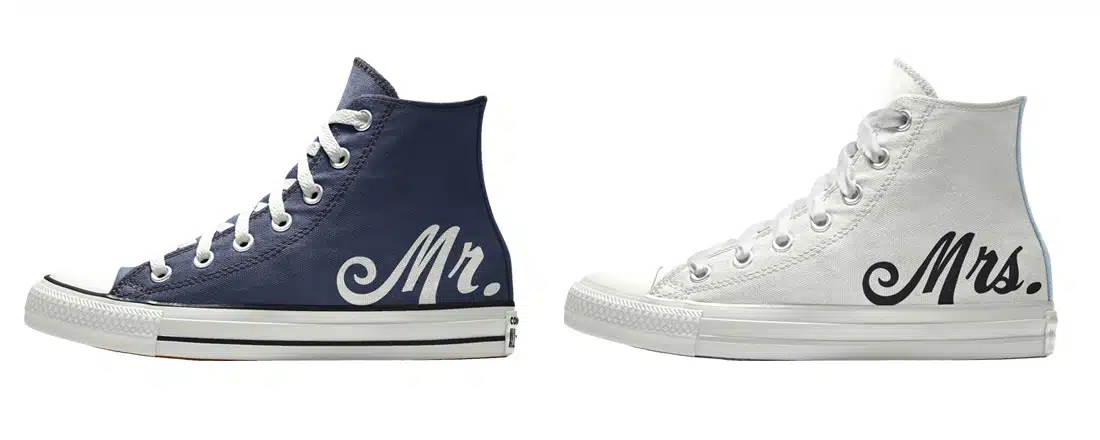
Another cool bridal sneakers option is Chuck Taylor Converse wedding shoes. they make a great alternative to traditional wedding shoes for brides and grooms alike.
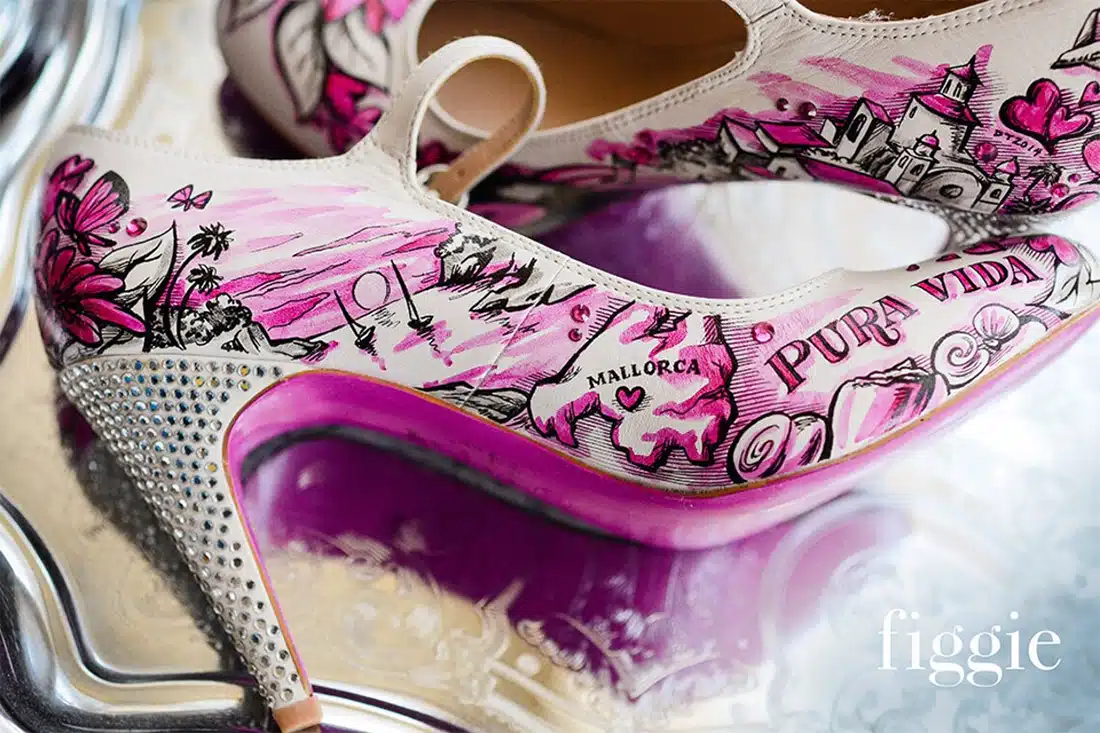
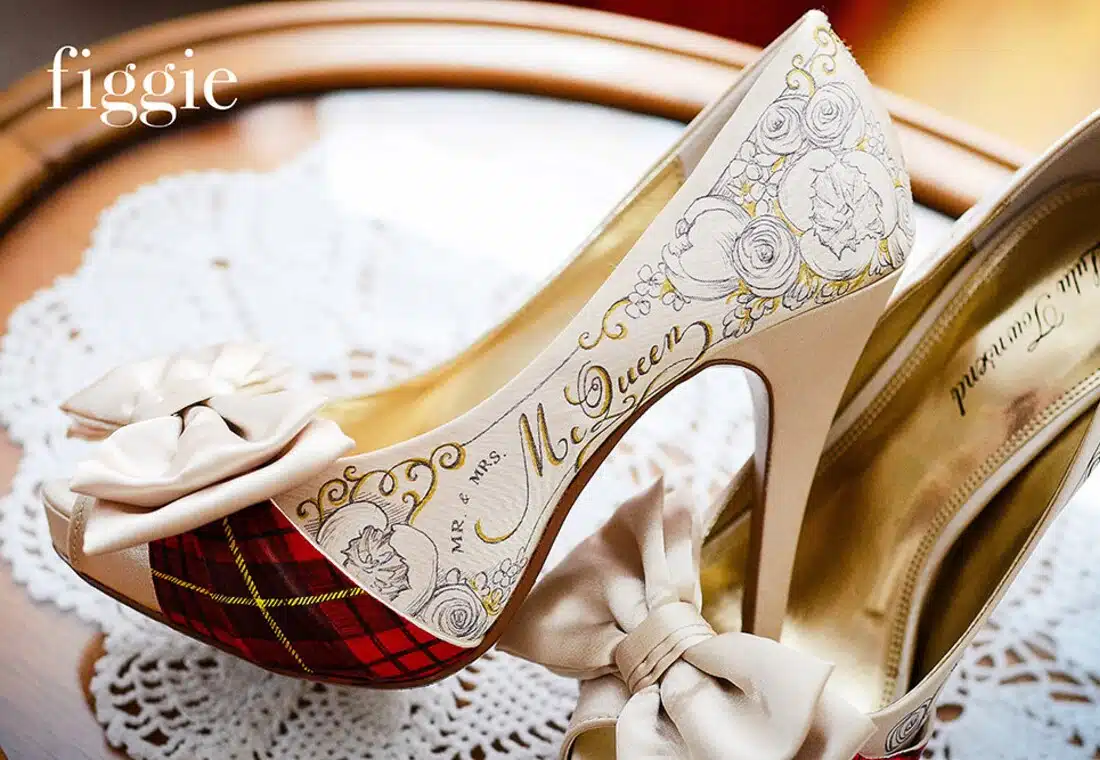
We just can’t get enough of Figgi’s personalized wedding shoes. Tattoesque-style, handpainted illustrations full of details and amazing style!
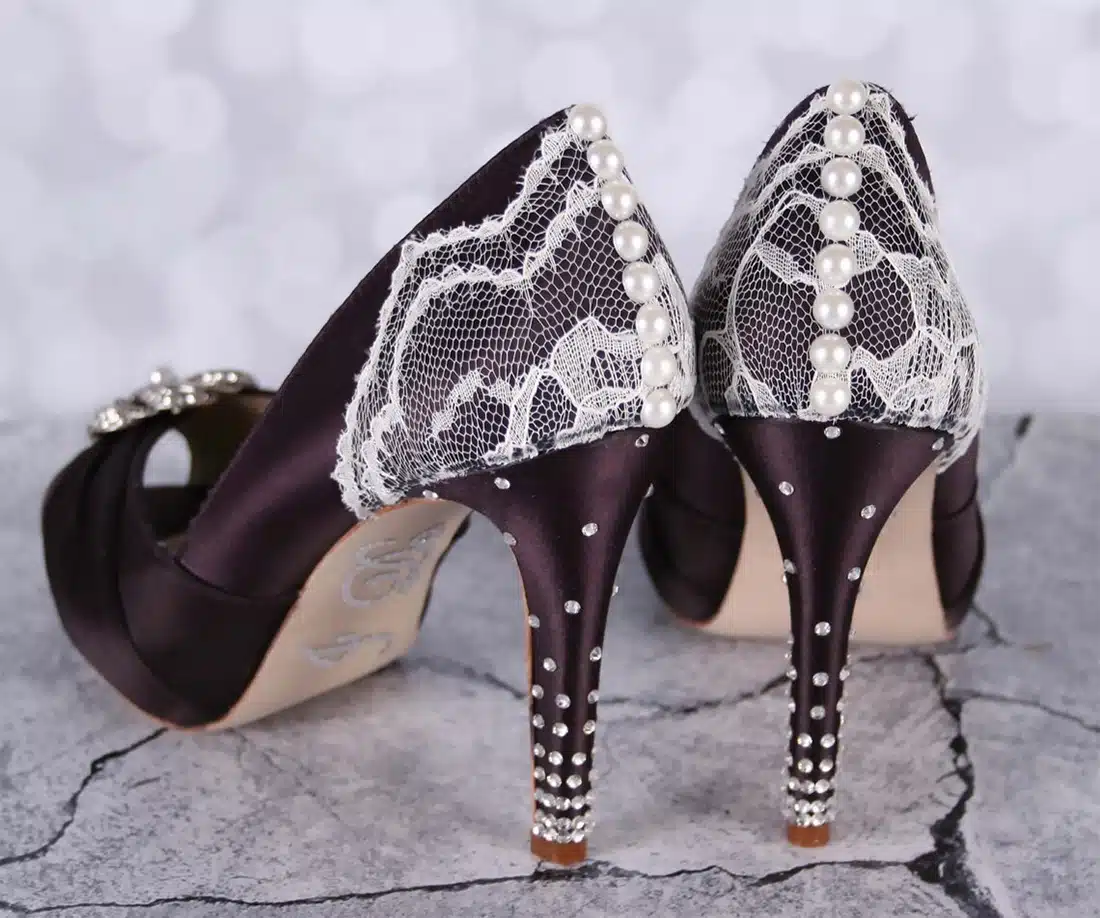
Ellie Wren Wedding Shoes offers a variety of customization and personalization options – from the shoe colors to details, fabric, and texts on the soles.
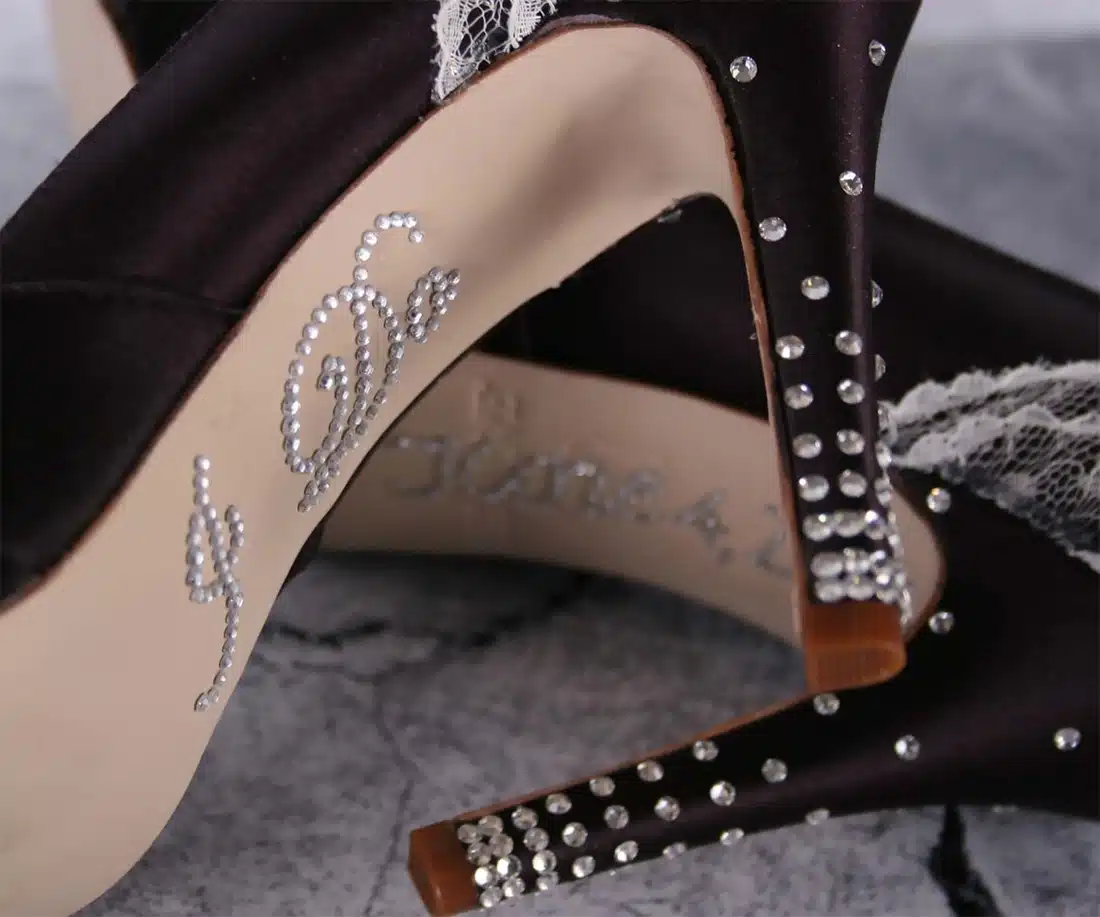
Before you start looking for your customized wedding shoes, two important tips:
Set out early
Avoid the last-minute rush. Furthermore, starting early gives you time to explore many options. You can compare styles and make a thoughtful decision. Starting early helps you avoid stress. You get time to review options and make a calm, confident decision.
Consider your wedding location
Don’t get carried away with the beauty of the sleek pair. Therefore, choose footwear that suits your wedding location perfectly.
What’s your dream customized wedding shoe?
Find Your Perfect Customized Wedding Shoes
Your wedding shoes tell your story. They reflect your personality and style. Customized options let you match your shoes to your theme, your dress, and your venue. Start your search early. Browse different styles and brands. Talk to a shoemaker or designer about your vision. The right pair of customized wedding shoes will make you feel confident, comfortable, and beautiful on your big day. What style speaks to you?
Colorful Weddings
Over the centuries, colors have played crucial roles in celebrations and events. Wondering why weddings are now a celebration of colors? It is because of the tremendous effect of these priceless gems. This article is designed as a beginner guide to colorful weddings…
Why should I have a colorful wedding?
A colorful wedding brings together bright vibrant colors and bright colors carry life and fun.
What is the most important factor when planning a colorful wedding?
Color. As with the word “colorful” itself, a colorful wedding feeds on color.
How do I Plan a Colorful Wedding?
Here are some points we’ve found helpful with planning a colorful wedding…
Choose a color range
While you want to have a colorful wedding, you don’t want your venue to look like World Color War 1. You could choose a few bright colors and go well together. Then, build around these colors, an element per time.
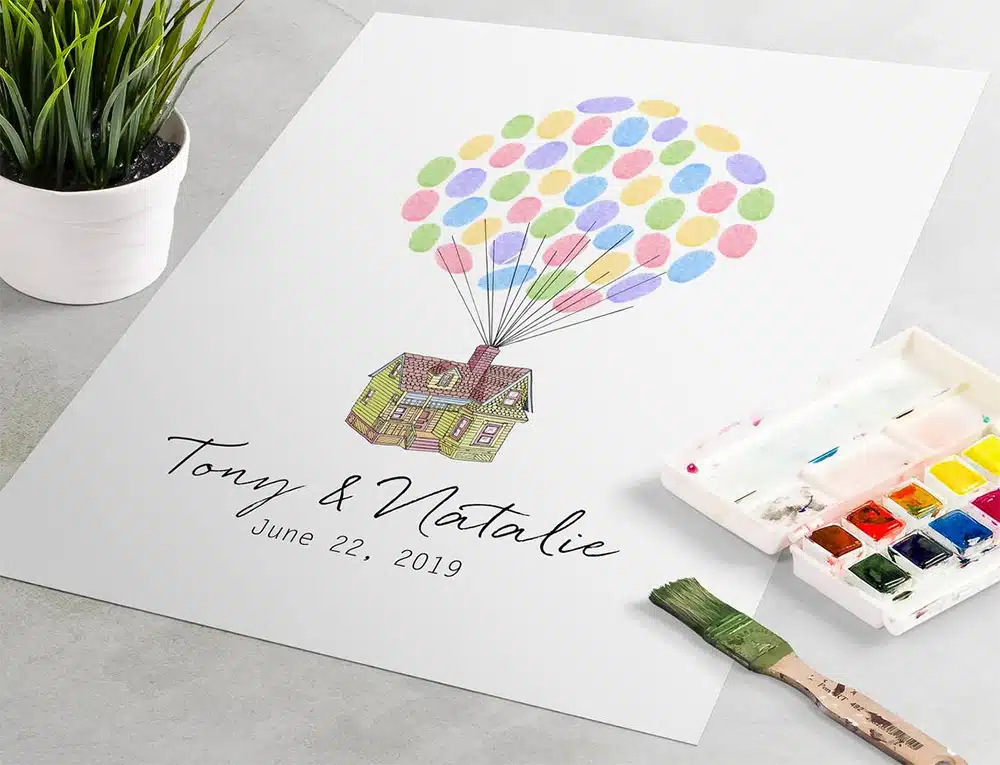
Use colorful invitations
A great way to set the tone for a colorful wedding is to send out colorful invites. A colorful invite will not only prepare the guest for the event to come but will also align the chosen color themes from start.
[source: Guestbook Envy]
Adopt bright furniture
A colorful wedding is an overall effect of numerous elements, the furniture being a major piece. Using bright-colored furniture is an assured way to splash a bit of color into your event. Plus, colored and comfortable furniture pieces are great for pictures too.
Bring in the floral
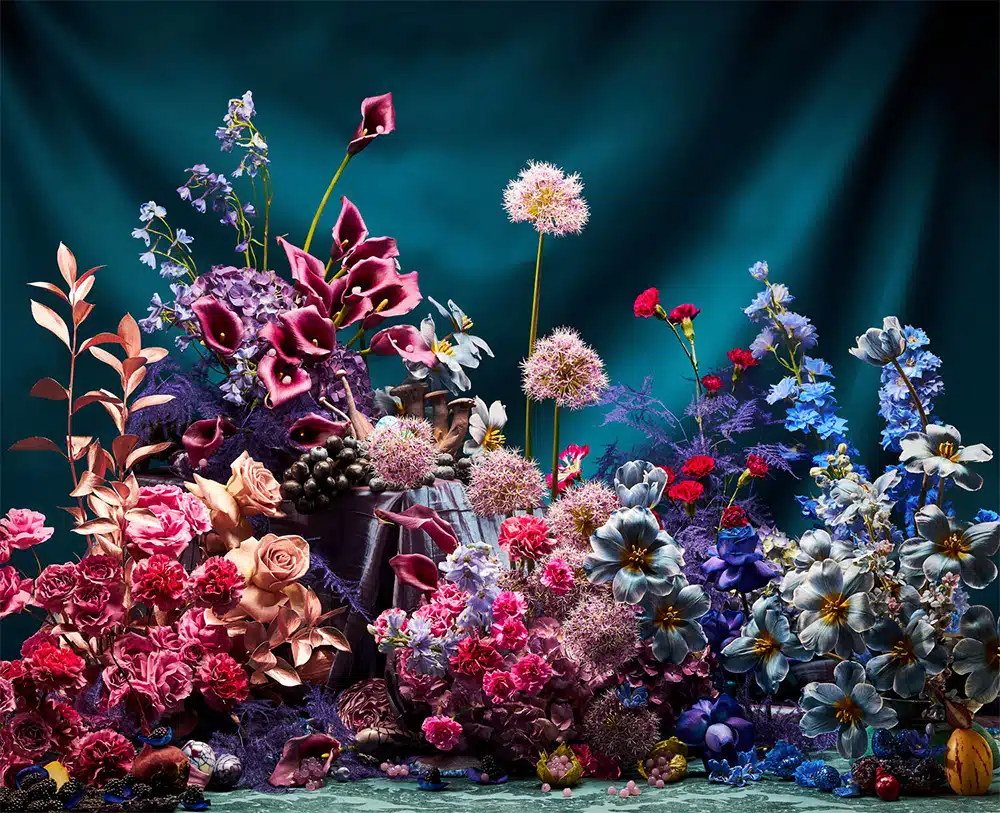
An easy way to bring life and color to your event is to use flowers. As with fabrics and home décor, brightly colored flowers bring in life and fun. Hence, using flowers at your wedding will undoubtedly enhance the colorful outlook.
Small vases with brightly colored flowers are great options for long reception tables. Alternatively, you could simply use a flower wall.
[Source: Texture Florals]
Color the table
When planning a colorful wedding, every piece of furniture counts.
Color your tables with brightly colored linens, tablecloths, and napkins. Consider using colorful cups and plates. Have every piece on your tables bring in some color and your venue would be looking like a peaceful home of exciting colors in no time.
Serve colored drinks and food items
Again, every element matters. If you’re gunning for a colorful wedding, your wedding cake doesn’t have to be plain. You should have your cake made in fun colors. An alternative way to splash color on a plain cake is to have colorful fruits and flowers around it.
With colorful weddings, the little elements we often ignore go a long way. Have the little details bear fun colors and your wedding will be looking like a feast of colors in no time.
[Main photo – the amazing We Heart Pictures]
Ideas for Unique Thank You Gifts
Gratitude stands at the center of every matter. Little wonder “thank you” is a magic word. Finding the right unique thank you gifts can be challenging — hand-written notes, cards, and personalized jewelry are among the most meaningful ways to express gratitude. Thinking of getting unique thank you gifts? Here is a complete guide.
Selecting a Thank You Gift
As with selecting birthday gifts, anniversary gifts, or any other type of gifts. There are important factors to note when selecting a thank you gift.
Recipient’s interest
Choose a gift your recipient likes, not necessarily one you like. The main point with a gift is that it is done with the interest of the recipient at heart.
Age
A perfect gift for a child might be just the worst idea for a teenager. Note that people change with time and so do their interests.
Recipients need
You want to give what you think a person wants or need, not what you want them to have.
Uniqueness
Everyone wants to feel special, knowing that you put in a lot of thought into their gift. Unsure what counts as unique? Here are some unique gift ideas for the perfect thank you gift:
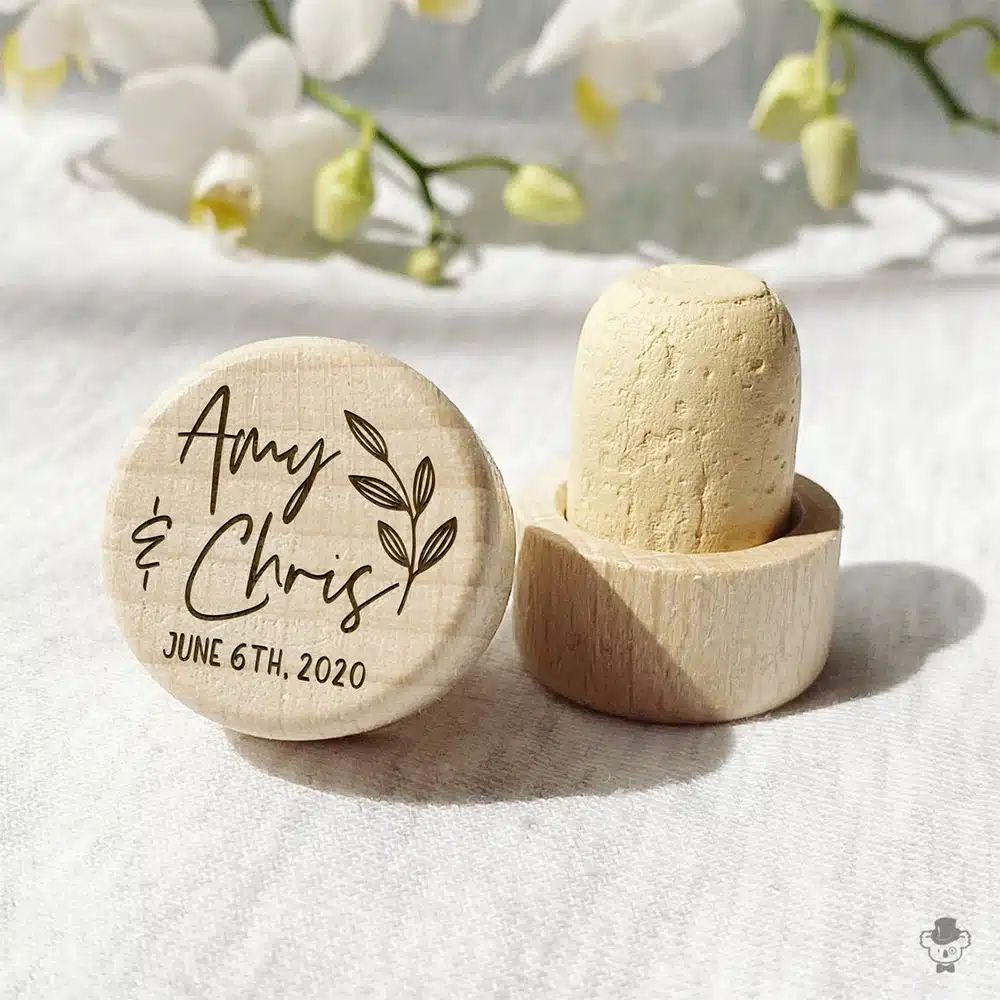
Custom Wine Stopper
This custom wine stopper from Etsy is a great gift for the wine lover. Whether you want to say thank you to your wedding guests or gift your loved ones, it can be customized to carry your message.
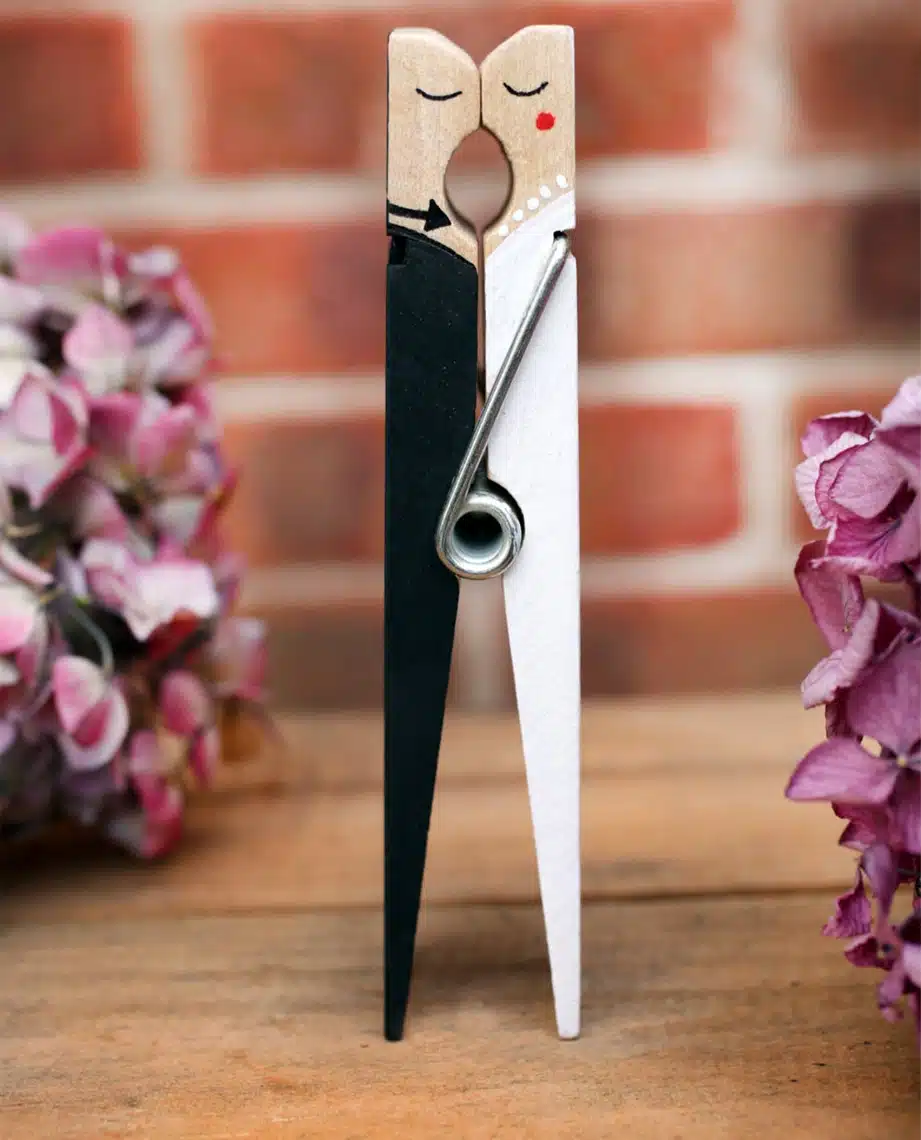
Mr. & Mrs. Table Decoration
This cute peg doubles as a table decoration and can even be used as a name holder at your wedding. Painted with so much detail, it is the perfect wedding favor for your big day.
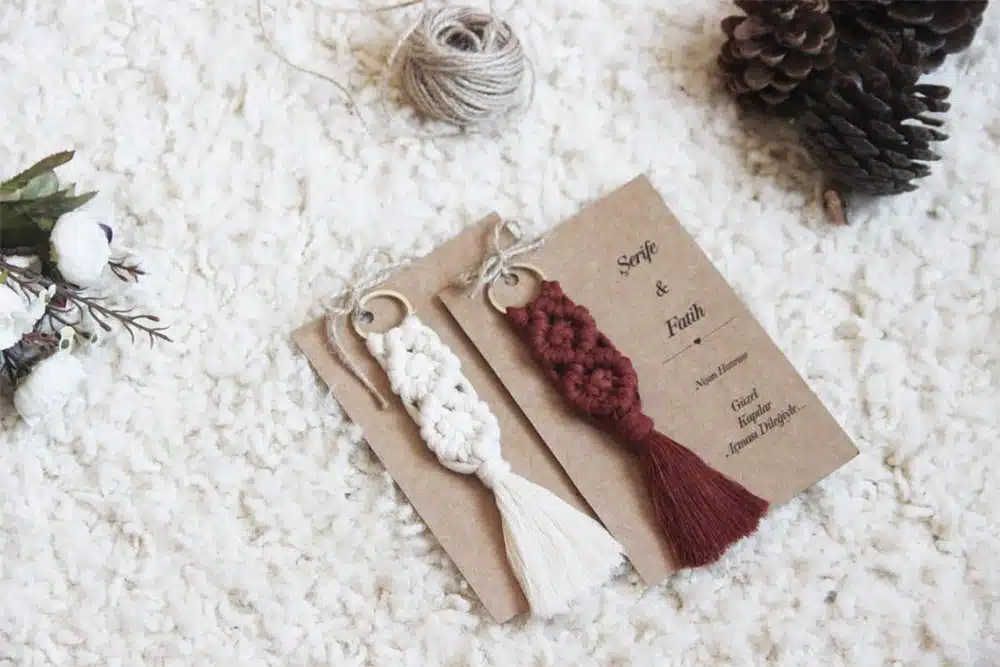
Personalized Wedding Favors
Thinking of a simple thank you gift to have your guest wowing at your wedding? Wedding, engagement, bridal shower, birthday, Christmas…you can gift this at every event. This personalized gift is a beautiful way to carry your heart note of gratitude to your recipient.
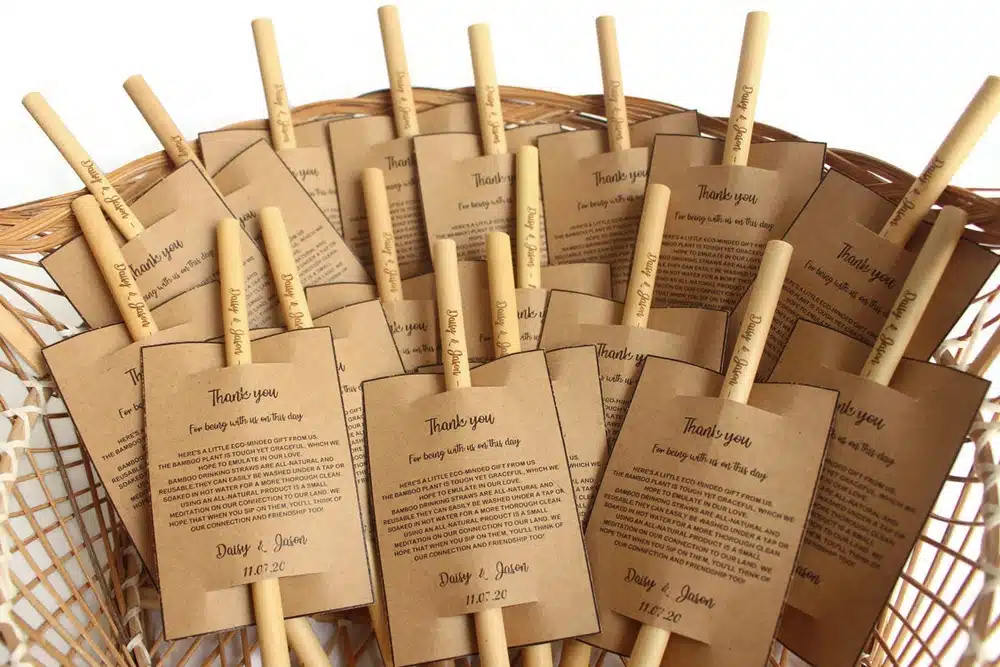
Personalized Engraved Bamboo Straws with Thank You Notes
What better way is there to say thank you than to actually say thank you? “Silent gratitude isn’t much to anyone,” Gertrude Stein said. We especially love these because they’re absolutely natural, washable, and reusable. It’s an investment of gratitude.
Tic Tac Toe – Guest Gift
Want a unique gift for your nature-loving wedding guests? The Tic-Tac Toe guest gift from Etsy is uniqueness and simplicity in one piece. Fun is guaranteed and boredom now in the past. This handmade bag is the perfect gift that cuts across all ages.
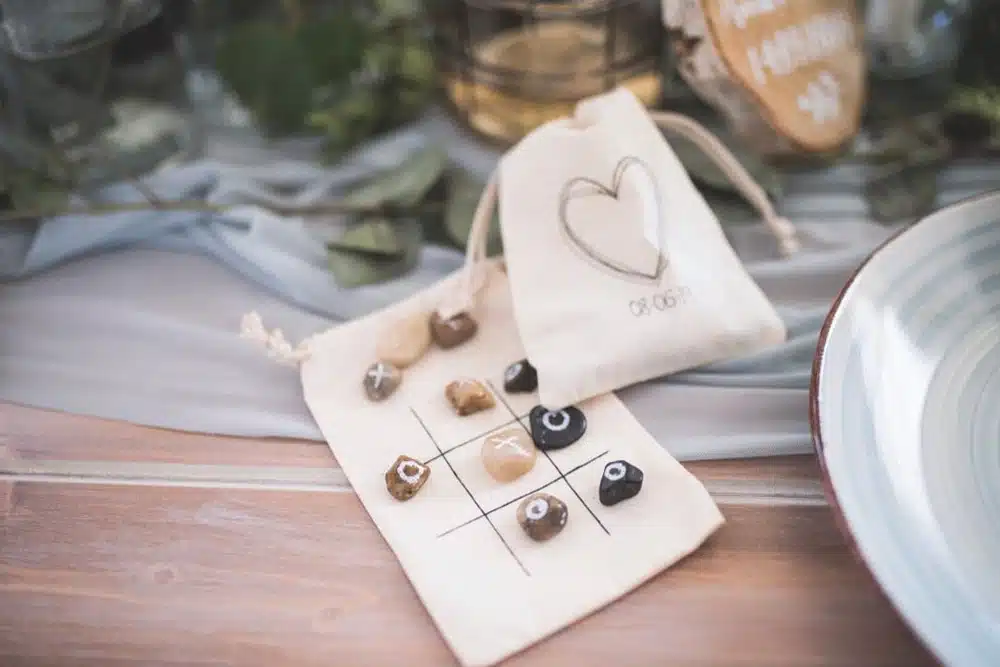
In the end, with gifts, the heart is principal. Remember thank you gifts are expressions of love and appreciation.
Denim & Weddings
The conventional look for weddings in most cities remains the traditional white wedding dress and tuxedo. However, many couples have defiled this norm and established a new trend of denim-themed weddings. This article is designed to answer frequently asked questions on Denim and Weddings…
What weddings can denim be worn to?
While jeans are not commonly accepted outfits in most cities, you could make it the wanted outfit for yours. Have a denim-themed wedding and denim can be worn to your wedding.
Why wear denim to my wedding
Well, why not? Here are a few reasons why you might consider wearing denim on your big day…
Endless options
Denim provides endless options of styles and a wide range of possibilities. Available in different styles and colors, you have numerous options to pick from for your big day.
Durability
Denim is a long-lasting fabric. Originally designed as fabrics for work clothes, they could sometimes last for up to a decade. This means that you can wear your dress time and time again after your wedding making it a great investment. It is the only fabric that offers this much durability.
Style
From faded to very deep colors, denim is available across different saturations. So, you can select a shade you prefer. Denim can be carefully tailored to include detailed embroidery designs and prints. So whether you want the “simple and classy” look or you aim for the “bold and beautiful” trend, it’s great for both.
Comfortable
Not only is denim durable but it is also a comfortable material. With the wide variety of brands, it is easy to find comfortable jeans. You could also have your outfits custom-made for you.
Easy to maintain
Unlike other fabrics that require consistent washing and delicate care, denim is much easier to maintain. Denim is the least difficult of clothing materials to maintain though the attention required might vary depending on your dress.
Wrinkle resistant
While you want to look great at your wedding, you don’t want to spend ages on laundry and ironing. Not only is the denim durable but it is also wrinkle resistant. So, you don’t have to worry about ironing after every wash.
Versatile
Denim is a perfect base for most outfits and pairing them with accessories is not only fun but extremely easy. Take your denim wedding dress a step higher with the right jewelry. Diamonds, emeralds, or sapphires? With denim, all is a perfect match.
But I want to wear a wedding gown
You could wear a denim wedding gown if you so delight. Here are a few denim gowns…

[source]

[source]
If you want to take this trend in smaller bites…
You can always start with an accessory or two such as this gorgeous denim brooch …
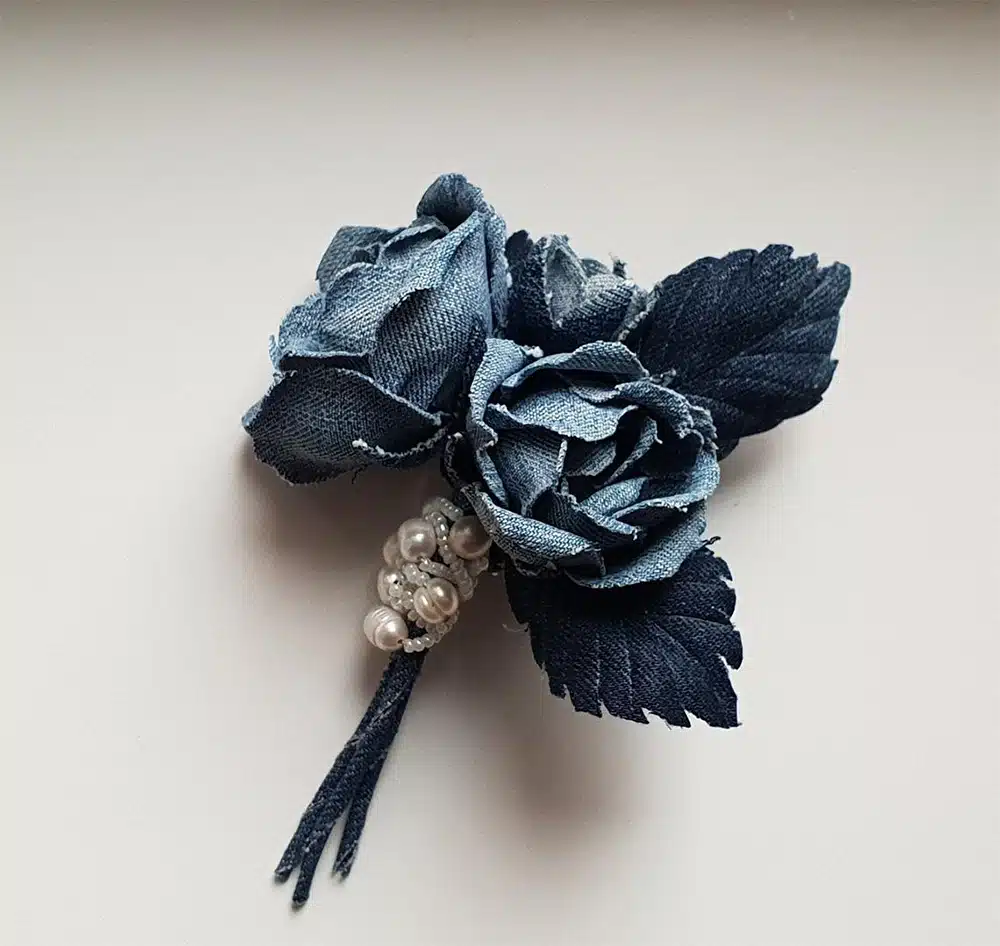
… or the wedding denim jackets trend!

[source]
Four Things You Should Know About Lab Created Diamonds
A perfect diamond piece should be pure, bright, with a clean history that cannot be questioned from origin to acquisition. If you were only familiar with the Natural diamond up until now, behold – for this is the day you’d meet its perfect alternative – the Lab created diamonds.
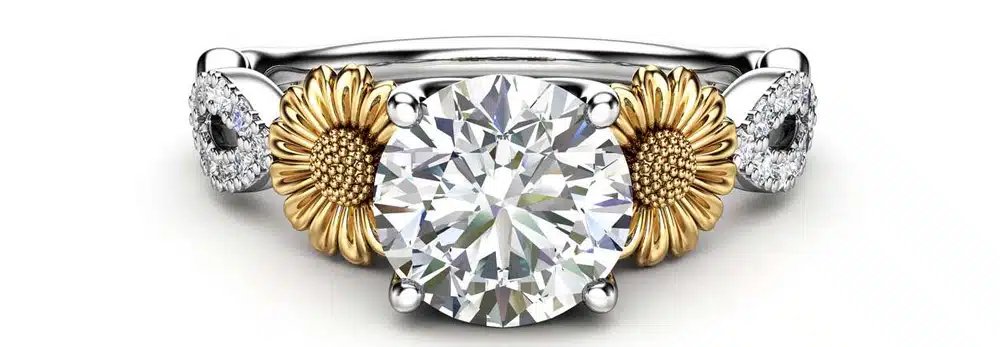
As their name suggests, Lab Created Diamonds are manufactured in laboratories under conditions that perfectly mimic the natural diamond-forming process. Lab Grown Diamonds have similar physical, chemical, and optical properties as mined diamonds. In fact, even industry experts can’t tell them apart without the aid of special equipment that scans for crystal patterns and impurities. They are technically natural diamonds without impurities, environmental degradation, and uncertainties. There are numerous reasons why lab made diamonds are a suitable replacement for natural diamonds. Here are a few of them:
Greater purity and improved quality
Say hello to the brighter twin!
Lab Grown Diamonds are purer than their natural counterparts due to the absence of impurities and dirt found in mined diamonds. They also have fewer blemishes since they were carefully prepared under favorable conditions. Hence, they are brighter and better than mined diamonds. Lab engineered diamonds are certified, giving you important information on Cut, Clarity, Carat Weight, and more.
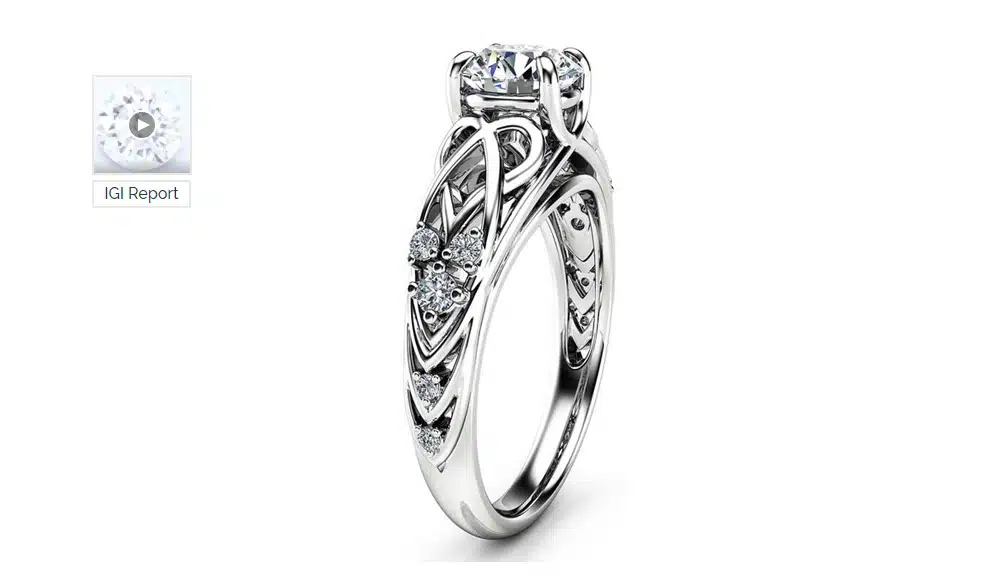
Click the ring to see it IGI Report Video
Guaranteed Origins
Often, a detailed journey path cannot be drawn for mined diamonds as the specific origin can be vague. We at Camellia Jewelry use only with conflict-free diamonds, but unfortunately, while shopping elsewhere, some diamonds have dark backgrounds, coming from conflict regions where they’ve been sold to fund war and promote chaos. But, the journey of lab-created diamonds from origin to acquisition can be known. Therefore, the only way to ascertain the origin of your diamonds is to purchase synthetic diamonds.
Affordable Diamond Jewelry
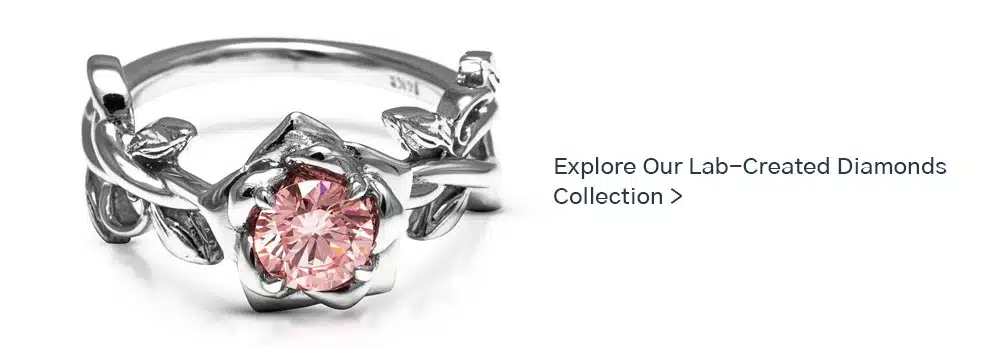
Lab made diamonds are not only purer than their natural counterparts but are also more affordable. Costing less than half the price of mined diamonds, they also come in a variety of natural-diamond colors, such as pink! This means you can really buy the ring of your dreams without having to compromise on the budget.
Environmentally-Friendly
Mining natural diamonds can damage the earth extensively. Diamond mines are some of the largest holes ever dug in the earth as enormous amounts of fossil fuels with heavy machinery are required to extract the gemstones. The Mirny Diamond Mine, the second largest hole in the earth, is almost a mile wide in diameter and about 525 meters deep. Lab diamonds, on the other hand, present none of these issues. With man-made diamonds, you could rock your diamond pieces and have Mother Nature smiling at you all day for conserving her resources.
With CVD diamonds, you can never go wrong. You have a natural diamond in its purer, brighter, Eco-friendly, and sustainable form for less than half its price. Synthetic diamonds are a girl’s better friends!
We’d LOVE to see a photo of you wearing your Camellia Jewelry
Send your photos to [email protected] and enter our raffle of 14K Gold Flower Diamond Stud Earrings
Last day to submit your photos: Feb 14, 2020, 5 PM EST
5 Alternatives to Traditional Wedding Cakes
It used to be the case that a wedding cake was an absolute essential on the wedding-day-event list, but times have changed and nowadays we see (and LOVE) gorgeous, yummy, surprising wedding cake alternatives. Gluten-free, sugar-free, cake-free… they’re all there, and we’ve picked some of the real surprising ones to share with you:
I Love You Brie Much
No sweet tooth? No problem. Wedding cheese cakes (not cheesecakes, cheese cakes!) and cheese boards There are plenty of savory wedding cake options out there. You’d be surprised to know just how much cheese and cheese plates are a huge trend these days – so why not bring this deliciousness to your special day?
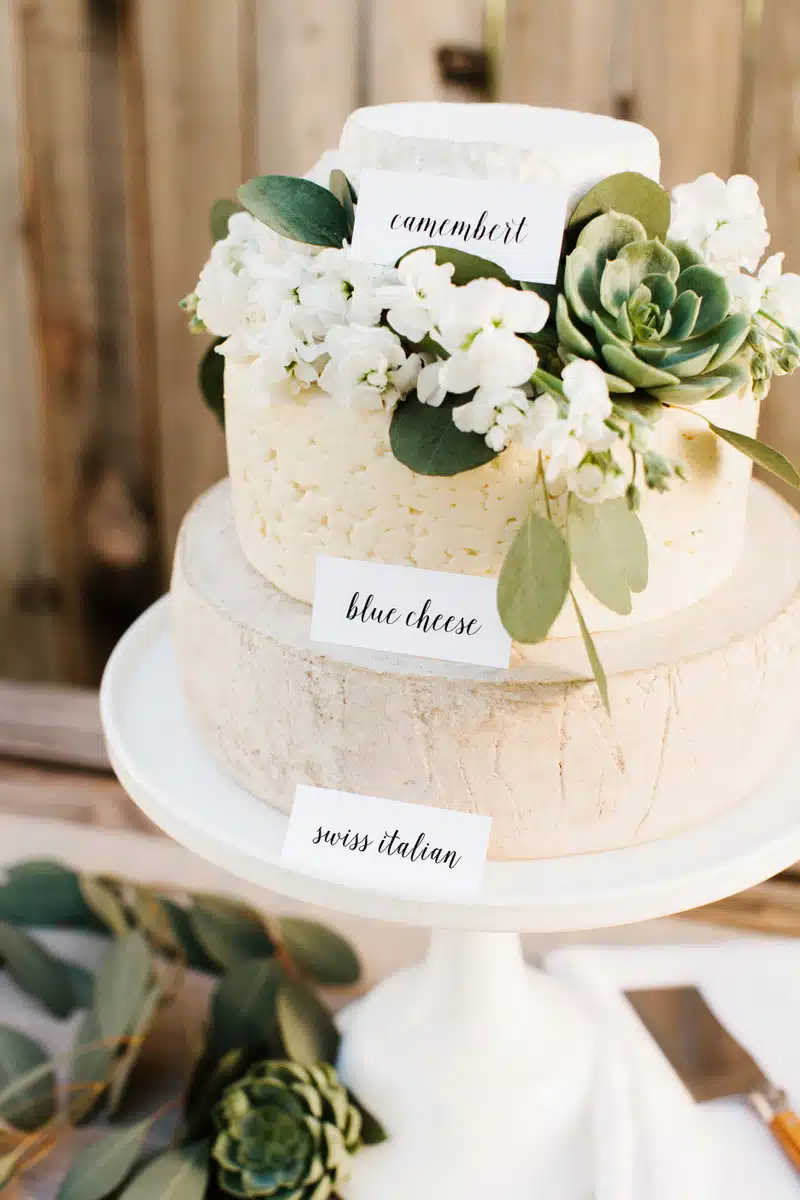
[photo: Tomkat Studio]
Slice Slice Baby
Someone to love us like we love pizza. And we’re not alone here, you know that. Take this endless, unconditional love (well, pineapple might change that) and turn it into a pizza wedding cake. Your guests will always remember that you both share a pizza of your heart.
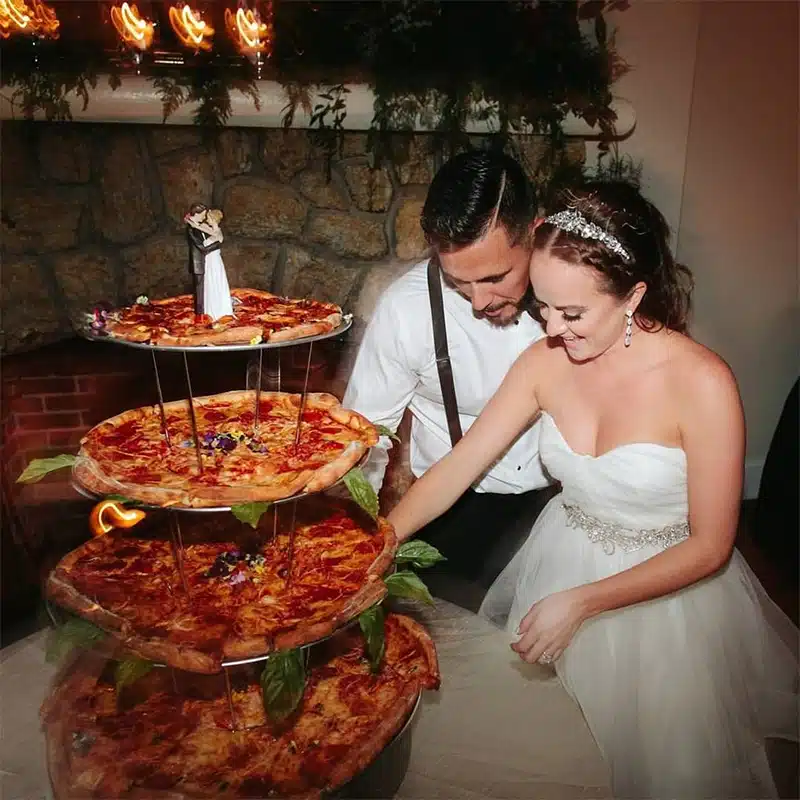
[photo: @toddgoodphoto]
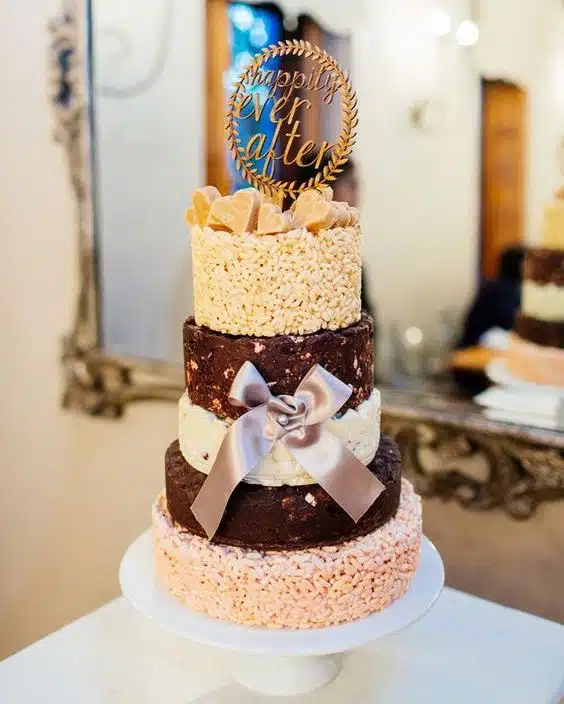
Rice Krispies Cake
Rice Kripsies treats wedding cake surely brings back childhood favorites into your special day. Your guests’ emotions of nostalgia and memories of childhood delight, will be a wonderful addition to a past-meets-future kind of moment.
[source: Pinterest]
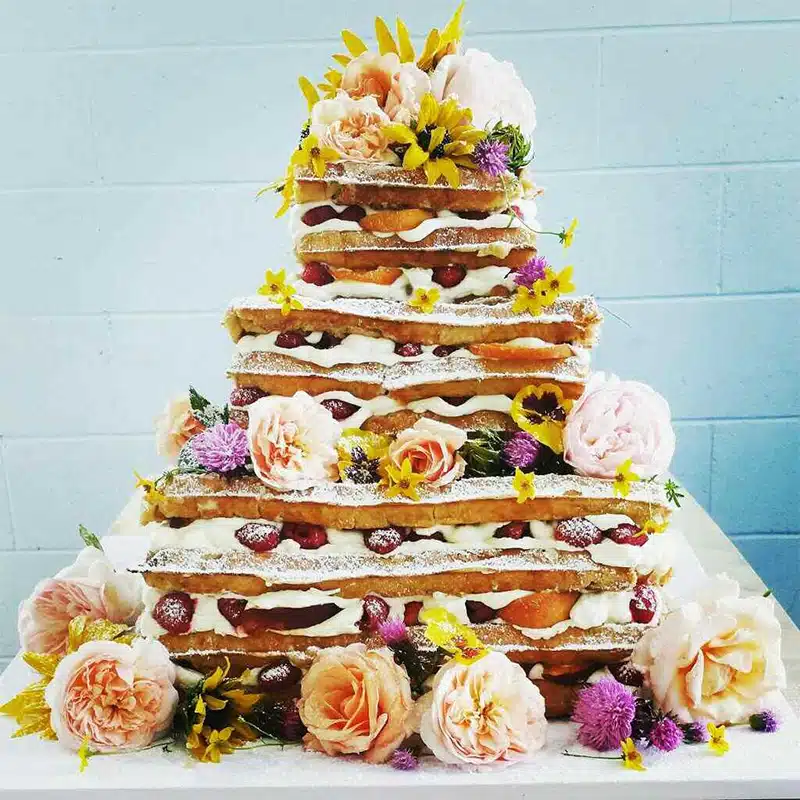
Pancakes and Waffles Cakes
Talking about childhood memories in the previous section made us look for other breakfast table wedding cake alternatives, and we’ve found this yummy version of breakfast waffles wedding cake. Perfect for current Brunch Weddings, we kind of want to get married and buried in this cake.
[photo: @WaffleLUV]
Big Statement, Mini Cakes
Minimonies, or mini-ceremonies, become more and more present as a result of how COVID-19 has affected the wedding industry. Since mini is the new word, why not go all the way to mini versions of wedding cakes, ones that would enable each guest to take one piece – no knife or gloves required? From cake pops to biscuits, to personal wedding cakes, it’s interesting and wonderful to see how creativity blooms in even challenging times.
View this post on Instagram
Do Black Diamonds Make Legit Engagement Rings?
Black Diamond Engagement Rings: Bold, Unique, and Stunning
Black diamond engagement rings are a bold choice for couples who want something truly unique. If you are considering buying a black diamond engagement ring, you are choosing a one-of-a-kind piece that stands out in any room. These rings suit individuals with a strong, confident personal style.
Why These Rings Make Such a Statement
A dark, powerful stone like a black diamond creates a striking and treasured jewel. It reflects your love story in the most distinctive way possible. These rings are also surprisingly affordable – more so than white or colored diamonds of similar size, since demand for them is lower.
Black diamonds became iconic when Mr. Big proposed to Carrie in Sex and the City 2 with a 5-carat stone set in an 18K white gold ring. That scene showed the world how romantic and striking these rings truly are. Since then, interest in them has grown steadily among couples who want to break with tradition.
How Black Diamonds Form
Black diamonds form under high pressure on carbon elements beneath the earth’s surface. They share the same chemical composition as white diamonds. However, graphite inclusions and random clustering throughout the crystal cause their dark color. Other colored diamonds get their color from geological impurities such as nitrogen, hydrogen, and boron. White, blue, and red diamonds each come in multiple color intensities. Black diamonds, by contrast, come in one deep, frosty color intensity.
There are two main types. The first type develops its dark color naturally during formation deep underground. The second type is treated through heating to reach that intense black color. Both options make stunning rings that will turn heads for years to come.
In short, if you want an engagement ring that stands apart from the crowd, a black diamond is an ideal choice. It is bold, beautiful, and uniquely yours.