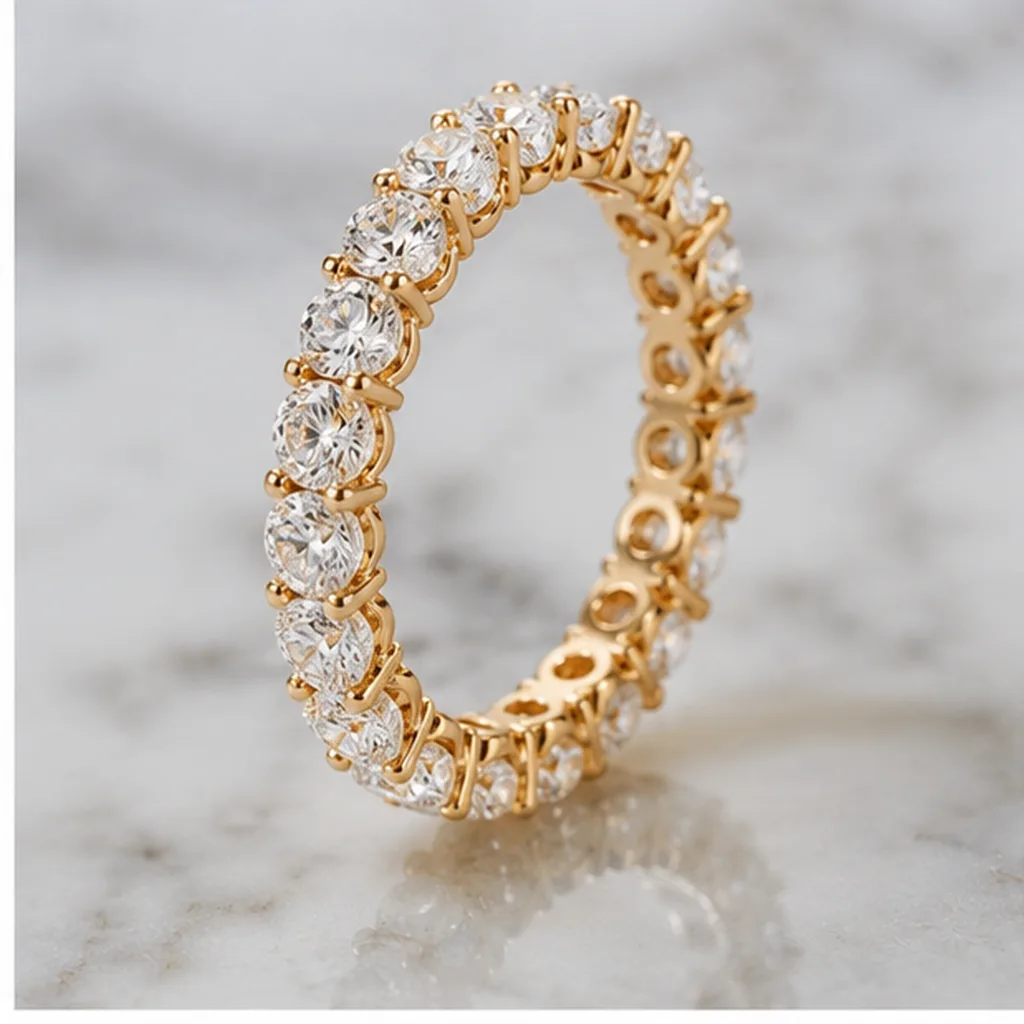


White Gold vs. Platinum: Which is Best for Your Engagement Ring?
Deciding between white gold vs. platinum is one of the last — and most confusing — choices in buying an engagement ring. Sitting side by side in a showroom the two look almost identical: both are bright, silvery and cool-toned. So why does one often cost half as much again as the other?
The answer is that they only look the same on day one. Over five, ten and twenty years of daily wear they behave in completely different ways, need different maintenance and age into different finishes. Neither is objectively better. This guide explains exactly how they differ so you can choose the one that suits your hand, your habits and your budget.

White Gold vs. Platinum: The Short Answer
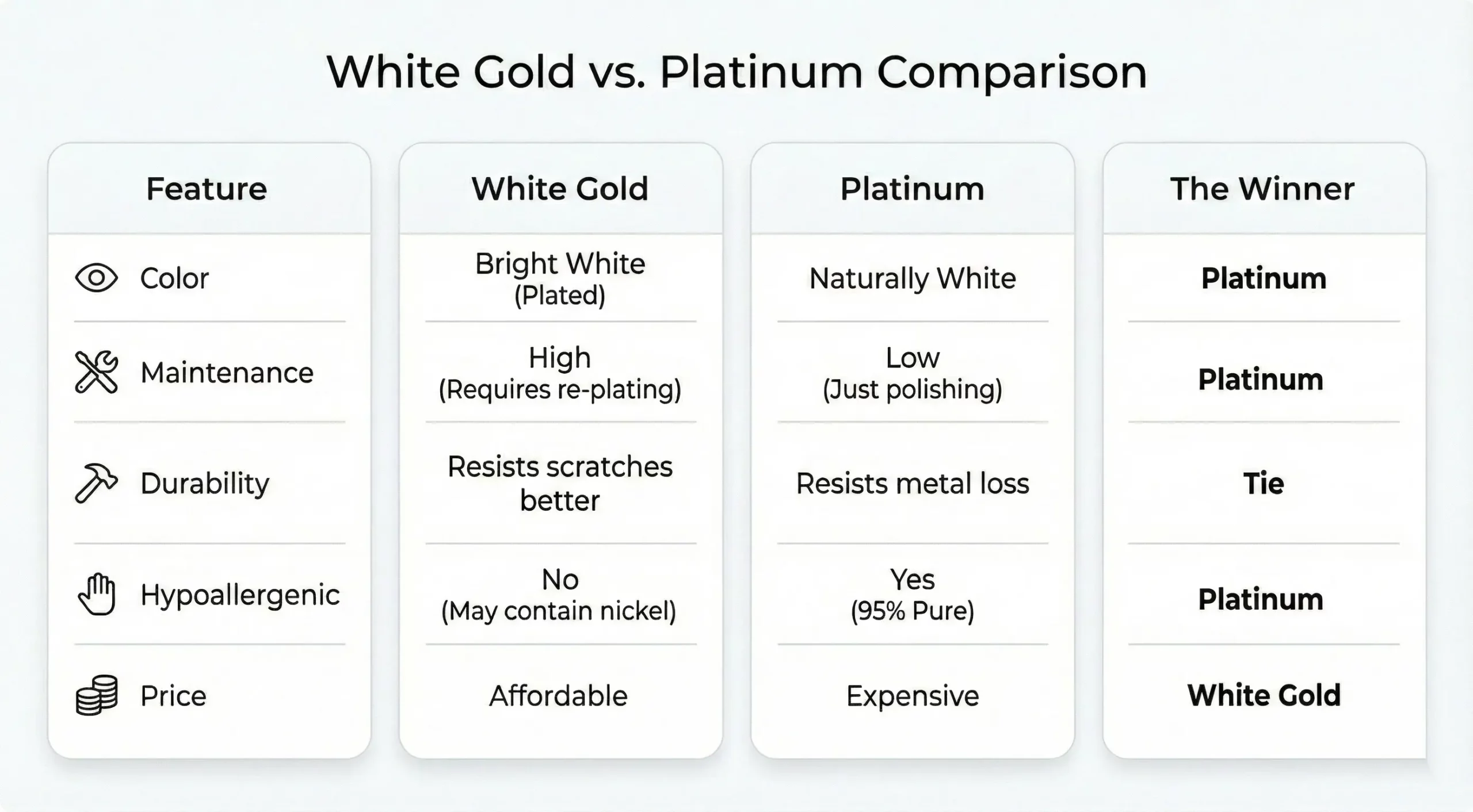
Platinum is a naturally white, dense precious metal used at about 95% purity; it never changes colour and needs no plating, but costs roughly 30–60% more. White gold is a gold alloy plated with rhodium to appear white; it is harder and more affordable, but the plating wears and needs renewing every one to two years.
Composition and Purity
Platinum is a naturally white metal, used in jewelry at very high purity — most commonly PT950, meaning 95% pure platinum with 5% of another platinum-group metal such as ruthenium, iridium or cobalt. Because so little alloy is present, platinum is genuinely hypoallergenic for almost everyone.
White gold is not a metal in its own right. It is yellow gold (58.3% in 14k, 75% in 18k) alloyed with white metals — palladium, silver, zinc and, in older or cheaper alloys, nickel. The resulting metal is a pale warm grey, so it is electroplated with a microscopically thin layer of rhodium to create the bright white finish you actually see.
That single structural difference — white all the way through versus white on the surface — drives almost every other difference between them.
Weight and Feel
Platinum is dramatically denser than gold. At roughly 21.4 g/cm³, it is about 60% heavier than 14k gold and around 40% heavier than 18k for an identical design. Pick up two identical rings and you can feel it instantly.
Whether that is a benefit is entirely personal. Many people read the weight as substance and quality. Others find a heavy ring tiring on a slim finger, or dislike it in a wide band. If you have never worn a platinum ring, it is worth trying one on before committing — it is the difference most people notice first and describe least accurately from photographs.
Durability: They Wear in Opposite Ways
This is the most misunderstood part of the comparison, because “harder” and “more durable” are not the same thing.
White gold: harder surface, but it loses metal
White gold, particularly 14k, is harder than platinum. It resists scratching better and holds crisp engraved detail well. But when gold does abrade, the metal is genuinely removed — a gold ring worn for thirty years is measurably lighter and thinner than it was when new. Prongs become slimmer over time and eventually need re-tipping.
Platinum: softer surface, but it keeps its metal
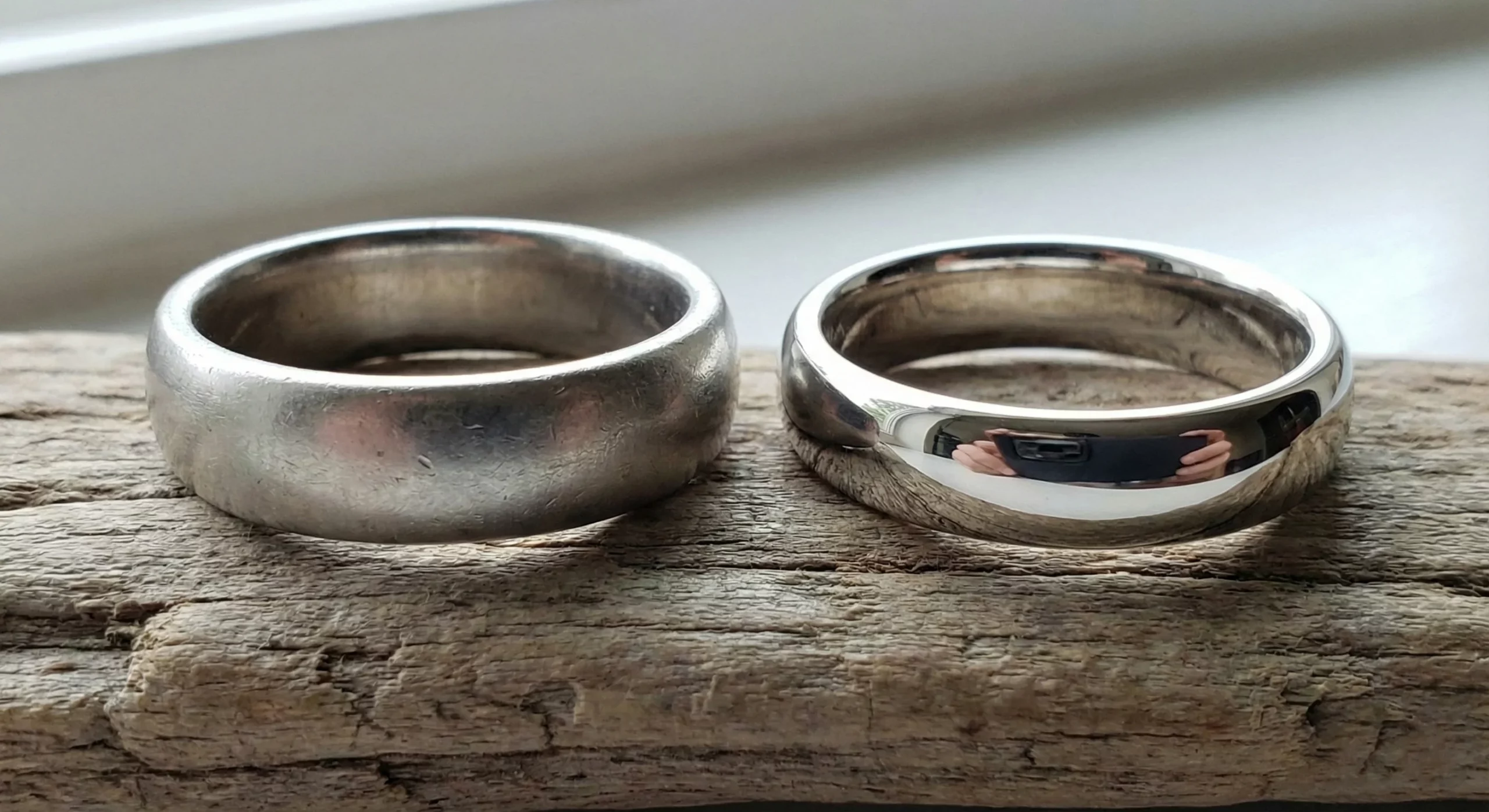
Platinum scratches more easily, but here is the key point: it is displaced rather than removed. The metal pushes aside into a tiny ridge instead of flaking away. A platinum ring loses almost no mass over decades, which is why platinum prongs are widely considered the most secure long-term way to hold a valuable stone. Platinum also work-hardens as it is worked and worn, and it does not become brittle with repeated repairs.
Patina: a feature or a flaw
Those thousands of tiny displaced scratches accumulate into a soft, satin sheen jewelers call patina. Some people love it — it reads as lived-in and antique, and it suits vintage-inspired and nature-inspired designs beautifully. Others prefer a mirror finish, in which case a polish every few years restores it completely. Either way, the colour never changes: platinum that has never been polished is still exactly as white as the day it was made.
Maintenance and Long-Term Cost
The purchase price is not the whole picture. White gold carries a recurring cost that platinum does not.
| White gold | Platinum | |
|---|---|---|
| Colour over time | Warms as rhodium wears | Never changes |
| Required upkeep | Re-plating every 1–2 years | Optional polish every few years |
| Typical upkeep cost | $50–$120 per re-plating | $40–$80 per polish, if wanted |
| Cost over 10 years | Roughly $300–$700 in re-plating | Often $0–$200 |
| Metal loss with wear | Gradual thinning | Negligible |
| Prong security long-term | Good; re-tipping eventually needed | Excellent |
| Resizing & repair | Straightforward, most jewelers | Requires specialist equipment and skill |
| Skin sensitivity | Depends on alloy — ask for nickel-free | Hypoallergenic |
Over a lifetime the gap narrows considerably. Platinum’s premium is paid once; white gold’s is paid in instalments. If you know you will not keep up with re-plating appointments, that is a genuine argument for platinum — a neglected white gold ring simply turns warm, while a neglected platinum ring just looks softly matte.
Why Platinum Costs More
- Density. The same ring design requires substantially more grams of metal in platinum.
- Purity. You are buying 95% precious metal rather than 58% or 75%.
- Workmanship. Platinum melts at a much higher temperature and behaves differently on the bench. It requires dedicated tools, separate polishing wheels to avoid contamination, and a more experienced setter — all of which raise labour cost.
- Waste and recovery. Platinum filings and scrap are harder to recycle in-house, so more of the metal cost is absorbed into the piece.
In practice, expect a platinum version of the same design to cost roughly 30–60% more than 14k white gold, with the gap widest on heavy or wide bands. For context on how gold karat affects price, see 14k vs. 18k Gold.
Allergies and Sensitive Skin
Platinum is the safest choice available. At 95% purity with platinum-group alloys, there is essentially nothing in it that commonly triggers contact dermatitis.
White gold depends entirely on its recipe. Nickel-alloyed white gold is a known allergen — the European Union restricts nickel release in prolonged skin contact to 0.5 µg/cm² per week for exactly this reason. Modern palladium-based white gold contains no nickel and is well tolerated by most people. Note also that a fresh rhodium layer acts as a barrier, so a nickel reaction sometimes appears only once the plating has worn through. If you have a known metal sensitivity, ask specifically what the white alloy contains.
Which Suits Which Ring Style?
- Delicate solitaires and thin bands: platinum’s strength lets a very fine band and slender prongs hold a large stone securely for decades.
- Micro-pavé and halo settings: platinum holds tiny stones exceptionally well, though many jewelers execute pavé beautifully in white gold too. If in white gold, expect re-plating to be more fiddly around the small stones.
- Vintage and Art Deco designs: platinum is the historically authentic choice — the great Deco pieces were made in it — and it takes fine millegrain and filigree superbly.
- Nature-inspired, textured and organic designs: both work, but a matte or hammered white gold surface hides plating wear better than a high polish does.
- Wide or heavy men’s bands: white gold keeps the weight and the price manageable; platinum can feel very substantial.
Matching a Wedding Band
You can wear platinum and white gold together, and plenty of people do — visually they are near enough identical. The practical caveat is that the harder white gold band will slowly abrade the softer platinum one where they sit against each other. If the two rings will be worn touching every day, matching metals is the lower-maintenance route. Our guide to engagement rings vs. wedding bands vs. eternity rings covers how the pieces are meant to work together.
The Verdict
Choose white gold if:
- Budget matters and you would rather put the difference into the centre stone
- You love a bright, mirror-white finish and do not mind a maintenance appointment every year or two
- You prefer a lighter ring on the finger
- Your design has crisp engraving or fine detail that benefits from a harder metal
Choose platinum if:
- You want a ring you can genuinely forget about — no plating, no colour change
- You have sensitive skin or a known nickel allergy
- You are setting a significant diamond and want the most secure long-term prongs
- You like the weight, or you like the way patina ages
- You are buying a piece intended to be passed down
Frequently Asked Questions
Is platinum worth the extra money?
If you value zero maintenance, maximum stone security and a metal that never changes colour, yes. If you are comfortable with a re-plating appointment every year or two, white gold gives you the same look today for meaningfully less, and the savings can buy a better diamond.
Can you tell platinum and white gold apart by looking?
When both are freshly polished, essentially no. Over time platinum develops a soft satin patina while white gold warms toward yellow — at that point the difference becomes obvious. Look for the hallmark: PT950 or PLAT versus 14K/585 or 18K/750.
Does platinum scratch more than white gold?
Yes, it scratches more easily — but it loses almost no metal doing so. White gold resists scratching better yet thins over the years. Different kinds of durability, not different amounts.
Does platinum ever turn yellow?
No. Platinum is white throughout, so there is no plating to wear off and no warmer metal underneath. It can look duller as patina develops, which a polish resolves.
Which is better for a very thin or delicate band?
Platinum. Its density and resistance to metal loss let a jeweler make a finer band and slimmer prongs that will still be strong in twenty years.
Is platinum harder to resize?
It requires higher temperatures, specialist tools and a jeweler experienced with the metal, so it usually costs more and takes a little longer. It is entirely routine at a workshop set up for it.
Which holds resale value better?
Both are recycled for their metal content, and platinum’s higher purity generally means more recoverable value per gram. In practice the design, condition and centre stone drive resale far more than the metal choice.
Making the Choice
There is no wrong answer in the white gold vs. platinum debate — only a better fit for how you live. If you want a ring that stays white forever and never needs an appointment, platinum earns its premium. If you want the same look today at a lower price and are happy with occasional upkeep, white gold is a beautiful and entirely legitimate choice.
Every Camellia Jewelry ring is handcrafted to order in your choice of metal, so you can see the same design costed in 14k white gold, 18k white gold or platinum before you decide. Browse our engagement ring collection, our vintage-inspired designs, or read Why Is My White Gold Turning Yellow? to understand the maintenance side in full.
Sources and further reading: Platinum Guild International; World Gold Council — About gold jewellery; ECHA — Substances restricted under REACH (nickel release).