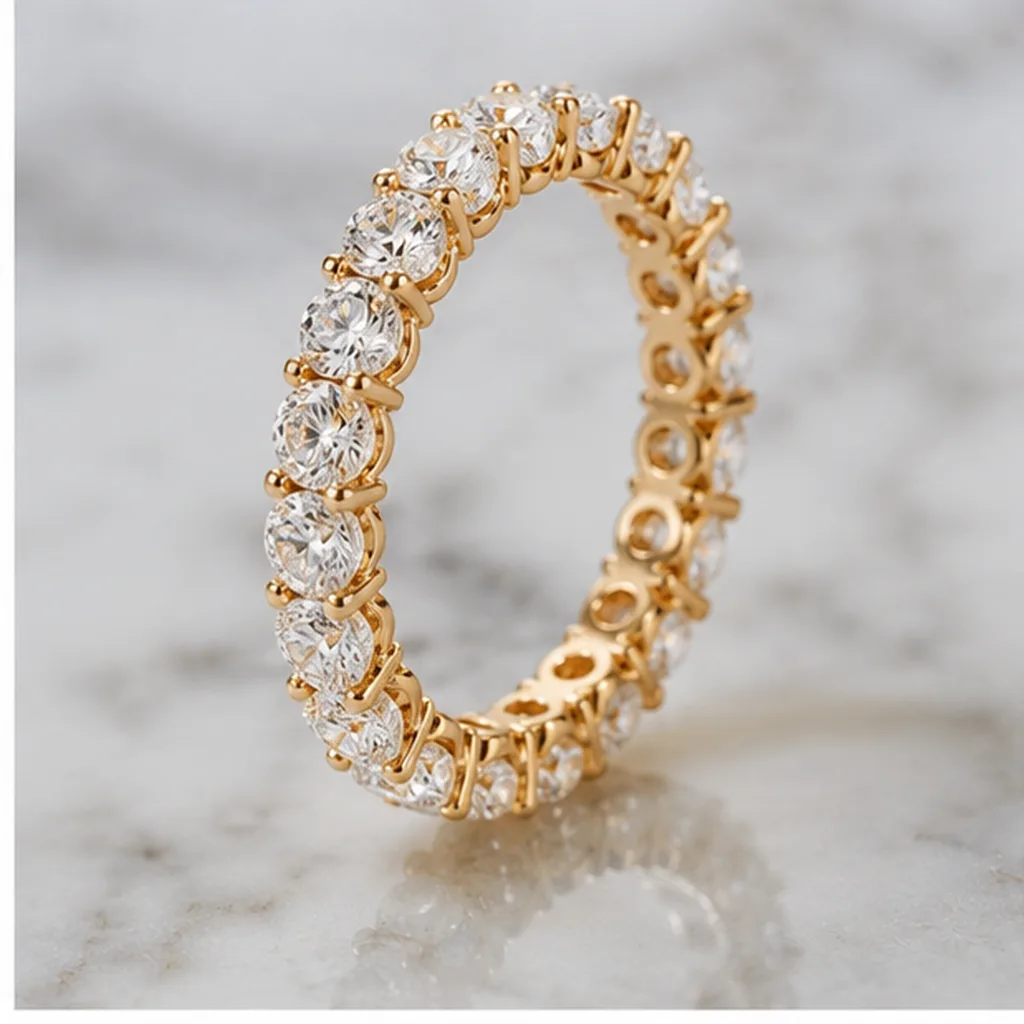


14k vs 18k Gold: Which is Better for Your Jewelry?
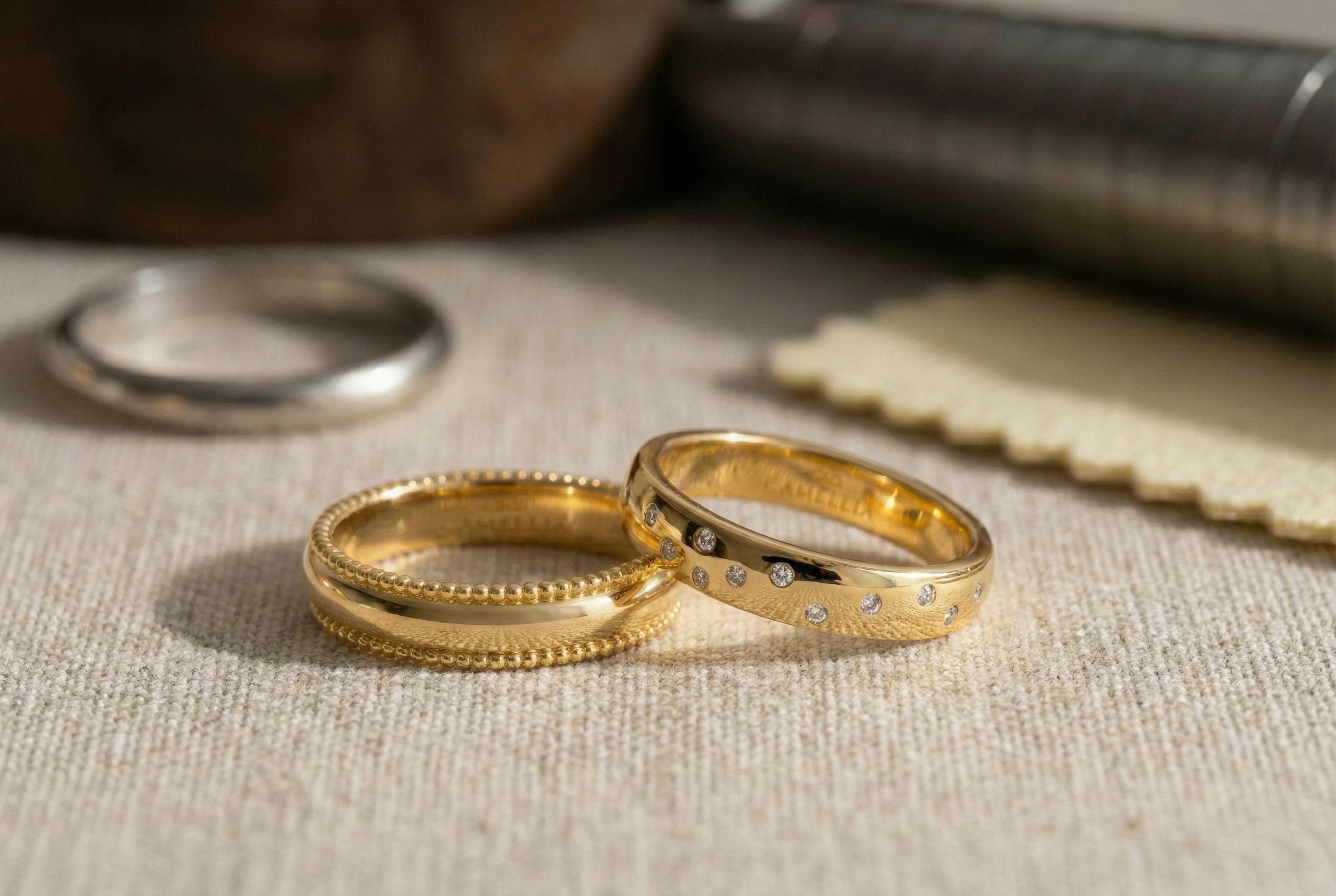
Choosing between 14k vs 18k gold is usually the first real decision you face when buying fine jewelry — and it is the one that trips up the most people. The instinct is simple: a higher number must be better. In practice, the higher karat is better at some things and measurably worse at others, and the right answer depends on your lifestyle, your skin, the colour of gold you love and how the piece will be worn.
This guide breaks down what actually changes between the two alloys: composition, hardness, colour, allergy risk, price and resale value — so you can choose with confidence rather than by number alone.
14k vs 18k Gold: The Short Answer
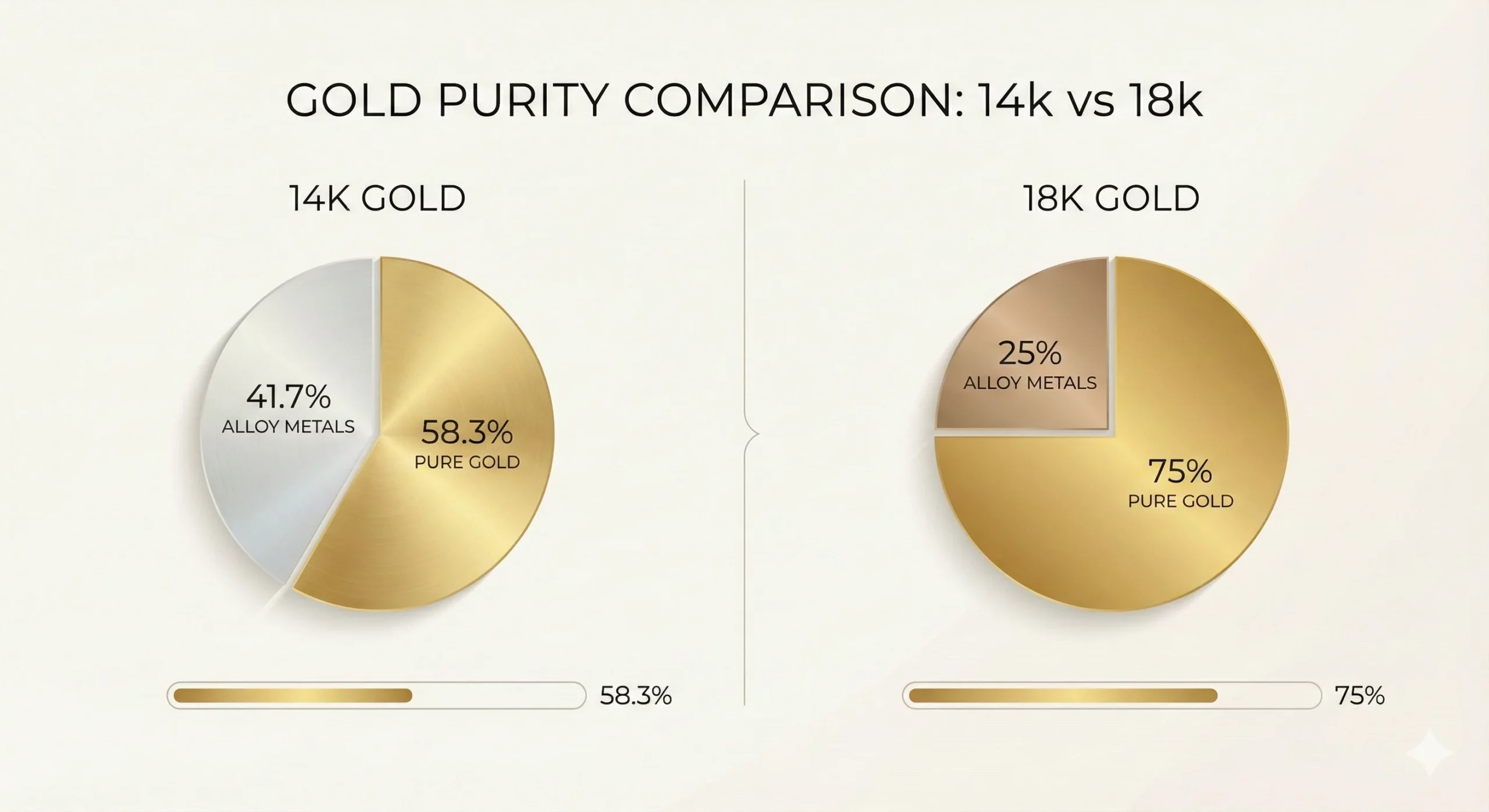
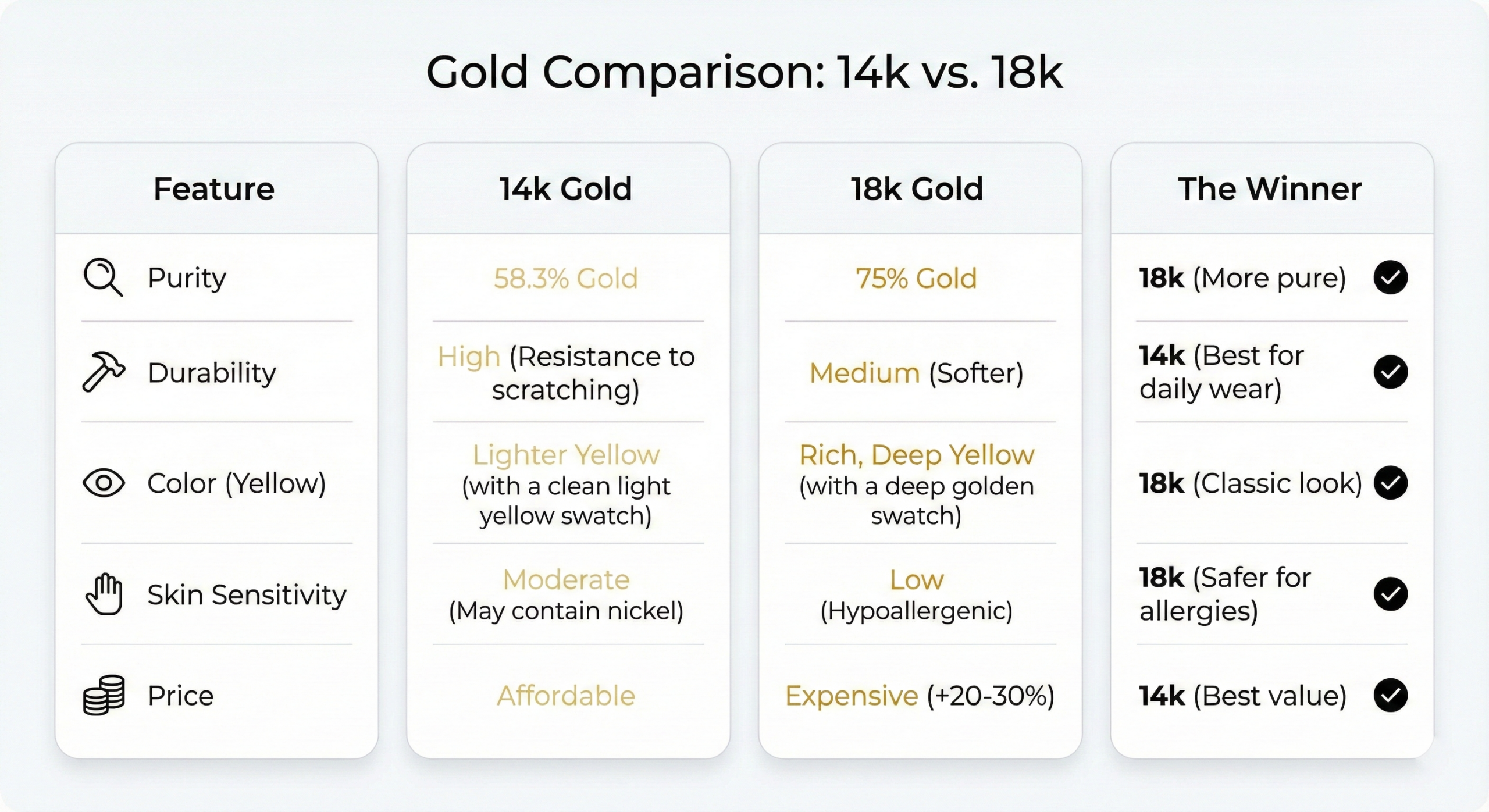
18k gold is 75% pure gold, giving it a richer colour and a lower risk of skin reactions. 14k gold is 58.3% pure gold, which makes it noticeably harder, more scratch-resistant and roughly 25–35% less expensive. For a ring worn every day, 14k is usually the more practical choice; for colour, purity and sensitive skin, 18k wins.
What Karat Actually Measures
Karat (spelled karat for purity, carat for gemstone weight) describes how much of an alloy is pure gold, expressed in twenty-fourths. Pure gold is 24k.
- 24k gold: 99.9% pure — far too soft for jewelry that is worn.
- 18k gold: 75% pure gold, 25% alloy metals. Stamped 18K or 750.
- 14k gold: 58.3% pure gold, 41.7% alloy metals. Stamped 14K or 585.
- 10k gold: 41.7% pure gold — the legal minimum to be called “gold” in the United States.
The remaining percentage is a deliberate recipe of copper, silver, zinc, nickel or palladium. That recipe is what gives gold its colour and its working properties — and it is the reason two rings that both say “gold” can behave completely differently on your finger.
| Karat | Pure gold | European fineness mark | Typical use |
|---|---|---|---|
| 24k | 99.9% | 999 | Bullion, ceremonial pieces |
| 22k | 91.7% | 916 | Traditional South Asian & Middle Eastern jewelry |
| 18k | 75.0% | 750 | Fine and luxury jewelry, European standard |
| 14k | 58.3% | 585 | Everyday fine jewelry, US bridal standard |
| 10k | 41.7% | 417 | Budget and fashion jewelry |
In the United States, the Federal Trade Commission’s Jewelry Guides require the karat fineness to appear immediately before the word “Gold” with equal prominence — which is why a legitimate piece is always marked “14K Gold” rather than simply “Gold”. You can read more about global gold standards at the World Gold Council.
Durability: Why the Lower Karat Is Tougher
This is the part that surprises people. Because 14k gold contains more alloy metal, it is significantly harder than 18k gold. Hardness translates directly into everyday resilience: 14k resists scratching, holds a crisp edge on engraved or milgrain detail, and is far less prone to the slow bending that turns a round shank into an oval.
Softness is not the same as fragility — an 18k ring will not break — but it does mark more easily and thin faster in the places that rub against a desk, a steering wheel or a kettlebell. It also means prongs in 18k need checking a little more often, especially on a ring worn 24 hours a day.
Choose 14k if you work with your hands, lift weights, rarely take the ring off, or want the crispest possible detail in a vintage-style or nature-inspired design.
Colour: Can You Actually See the Difference?
It depends entirely on which colour of gold you choose.
Yellow Gold — a clear difference
18k yellow gold has a deep, warm, buttery tone that reads as unmistakably “gold” across a room. 14k yellow gold is lighter and slightly cooler, closer to a soft honey. Side by side the difference is obvious; alone on a hand it is subtle. If the rich, saturated look of traditional gold is what you picture, 18k is worth the premium.
White Gold — virtually identical
Both 14k and 18k white gold are finished with a layer of rhodium, which is what creates that bright, icy white. Since you are looking at the rhodium rather than the gold beneath it, the two are nearly indistinguishable when new. This makes 14k the sensible choice in white gold: you get the harder metal and pay less, with no visible compromise. When the plating eventually wears, 14k white gold reveals a slightly greyer tone and 18k a slightly warmer one — see Why Is My White Gold Turning Yellow? for the full explanation.
Rose Gold — a subtle difference
Rose gold gets its colour from copper. Because 14k has more room for alloy, 14k rose gold is pinker and more coppery, while 18k rose gold is softer and peachier. Many people prefer 14k here precisely because the colour is stronger — and the extra copper also makes 14k rose gold the hardest of the common gold alloys.
Skin Sensitivity and Nickel
If you have reacted to costume jewelry or a watch back, this section matters more than price. Nickel is one of the most common contact allergens in the world, and it has traditionally been used to whiten and harden white gold.
Because 14k contains roughly 42% alloy metals versus 25% in 18k, a nickel-bearing 14k alloy can release more nickel against the skin. That is why 18k is generally the safer choice for sensitive skin.
The more important question, though, is not the karat but the recipe. In the European Union, REACH restricts nickel release from items in prolonged skin contact to 0.5 µg/cm² per week (and 0.2 µg/cm² per week for piercing posts). Many quality manufacturers — including us — now use palladium-based white gold, which contains no nickel at all. If you know you are nickel-sensitive, ask specifically for a nickel-free or palladium white gold alloy, or move to platinum, rather than relying on karat alone.
Price: How Much More Does 18k Cost?
An 18k piece contains about 29% more pure gold than the same piece in 14k, so the metal cost rises accordingly. In finished jewelry the difference typically lands somewhere between 25% and 40%, depending on how much metal the design uses. A delicate solitaire band shows a small difference; a wide, heavy signet or a substantial nature-inspired ring shows a large one.
It is worth putting that in context. On a bridal purchase, the metal is rarely the biggest line item — the centre stone usually is. Many buyers choose 14k for the setting specifically to move budget into a better diamond, which is almost always the more visible upgrade.
| Priority | Better choice | Why |
|---|---|---|
| Everyday durability | 14k | Harder alloy, resists scratches and bending |
| Richest yellow colour | 18k | 75% gold gives a deeper, warmer tone |
| Sensitive skin | 18k (ideally palladium white) | Fewer base metals, lower nickel exposure |
| Best value per dollar | 14k | 25–40% less for the same design |
| White gold specifically | 14k | Rhodium finish makes the two look the same |
| Rose gold with strong colour | 14k | More copper produces a pinker hue |
| Long-term metal value | 18k | More pure gold content per gram |
| Fine engraving & milgrain | 14k | Holds crisp detail longer under wear |
Resale and Intrinsic Value
Gram for gram, 18k is worth more as metal because it simply contains more gold. If you think of jewelry partly as a store of value, that is a genuine argument for 18k. In reality, though, the resale value of a finished piece of fine jewelry is driven far more by design, brand, condition and the quality of its stones than by the karat of the metal. Buying 18k purely as an investment rarely works out; buying it because you love the colour almost always does.
Which Should You Choose for an Engagement Ring?
Choose 14k gold if:
- The ring will be worn every single day, including at work and at the gym
- You want white gold — the visual difference is negligible
- You want a strong, pink rose gold
- You would rather put the savings toward a larger or better-quality centre stone
- Your design has fine engraving, milgrain or delicate botanical detail
Choose 18k gold if:
- You love the deep, saturated colour of classic yellow gold
- You have known metal sensitivities
- The piece is an occasion or heirloom item rather than a daily workhorse
- You value the higher pure-gold content and the European 750 standard
- You are pairing it with a high-value stone and want the finest possible materials throughout
Caring for Both
Both alloys respond to the same care: keep them away from chlorine and bleach, remove them before the gym and household cleaning, and clean them regularly with warm water and mild soap. Because 18k is softer, it benefits from a slightly gentler touch and a professional prong check roughly every six months. Our step-by-step guide to cleaning gold and diamond jewelry at home covers the safe method in detail.
Frequently Asked Questions
Is 18k gold worth the extra money?
For yellow gold, sensitive skin, or a piece you consider an heirloom — yes. For white gold, or for a ring that will take daily punishment, the extra cost buys colour and purity you may not see and durability you actively lose. Decide based on the colour you want and how the piece will live.
Does 14k gold tarnish or turn your finger green?
Solid 14k gold does not tarnish. Occasional green marks on skin come from the copper in the alloy reacting with acidic sweat, lotions or cleaning products — it is harmless, more common in humid climates, and usually resolved by cleaning the piece and keeping it away from chemicals.
Which is better for daily wear, 14k or 18k?
14k, in most cases. It is measurably harder, resists scratching and deformation better, and costs less to replace or repair. This is why 14k has become the default for American bridal jewelry.
Can you tell 14k and 18k apart just by looking?
In yellow gold, usually yes when they are side by side. In white gold, essentially never, because both are rhodium-plated. In rose gold, the difference is a subtle shift in how pink the metal reads.
Is 18k gold hypoallergenic?
Not automatically, but it is lower risk. Hypoallergenic depends on whether the alloy contains nickel, not on the karat. A nickel-free 14k palladium white gold can be gentler on the skin than a nickel-bearing 18k. Always ask what the white alloy is made of.
Can I mix 14k and 18k in a stacked set?
Yes, and many people do. Be aware that the harder 14k band will slowly wear the softer 18k one where they rub, so expect the 18k piece to need refinishing sooner. Matching karats in a stacking set is the lower-maintenance option.
The Verdict
There is no universally “better” karat — only a better fit. 14k gold is the pragmatic choice: harder, more affordable and visually identical in white gold. 18k gold is the luxurious one: purer, warmer in colour and kinder to sensitive skin. Decide which of those qualities you will notice every day, and the choice makes itself.
At Camellia Jewelry every ring is handcrafted to order, so you can choose 14k or 18k in yellow, white or rose gold on almost any design. Browse our handcrafted engagement rings, explore vintage-inspired styles, or read White Gold vs. Platinum if you are weighing a precious-metal upgrade.