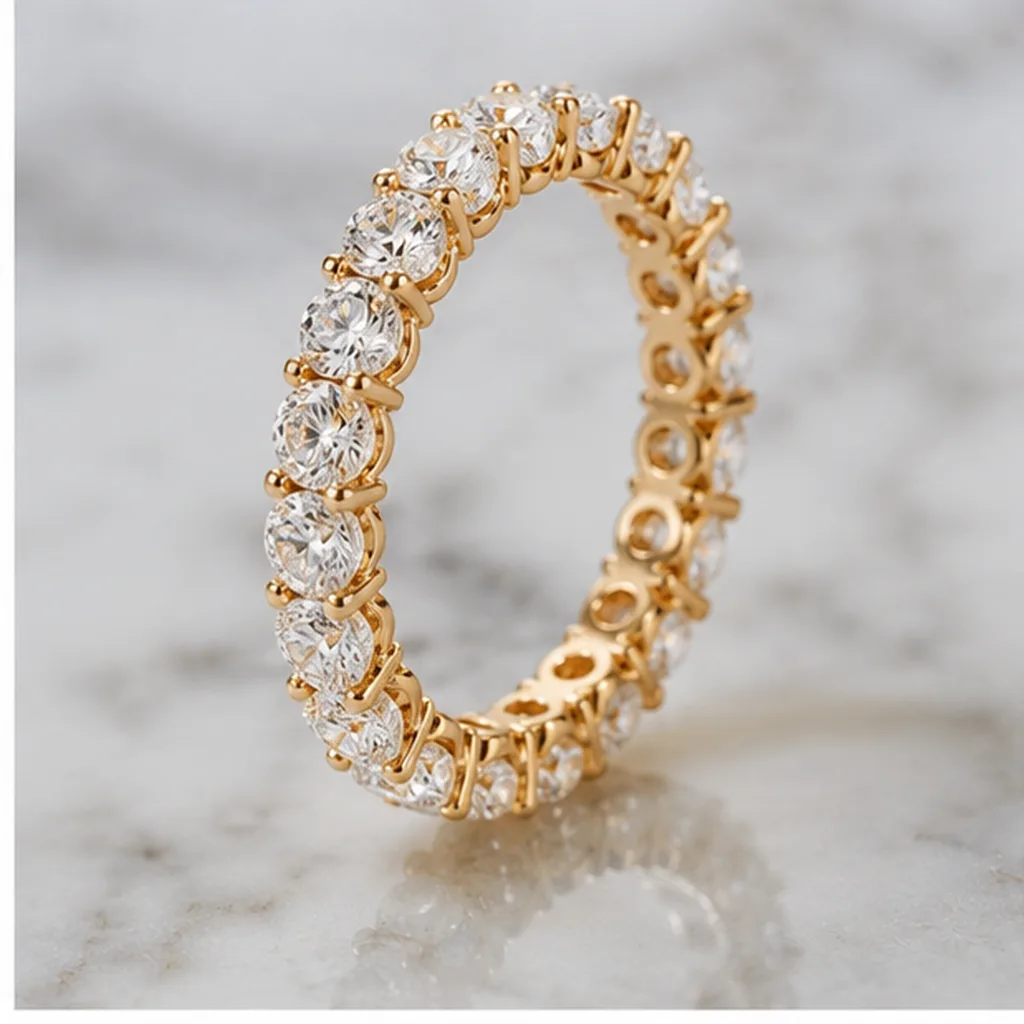


Natural vs. Lab-Grown Diamonds: What’s the Real Difference?
The question comes up in almost every engagement ring conversation now: natural vs. lab-grown diamonds — what is the real difference, and does it matter? The short version is that the difference is one of origin, not of substance. Everything else — price, value over time, availability and how the trade treats them — follows from that single fact.
This guide covers what each one is, how they are made and graded, what they actually cost, what happens to their value, and how to decide which belongs in your ring.
Natural vs. Lab-Grown Diamonds: The Short Answer
- Are lab-grown diamonds real? Yes. Both are pure crystallised carbon with identical chemical, physical and optical properties.
- Do they look different? No. Not to the eye, not under a loupe, and not to a standard diamond tester.
- Price: Lab-grown diamonds typically cost 70–90% less than a comparable natural diamond, and the gap has continued to widen.
- Value over time: Natural diamonds retain a portion of their value; lab-grown diamonds currently have very little resale value.
- The trade-off: Size and quality today versus scarcity and retained value tomorrow.
Are Lab-Grown Diamonds Real Diamonds?
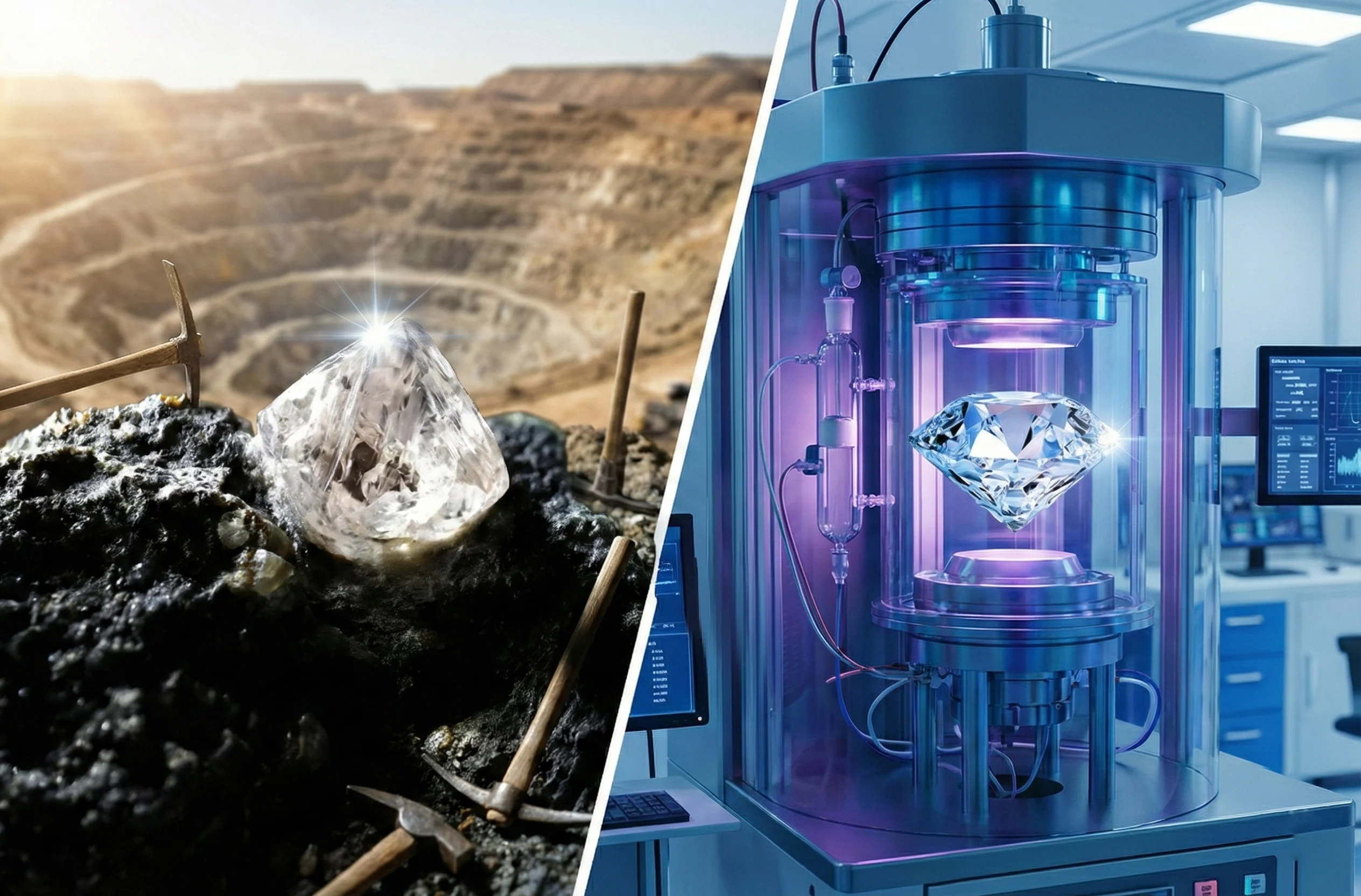
Yes. A lab-grown diamond is a real diamond — it has the same chemical composition, crystal structure, hardness and light performance as a mined diamond. The only difference is that it crystallised in a growth chamber over a few weeks rather than in the Earth’s mantle over hundreds of millions of years.
This is not marketing language; it is the legal position. Under the US Federal Trade Commission’s Jewelry Guides (16 CFR Part 23), laboratory-created diamonds may be described as diamonds, provided the description is accompanied by a clear disclosure such as “laboratory-created”, “laboratory-grown” or “[manufacturer]-created” so that no buyer could mistake the stone for a mined one.
What this means in practice: any reputable seller must tell you which you are buying, in plain language, on the invoice and the grading report. If a listing is ambiguous about origin, that is a reason to walk away — not a bargain.
Is There Any Physical Difference?
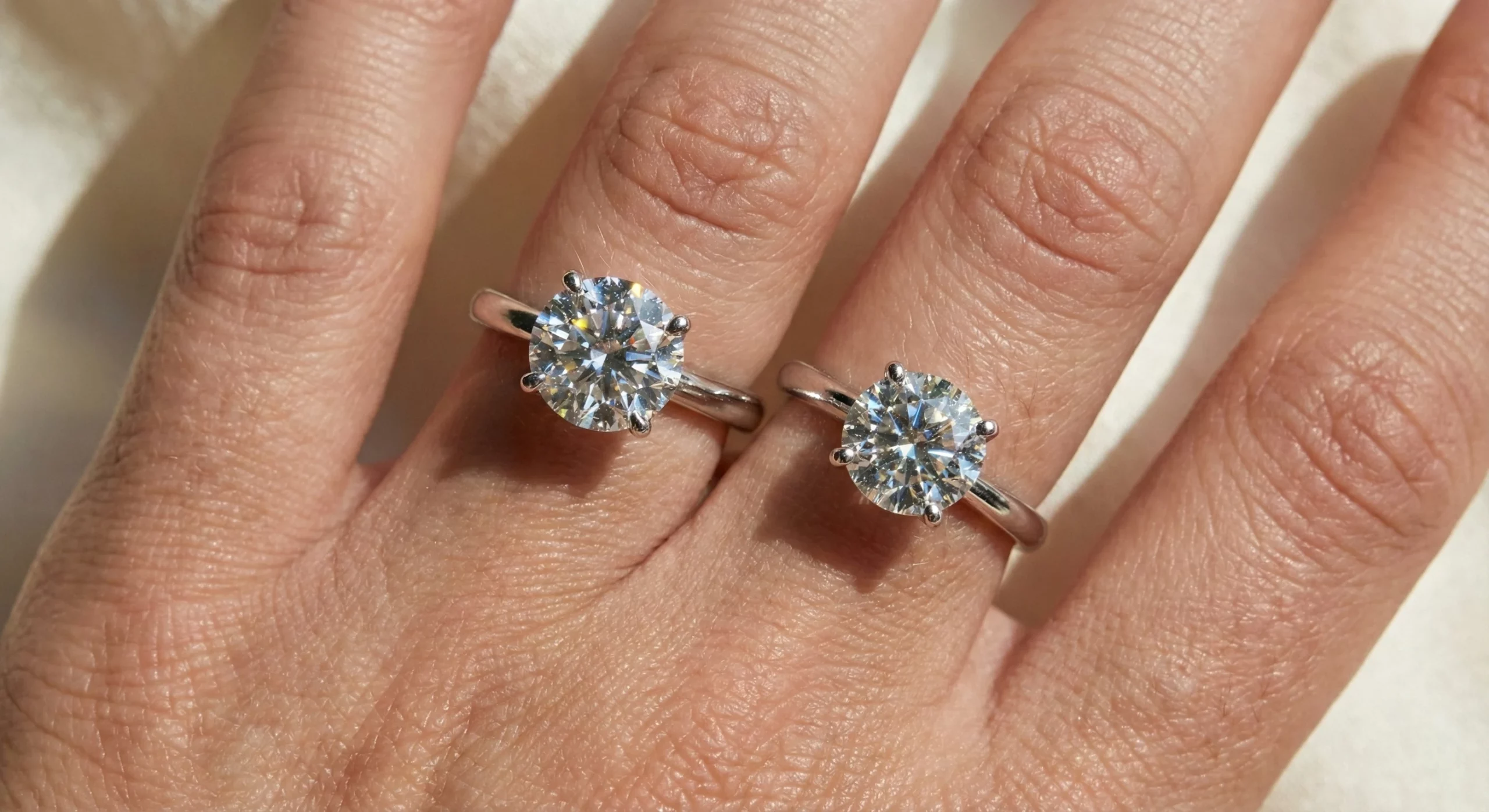
Chemically and structurally, no. Both score 10 on the Mohs scale, share the same refractive index of about 2.42, and disperse light into the same fire. Placed side by side, they are indistinguishable to the naked eye — and a lab-grown stone is exactly as suitable for daily wear in an engagement ring as a natural one.
The differences are microscopic and forensic. Natural diamonds often contain mineral inclusions formed in the Earth; lab-grown stones may show trace metallic flux inclusions (HPHT) or particular growth striations (CVD), along with different fluorescence and phosphorescence patterns. None of this is visible to a buyer, and none of it affects beauty or durability.
How Lab-Grown Diamonds Are Made
Two technologies dominate, and the method affects cost far more than it affects the finished stone.
| HPHT | CVD | |
|---|---|---|
| Full name | High Pressure, High Temperature | Chemical Vapour Deposition |
| Process | Replicates mantle conditions — carbon dissolved in molten metal crystallises on a seed under extreme pressure | Carbon-rich gas is broken down in a vacuum chamber and deposited layer by layer onto a seed plate |
| Typical growth time | Days to a few weeks | Two to four weeks |
| Common characteristics | May show metallic inclusions; sometimes magnetic | May show growth striations; often post-growth treated to improve colour |
| Best known for | Fancy coloured stones, smaller sizes | Large, high-clarity colourless stones |
Can a Jeweler Tell the Difference?
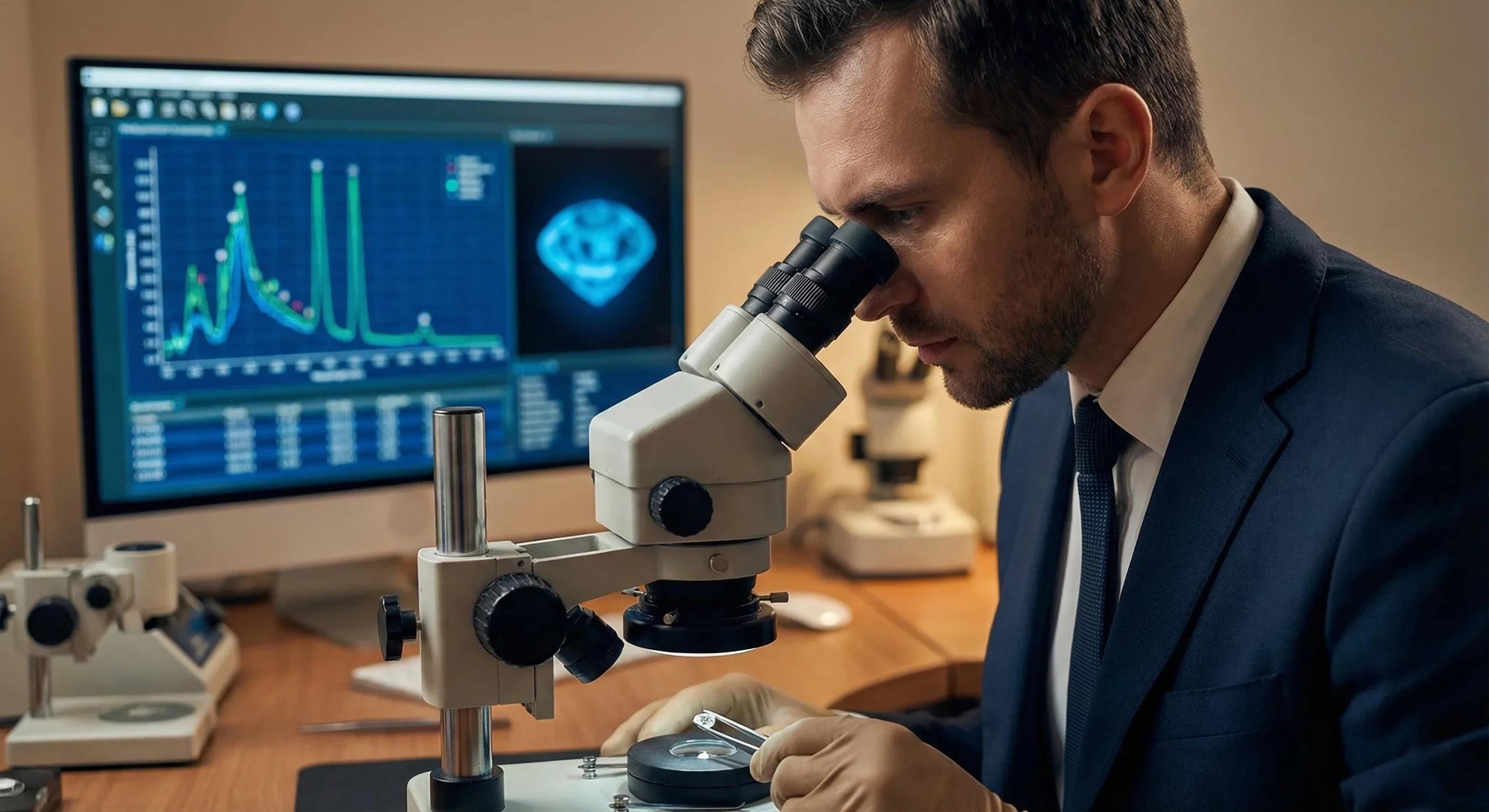
Not by looking. A standard thermal diamond tester measures thermal conductivity, and because a lab-grown diamond is a diamond, it reads “diamond”. A 10x loupe will not reveal the origin either.
Identification requires laboratory instruments — spectroscopy and specialised screening equipment that detect trace nitrogen patterns, strain and fluorescence signatures. Major labs including GIA and IGI run exactly this equipment, which is why an independent grading report is the only reliable proof of origin.
Grading Reports: What to Insist On
Buy the report, not the sales pitch. Whichever type of stone you choose:
- Ask for an independent report from GIA or IGI. In-house or “appraisal certificates” from the seller are not the same thing.
- Check the origin line. A GIA Laboratory-Grown Diamond Report states the growth method and that the stone is laboratory-grown.
- Look for the laser inscription. Most lab-grown stones are inscribed on the girdle with the report number and the words “laboratory-grown”. Ask to see it under magnification.
- Compare like with like. Grading standards can differ between laboratories, so a G/VS2 from one lab is not always identical to a G/VS2 from another. Judge the stone in person as well as on paper.
Price: How Much Do You Actually Save?
Lab-grown diamonds generally sell for 70–90% less than a comparable natural stone, and in larger sizes the gap is wider still. Production capacity has expanded enormously and growing costs have fallen, which has pushed wholesale prices down year after year.
In practical terms, a budget that buys a well-cut natural diamond of roughly one carat will often buy a lab-grown stone of two carats or more at a similar or better clarity and colour grade. That is a real, visible difference on the hand — and it is the single biggest reason lab-grown has taken so much of the bridal market.
There is a second way to spend the saving: upgrade everything else. A better cut grade, a more substantial setting, or a move from 14k gold to platinum. If you are weighing that, our guides to 14k vs. 18k gold and white gold vs. platinum explain where that money shows.
Resale and Long-Term Value
This is the honest catch, and it deserves to be stated plainly. Lab-grown diamonds currently have very little resale value.
A natural diamond is a finite good; supply is limited by geology. A lab-grown diamond is a manufactured product, and manufactured products get cheaper as production scales and technology improves. A stone bought today competes on the second-hand market against a newer, cheaper equivalent tomorrow. Natural diamonds are not investments either — retail markup means most resell well below purchase price — but they do retain a meaningful floor that lab-grown stones do not.
Practical consequences worth knowing:
- Upgrade or trade-in programmes are far more common and more generous for natural stones. Ask before you buy if this matters to you.
- Insurance replacement values for lab-grown stones should be reviewed periodically, since replacement cost falls over time.
- If a piece is intended to be inherited, that is an argument for natural — not because lab-grown is inferior, but because scarcity is what holds value across generations.
Quick Comparison
| Feature | Natural diamond | Lab-grown diamond |
|---|---|---|
| Composition | Crystallised carbon — a real diamond | Crystallised carbon — a real diamond |
| Hardness | 10 on the Mohs scale | 10 on the Mohs scale |
| Origin | Formed in the Earth over geological time | Grown in a chamber in weeks |
| Appearance | Identical to the eye | Identical to the eye |
| Price | Full market price | Roughly 70–90% less |
| Size for the budget | Smaller | Substantially larger |
| Resale value | Retains a portion | Very low to none |
| Availability of large stones | Rare and expensive | Readily available |
| Grading report | GIA / IGI | GIA / IGI, marked laboratory-grown |
| Emotional appeal | Rarity, tradition, geological history | Modern, accessible, controllable origin |
What About Ethics and Sustainability?
This deserves a more careful answer than either side usually gives.
Lab-grown diamonds avoid mining entirely — no open pits, no tailings, no questions about the provenance of a rough stone. That is a genuine advantage. However, growing diamonds is energy-intensive, and the environmental footprint depends heavily on whether that energy comes from renewables or coal. Claims of “carbon neutral” or “sustainable” should be backed by third-party certification; the FTC has warned marketers on both sides against unsubstantiated environmental claims.
On the natural side, the Kimberley Process and modern chain-of-custody programmes have significantly changed the industry since the 1990s, and diamond mining is a major source of employment and public revenue in several countries. Neither option is unambiguously “the ethical one” — the responsible move is to buy from a seller who can tell you specifically where the stone came from and show the documentation.
Which Should You Choose?
Choose a lab-grown diamond if:
- Size and visual impact for your budget are the priority
- You want a higher colour and clarity grade than you could otherwise afford
- You are comfortable treating the ring as jewelry rather than as a store of value
- Avoiding mining matters to you personally
Choose a natural diamond if:
- The romance of a stone formed over a billion years is part of the meaning
- You want the piece to hold a portion of its value, or to be inherited
- You may want to use a trade-in or upgrade programme later
- Rarity itself is what you are buying
Frequently Asked Questions
Will a lab-grown diamond pass a diamond tester?
Yes. Standard thermal and electrical testers identify it as diamond, because it is diamond. Only specialised laboratory screening equipment distinguishes origin.
Do lab-grown diamonds get cloudy or lose their sparkle?
No. They do not degrade, discolour or cloud over. Like any diamond, they look dull when coated in skin oils and lotions — our guide to cleaning jewelry at home restores the sparkle in about ten minutes.
Are lab-grown diamonds cheaper because they are lower quality?
No. They are cheaper because supply is not constrained by geology. Lab-grown stones are available in the highest colour and clarity grades, often more easily than natural stones of the same grade.
Can you insure a lab-grown diamond?
Yes, on the same terms as any fine jewelry. Because replacement costs have been falling, it is worth reviewing the declared value every few years so you are neither under- nor over-insured.
Is a lab-grown diamond appropriate for an engagement ring?
Absolutely. It is a real diamond with identical hardness and light performance, and it will wear exactly as well over a lifetime. The decision is about value and meaning, not durability.
What is the difference between lab-grown diamonds and moissanite or cubic zirconia?
A large one. Moissanite is silicon carbide and cubic zirconia is zirconium dioxide — different materials, different hardness, different optical behaviour. A lab-grown diamond is chemically identical to a mined diamond; simulants are not diamonds at all.
Do lab-grown diamonds come with a certificate?
Reputable ones do. Look for a GIA or IGI laboratory-grown report and a matching laser inscription on the girdle.
The Bottom Line
Both are real diamonds. A lab-grown stone offers a bigger, brighter ring today for dramatically less money, with a transparent origin and no mining. A natural stone offers scarcity, tradition and a value floor that a manufactured product cannot match. Neither is a mistake — they are simply answers to different questions.
At Camellia Jewelry we set both, and every design can be made either way, so you can compare the same ring with a natural or a lab-grown centre stone before you commit. Explore our handcrafted engagement rings, our lab diamond engagement rings, or read about how our custom rings are made.
Sources and further reading: FTC Jewelry Guides, 16 CFR Part 23; GIA News & Research.