


Category: Technical Comparison
Natural vs. Lab-Grown Diamonds: What’s the Real Difference?
The question comes up in almost every engagement ring conversation now: natural vs. lab-grown diamonds — what is the real difference, and does it matter? The short version is that the difference is one of origin, not of substance. Everything else — price, value over time, availability and how the trade treats them — follows from that single fact.
This guide covers what each one is, how they are made and graded, what they actually cost, what happens to their value, and how to decide which belongs in your ring.
Natural vs. Lab-Grown Diamonds: The Short Answer
- Are lab-grown diamonds real? Yes. Both are pure crystallised carbon with identical chemical, physical and optical properties.
- Do they look different? No. Not to the eye, not under a loupe, and not to a standard diamond tester.
- Price: Lab-grown diamonds typically cost 70–90% less than a comparable natural diamond, and the gap has continued to widen.
- Value over time: Natural diamonds retain a portion of their value; lab-grown diamonds currently have very little resale value.
- The trade-off: Size and quality today versus scarcity and retained value tomorrow.

Are Lab-Grown Diamonds Real Diamonds?
Yes. A lab-grown diamond is a real diamond — it has the same chemical composition, crystal structure, hardness and light performance as a mined diamond. The only difference is that it crystallised in a growth chamber over a few weeks rather than in the Earth’s mantle over hundreds of millions of years.
This is not marketing language; it is the legal position. Under the US Federal Trade Commission’s Jewelry Guides (16 CFR Part 23), laboratory-created diamonds may be described as diamonds, provided the description is accompanied by a clear disclosure such as “laboratory-created”, “laboratory-grown” or “[manufacturer]-created” so that no buyer could mistake the stone for a mined one.
What this means in practice: any reputable seller must tell you which you are buying, in plain language, on the invoice and the grading report. If a listing is ambiguous about origin, that is a reason to walk away — not a bargain.
Is There Any Physical Difference?
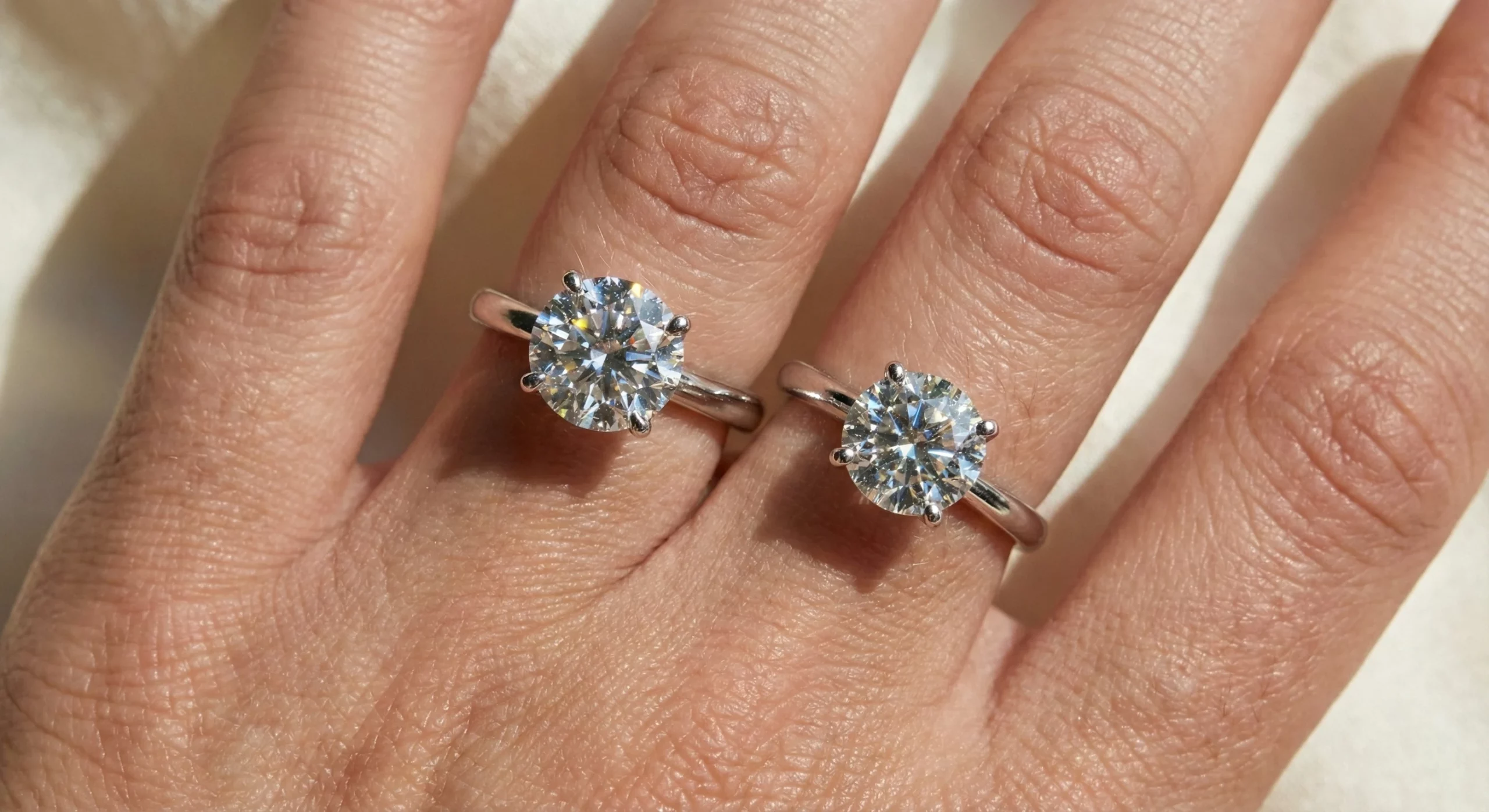
Chemically and structurally, no. Both score 10 on the Mohs scale, share the same refractive index of about 2.42, and disperse light into the same fire. Placed side by side, they are indistinguishable to the naked eye — and a lab-grown stone is exactly as suitable for daily wear in an engagement ring as a natural one.
The differences are microscopic and forensic. Natural diamonds often contain mineral inclusions formed in the Earth; lab-grown stones may show trace metallic flux inclusions (HPHT) or particular growth striations (CVD), along with different fluorescence and phosphorescence patterns. None of this is visible to a buyer, and none of it affects beauty or durability.
How Lab-Grown Diamonds Are Made
Two technologies dominate, and the method affects cost far more than it affects the finished stone.
| HPHT | CVD | |
|---|---|---|
| Full name | High Pressure, High Temperature | Chemical Vapour Deposition |
| Process | Replicates mantle conditions — carbon dissolved in molten metal crystallises on a seed under extreme pressure | Carbon-rich gas is broken down in a vacuum chamber and deposited layer by layer onto a seed plate |
| Typical growth time | Days to a few weeks | Two to four weeks |
| Common characteristics | May show metallic inclusions; sometimes magnetic | May show growth striations; often post-growth treated to improve colour |
| Best known for | Fancy coloured stones, smaller sizes | Large, high-clarity colourless stones |
Can a Jeweler Tell the Difference?
Not by looking. A standard thermal diamond tester measures thermal conductivity, and because a lab-grown diamond is a diamond, it reads “diamond”. A 10x loupe will not reveal the origin either.
Identification requires laboratory instruments — spectroscopy and specialised screening equipment that detect trace nitrogen patterns, strain and fluorescence signatures. Major labs including GIA and IGI run exactly this equipment, which is why an independent grading report is the only reliable proof of origin.

Grading Reports: What to Insist On
Buy the report, not the sales pitch. Whichever type of stone you choose:
- Ask for an independent report from GIA or IGI. In-house or “appraisal certificates” from the seller are not the same thing.
- Check the origin line. A GIA Laboratory-Grown Diamond Report states the growth method and that the stone is laboratory-grown.
- Look for the laser inscription. Most lab-grown stones are inscribed on the girdle with the report number and the words “laboratory-grown”. Ask to see it under magnification.
- Compare like with like. Grading standards can differ between laboratories, so a G/VS2 from one lab is not always identical to a G/VS2 from another. Judge the stone in person as well as on paper.
Price: How Much Do You Actually Save?
Lab-grown diamonds generally sell for 70–90% less than a comparable natural stone, and in larger sizes the gap is wider still. Production capacity has expanded enormously and growing costs have fallen, which has pushed wholesale prices down year after year.
In practical terms, a budget that buys a well-cut natural diamond of roughly one carat will often buy a lab-grown stone of two carats or more at a similar or better clarity and colour grade. That is a real, visible difference on the hand — and it is the single biggest reason lab-grown has taken so much of the bridal market.
There is a second way to spend the saving: upgrade everything else. A better cut grade, a more substantial setting, or a move from 14k gold to platinum. If you are weighing that, our guides to 14k vs. 18k gold and white gold vs. platinum explain where that money shows.
Resale and Long-Term Value
This is the honest catch, and it deserves to be stated plainly. Lab-grown diamonds currently have very little resale value.
A natural diamond is a finite good; supply is limited by geology. A lab-grown diamond is a manufactured product, and manufactured products get cheaper as production scales and technology improves. A stone bought today competes on the second-hand market against a newer, cheaper equivalent tomorrow. Natural diamonds are not investments either — retail markup means most resell well below purchase price — but they do retain a meaningful floor that lab-grown stones do not.
Practical consequences worth knowing:
- Upgrade or trade-in programmes are far more common and more generous for natural stones. Ask before you buy if this matters to you.
- Insurance replacement values for lab-grown stones should be reviewed periodically, since replacement cost falls over time.
- If a piece is intended to be inherited, that is an argument for natural — not because lab-grown is inferior, but because scarcity is what holds value across generations.
Quick Comparison
| Feature | Natural diamond | Lab-grown diamond |
|---|---|---|
| Composition | Crystallised carbon — a real diamond | Crystallised carbon — a real diamond |
| Hardness | 10 on the Mohs scale | 10 on the Mohs scale |
| Origin | Formed in the Earth over geological time | Grown in a chamber in weeks |
| Appearance | Identical to the eye | Identical to the eye |
| Price | Full market price | Roughly 70–90% less |
| Size for the budget | Smaller | Substantially larger |
| Resale value | Retains a portion | Very low to none |
| Availability of large stones | Rare and expensive | Readily available |
| Grading report | GIA / IGI | GIA / IGI, marked laboratory-grown |
| Emotional appeal | Rarity, tradition, geological history | Modern, accessible, controllable origin |
What About Ethics and Sustainability?
This deserves a more careful answer than either side usually gives.
Lab-grown diamonds avoid mining entirely — no open pits, no tailings, no questions about the provenance of a rough stone. That is a genuine advantage. However, growing diamonds is energy-intensive, and the environmental footprint depends heavily on whether that energy comes from renewables or coal. Claims of “carbon neutral” or “sustainable” should be backed by third-party certification; the FTC has warned marketers on both sides against unsubstantiated environmental claims.
On the natural side, the Kimberley Process and modern chain-of-custody programmes have significantly changed the industry since the 1990s, and diamond mining is a major source of employment and public revenue in several countries. Neither option is unambiguously “the ethical one” — the responsible move is to buy from a seller who can tell you specifically where the stone came from and show the documentation.
Which Should You Choose?
Choose a lab-grown diamond if:
- Size and visual impact for your budget are the priority
- You want a higher colour and clarity grade than you could otherwise afford
- You are comfortable treating the ring as jewelry rather than as a store of value
- Avoiding mining matters to you personally
Choose a natural diamond if:
- The romance of a stone formed over a billion years is part of the meaning
- You want the piece to hold a portion of its value, or to be inherited
- You may want to use a trade-in or upgrade programme later
- Rarity itself is what you are buying
Frequently Asked Questions
Will a lab-grown diamond pass a diamond tester?
Yes. Standard thermal and electrical testers identify it as diamond, because it is diamond. Only specialised laboratory screening equipment distinguishes origin.
Do lab-grown diamonds get cloudy or lose their sparkle?
No. They do not degrade, discolour or cloud over. Like any diamond, they look dull when coated in skin oils and lotions — our guide to cleaning jewelry at home restores the sparkle in about ten minutes.
Are lab-grown diamonds cheaper because they are lower quality?
No. They are cheaper because supply is not constrained by geology. Lab-grown stones are available in the highest colour and clarity grades, often more easily than natural stones of the same grade.
Can you insure a lab-grown diamond?
Yes, on the same terms as any fine jewelry. Because replacement costs have been falling, it is worth reviewing the declared value every few years so you are neither under- nor over-insured.
Is a lab-grown diamond appropriate for an engagement ring?
Absolutely. It is a real diamond with identical hardness and light performance, and it will wear exactly as well over a lifetime. The decision is about value and meaning, not durability.
What is the difference between lab-grown diamonds and moissanite or cubic zirconia?
A large one. Moissanite is silicon carbide and cubic zirconia is zirconium dioxide — different materials, different hardness, different optical behaviour. A lab-grown diamond is chemically identical to a mined diamond; simulants are not diamonds at all.
Do lab-grown diamonds come with a certificate?
Reputable ones do. Look for a GIA or IGI laboratory-grown report and a matching laser inscription on the girdle.
The Bottom Line
Both are real diamonds. A lab-grown stone offers a bigger, brighter ring today for dramatically less money, with a transparent origin and no mining. A natural stone offers scarcity, tradition and a value floor that a manufactured product cannot match. Neither is a mistake — they are simply answers to different questions.
At Camellia Jewelry we set both, and every design can be made either way, so you can compare the same ring with a natural or a lab-grown centre stone before you commit. Explore our handcrafted engagement rings, our lab diamond engagement rings, or read about how our custom rings are made.
Sources and further reading: FTC Jewelry Guides, 16 CFR Part 23; GIA News & Research.


White Gold vs. Platinum: Which is Best for Your Engagement Ring?
Deciding between white gold vs. platinum is one of the last — and most confusing — choices in buying an engagement ring. Sitting side by side in a showroom the two look almost identical: both are bright, silvery and cool-toned. So why does one often cost half as much again as the other?
The answer is that they only look the same on day one. Over five, ten and twenty years of daily wear they behave in completely different ways, need different maintenance and age into different finishes. Neither is objectively better. This guide explains exactly how they differ so you can choose the one that suits your hand, your habits and your budget.

White Gold vs. Platinum: The Short Answer
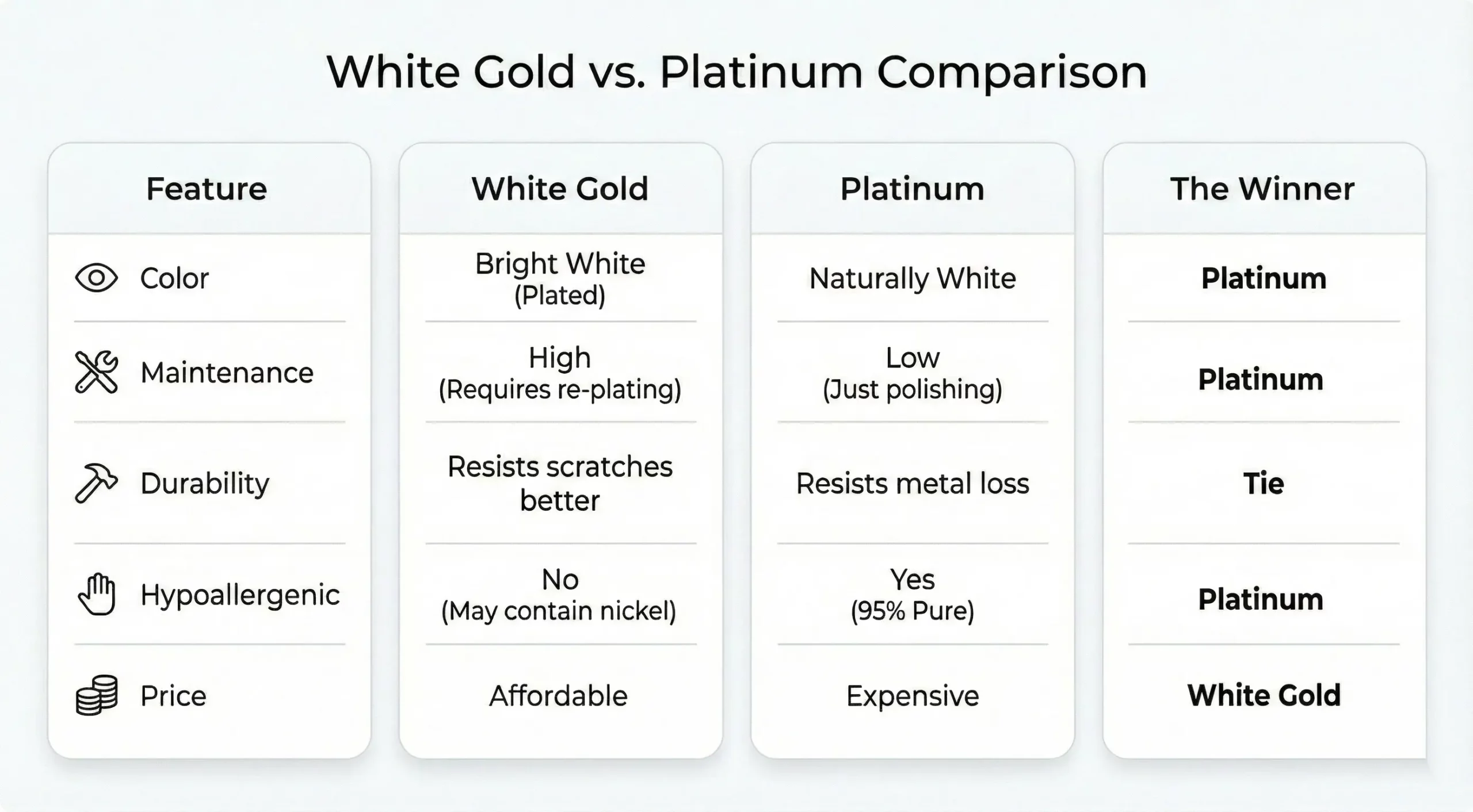
Platinum is a naturally white, dense precious metal used at about 95% purity; it never changes colour and needs no plating, but costs roughly 30–60% more. White gold is a gold alloy plated with rhodium to appear white; it is harder and more affordable, but the plating wears and needs renewing every one to two years.
Composition and Purity
Platinum is a naturally white metal, used in jewelry at very high purity — most commonly PT950, meaning 95% pure platinum with 5% of another platinum-group metal such as ruthenium, iridium or cobalt. Because so little alloy is present, platinum is genuinely hypoallergenic for almost everyone.
White gold is not a metal in its own right. It is yellow gold (58.3% in 14k, 75% in 18k) alloyed with white metals — palladium, silver, zinc and, in older or cheaper alloys, nickel. The resulting metal is a pale warm grey, so it is electroplated with a microscopically thin layer of rhodium to create the bright white finish you actually see.
That single structural difference — white all the way through versus white on the surface — drives almost every other difference between them.
Weight and Feel
Platinum is dramatically denser than gold. At roughly 21.4 g/cm³, it is about 60% heavier than 14k gold and around 40% heavier than 18k for an identical design. Pick up two identical rings and you can feel it instantly.
Whether that is a benefit is entirely personal. Many people read the weight as substance and quality. Others find a heavy ring tiring on a slim finger, or dislike it in a wide band. If you have never worn a platinum ring, it is worth trying one on before committing — it is the difference most people notice first and describe least accurately from photographs.
Durability: They Wear in Opposite Ways
This is the most misunderstood part of the comparison, because “harder” and “more durable” are not the same thing.
White gold: harder surface, but it loses metal
White gold, particularly 14k, is harder than platinum. It resists scratching better and holds crisp engraved detail well. But when gold does abrade, the metal is genuinely removed — a gold ring worn for thirty years is measurably lighter and thinner than it was when new. Prongs become slimmer over time and eventually need re-tipping.
Platinum: softer surface, but it keeps its metal
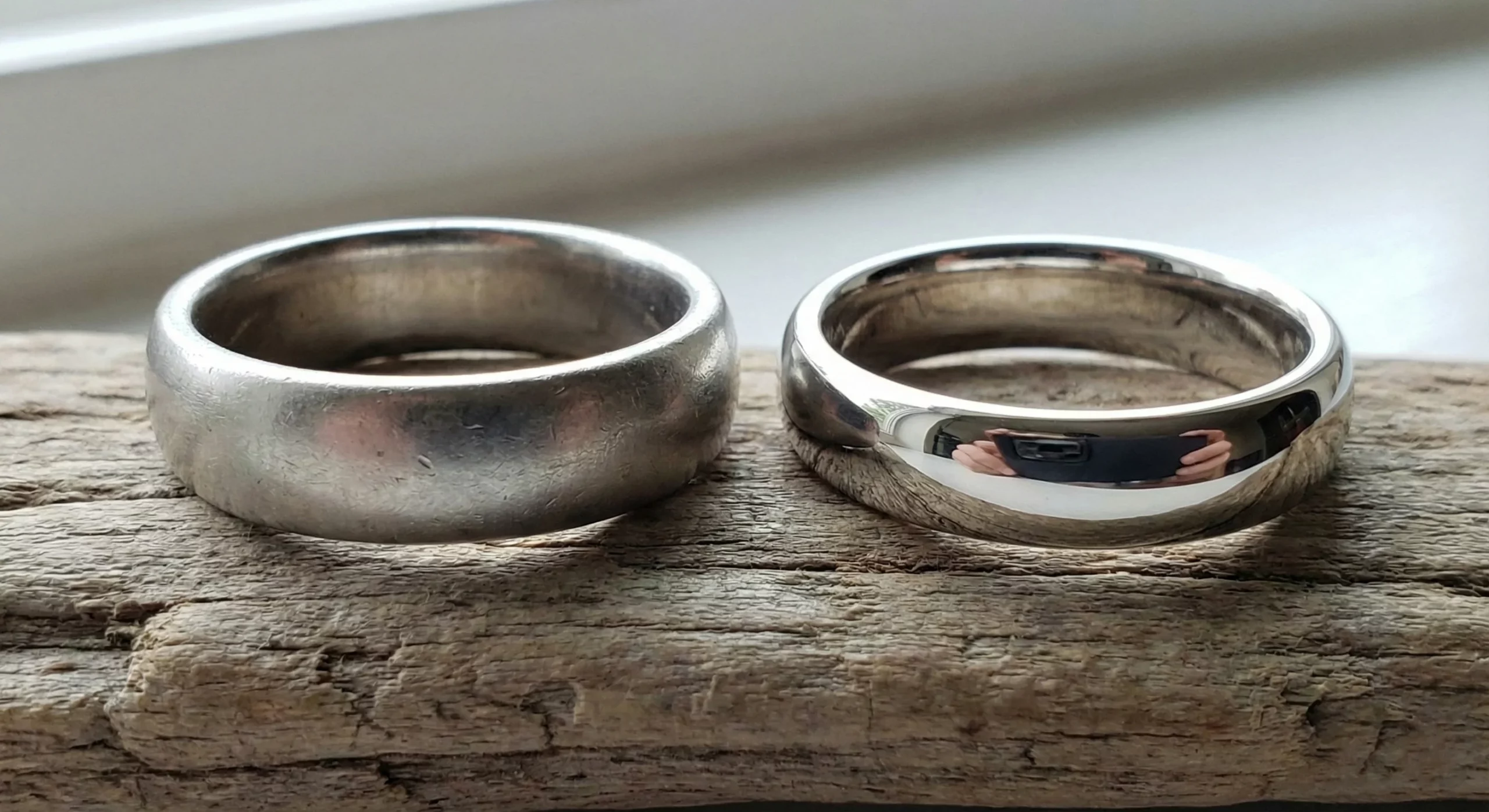
Platinum scratches more easily, but here is the key point: it is displaced rather than removed. The metal pushes aside into a tiny ridge instead of flaking away. A platinum ring loses almost no mass over decades, which is why platinum prongs are widely considered the most secure long-term way to hold a valuable stone. Platinum also work-hardens as it is worked and worn, and it does not become brittle with repeated repairs.
Patina: a feature or a flaw
Those thousands of tiny displaced scratches accumulate into a soft, satin sheen jewelers call patina. Some people love it — it reads as lived-in and antique, and it suits vintage-inspired and nature-inspired designs beautifully. Others prefer a mirror finish, in which case a polish every few years restores it completely. Either way, the colour never changes: platinum that has never been polished is still exactly as white as the day it was made.
Maintenance and Long-Term Cost
The purchase price is not the whole picture. White gold carries a recurring cost that platinum does not.
| White gold | Platinum | |
|---|---|---|
| Colour over time | Warms as rhodium wears | Never changes |
| Required upkeep | Re-plating every 1–2 years | Optional polish every few years |
| Typical upkeep cost | $50–$120 per re-plating | $40–$80 per polish, if wanted |
| Cost over 10 years | Roughly $300–$700 in re-plating | Often $0–$200 |
| Metal loss with wear | Gradual thinning | Negligible |
| Prong security long-term | Good; re-tipping eventually needed | Excellent |
| Resizing & repair | Straightforward, most jewelers | Requires specialist equipment and skill |
| Skin sensitivity | Depends on alloy — ask for nickel-free | Hypoallergenic |
Over a lifetime the gap narrows considerably. Platinum’s premium is paid once; white gold’s is paid in instalments. If you know you will not keep up with re-plating appointments, that is a genuine argument for platinum — a neglected white gold ring simply turns warm, while a neglected platinum ring just looks softly matte.
Why Platinum Costs More
- Density. The same ring design requires substantially more grams of metal in platinum.
- Purity. You are buying 95% precious metal rather than 58% or 75%.
- Workmanship. Platinum melts at a much higher temperature and behaves differently on the bench. It requires dedicated tools, separate polishing wheels to avoid contamination, and a more experienced setter — all of which raise labour cost.
- Waste and recovery. Platinum filings and scrap are harder to recycle in-house, so more of the metal cost is absorbed into the piece.
In practice, expect a platinum version of the same design to cost roughly 30–60% more than 14k white gold, with the gap widest on heavy or wide bands. For context on how gold karat affects price, see 14k vs. 18k Gold.
Allergies and Sensitive Skin
Platinum is the safest choice available. At 95% purity with platinum-group alloys, there is essentially nothing in it that commonly triggers contact dermatitis.
White gold depends entirely on its recipe. Nickel-alloyed white gold is a known allergen — the European Union restricts nickel release in prolonged skin contact to 0.5 µg/cm² per week for exactly this reason. Modern palladium-based white gold contains no nickel and is well tolerated by most people. Note also that a fresh rhodium layer acts as a barrier, so a nickel reaction sometimes appears only once the plating has worn through. If you have a known metal sensitivity, ask specifically what the white alloy contains.
Which Suits Which Ring Style?
- Delicate solitaires and thin bands: platinum’s strength lets a very fine band and slender prongs hold a large stone securely for decades.
- Micro-pavé and halo settings: platinum holds tiny stones exceptionally well, though many jewelers execute pavé beautifully in white gold too. If in white gold, expect re-plating to be more fiddly around the small stones.
- Vintage and Art Deco designs: platinum is the historically authentic choice — the great Deco pieces were made in it — and it takes fine millegrain and filigree superbly.
- Nature-inspired, textured and organic designs: both work, but a matte or hammered white gold surface hides plating wear better than a high polish does.
- Wide or heavy men’s bands: white gold keeps the weight and the price manageable; platinum can feel very substantial.
Matching a Wedding Band
You can wear platinum and white gold together, and plenty of people do — visually they are near enough identical. The practical caveat is that the harder white gold band will slowly abrade the softer platinum one where they sit against each other. If the two rings will be worn touching every day, matching metals is the lower-maintenance route. Our guide to engagement rings vs. wedding bands vs. eternity rings covers how the pieces are meant to work together.
The Verdict
Choose white gold if:
- Budget matters and you would rather put the difference into the centre stone
- You love a bright, mirror-white finish and do not mind a maintenance appointment every year or two
- You prefer a lighter ring on the finger
- Your design has crisp engraving or fine detail that benefits from a harder metal
Choose platinum if:
- You want a ring you can genuinely forget about — no plating, no colour change
- You have sensitive skin or a known nickel allergy
- You are setting a significant diamond and want the most secure long-term prongs
- You like the weight, or you like the way patina ages
- You are buying a piece intended to be passed down
Frequently Asked Questions
Is platinum worth the extra money?
If you value zero maintenance, maximum stone security and a metal that never changes colour, yes. If you are comfortable with a re-plating appointment every year or two, white gold gives you the same look today for meaningfully less, and the savings can buy a better diamond.
Can you tell platinum and white gold apart by looking?
When both are freshly polished, essentially no. Over time platinum develops a soft satin patina while white gold warms toward yellow — at that point the difference becomes obvious. Look for the hallmark: PT950 or PLAT versus 14K/585 or 18K/750.
Does platinum scratch more than white gold?
Yes, it scratches more easily — but it loses almost no metal doing so. White gold resists scratching better yet thins over the years. Different kinds of durability, not different amounts.
Does platinum ever turn yellow?
No. Platinum is white throughout, so there is no plating to wear off and no warmer metal underneath. It can look duller as patina develops, which a polish resolves.
Which is better for a very thin or delicate band?
Platinum. Its density and resistance to metal loss let a jeweler make a finer band and slimmer prongs that will still be strong in twenty years.
Is platinum harder to resize?
It requires higher temperatures, specialist tools and a jeweler experienced with the metal, so it usually costs more and takes a little longer. It is entirely routine at a workshop set up for it.
Which holds resale value better?
Both are recycled for their metal content, and platinum’s higher purity generally means more recoverable value per gram. In practice the design, condition and centre stone drive resale far more than the metal choice.
Making the Choice
There is no wrong answer in the white gold vs. platinum debate — only a better fit for how you live. If you want a ring that stays white forever and never needs an appointment, platinum earns its premium. If you want the same look today at a lower price and are happy with occasional upkeep, white gold is a beautiful and entirely legitimate choice.
Every Camellia Jewelry ring is handcrafted to order in your choice of metal, so you can see the same design costed in 14k white gold, 18k white gold or platinum before you decide. Browse our engagement ring collection, our vintage-inspired designs, or read Why Is My White Gold Turning Yellow? to understand the maintenance side in full.
Sources and further reading: Platinum Guild International; World Gold Council — About gold jewellery; ECHA — Substances restricted under REACH (nickel release).
14k vs 18k Gold: Which is Better for Your Jewelry?
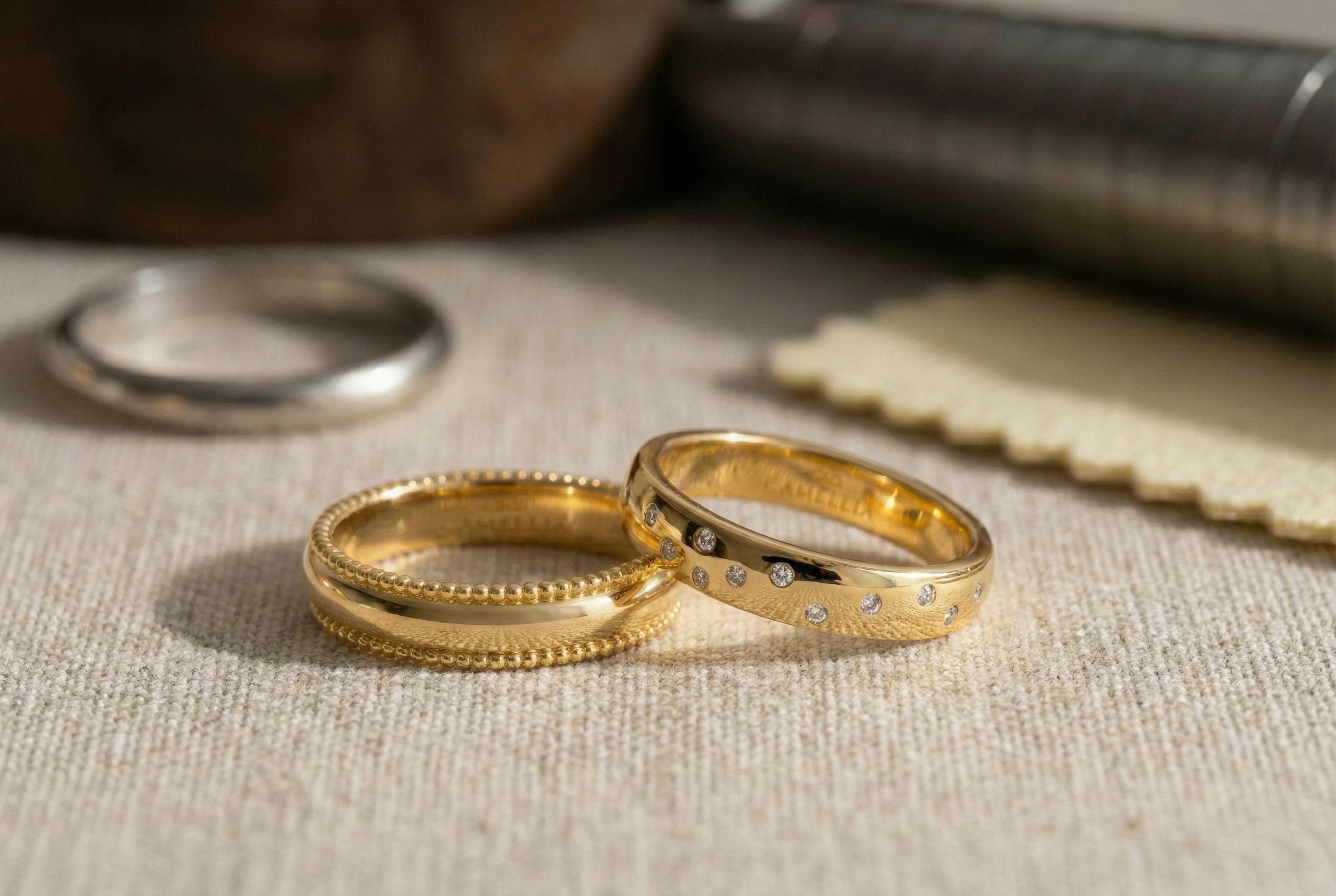
Choosing between 14k vs 18k gold is usually the first real decision you face when buying fine jewelry — and it is the one that trips up the most people. The instinct is simple: a higher number must be better. In practice, the higher karat is better at some things and measurably worse at others, and the right answer depends on your lifestyle, your skin, the colour of gold you love and how the piece will be worn.
This guide breaks down what actually changes between the two alloys: composition, hardness, colour, allergy risk, price and resale value — so you can choose with confidence rather than by number alone.
14k vs 18k Gold: The Short Answer
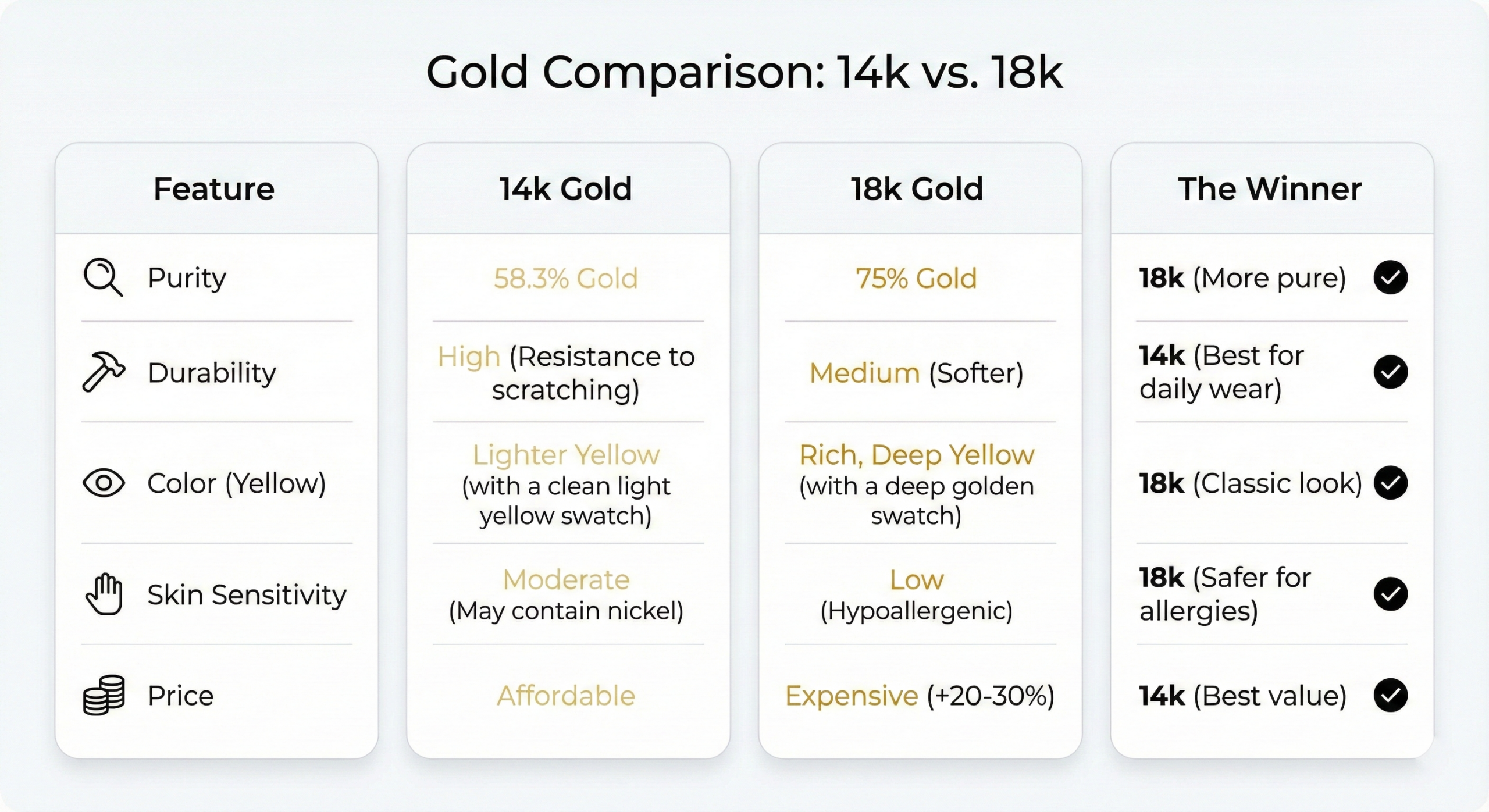
18k gold is 75% pure gold, giving it a richer colour and a lower risk of skin reactions. 14k gold is 58.3% pure gold, which makes it noticeably harder, more scratch-resistant and roughly 25–35% less expensive. For a ring worn every day, 14k is usually the more practical choice; for colour, purity and sensitive skin, 18k wins.
What Karat Actually Measures
Karat (spelled karat for purity, carat for gemstone weight) describes how much of an alloy is pure gold, expressed in twenty-fourths. Pure gold is 24k.
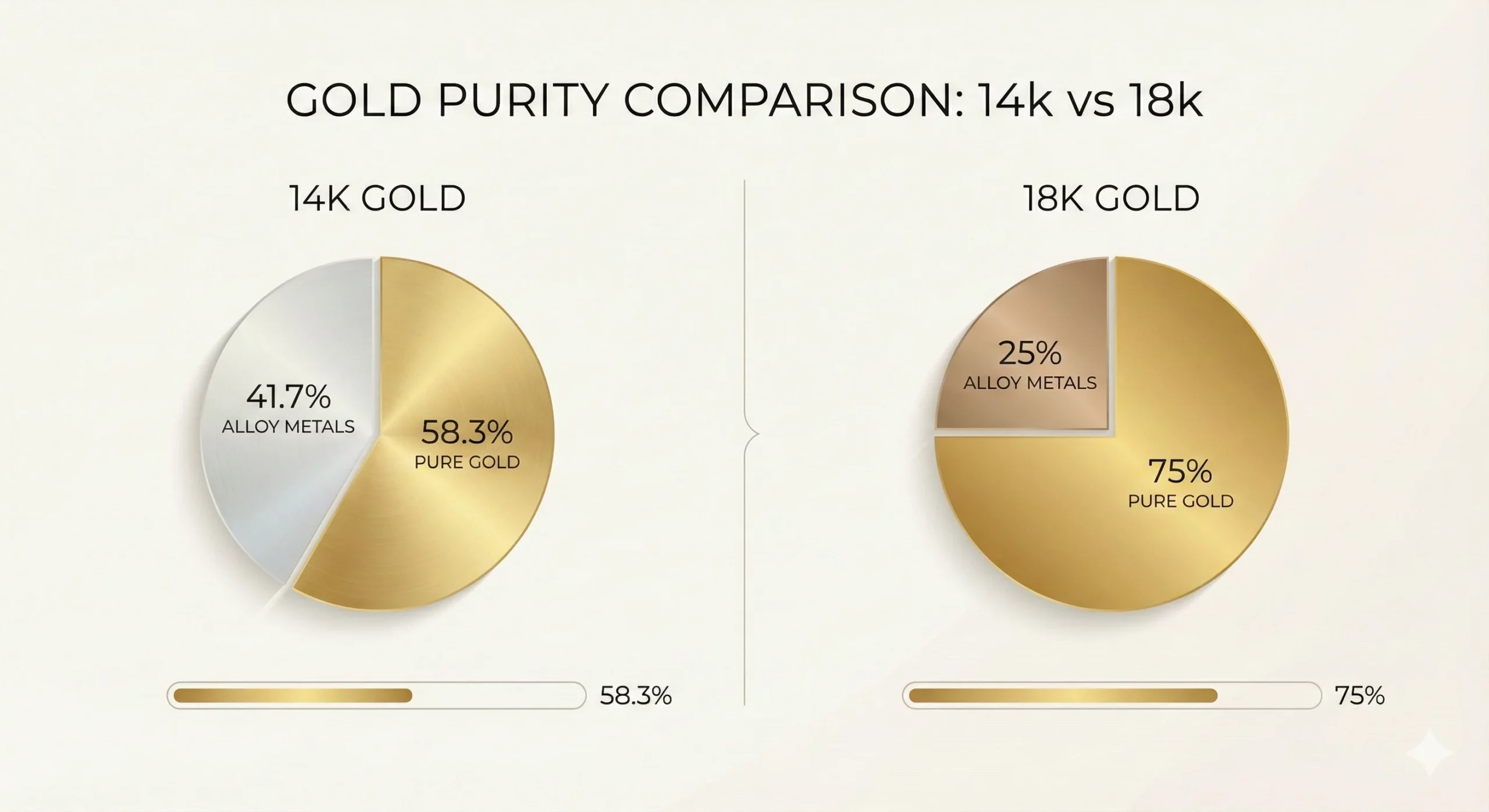
- 24k gold: 99.9% pure — far too soft for jewelry that is worn.
- 18k gold: 75% pure gold, 25% alloy metals. Stamped 18K or 750.
- 14k gold: 58.3% pure gold, 41.7% alloy metals. Stamped 14K or 585.
- 10k gold: 41.7% pure gold — the legal minimum to be called “gold” in the United States.
The remaining percentage is a deliberate recipe of copper, silver, zinc, nickel or palladium. That recipe is what gives gold its colour and its working properties — and it is the reason two rings that both say “gold” can behave completely differently on your finger.
| Karat | Pure gold | European fineness mark | Typical use |
|---|---|---|---|
| 24k | 99.9% | 999 | Bullion, ceremonial pieces |
| 22k | 91.7% | 916 | Traditional South Asian & Middle Eastern jewelry |
| 18k | 75.0% | 750 | Fine and luxury jewelry, European standard |
| 14k | 58.3% | 585 | Everyday fine jewelry, US bridal standard |
| 10k | 41.7% | 417 | Budget and fashion jewelry |
In the United States, the Federal Trade Commission’s Jewelry Guides require the karat fineness to appear immediately before the word “Gold” with equal prominence — which is why a legitimate piece is always marked “14K Gold” rather than simply “Gold”. You can read more about global gold standards at the World Gold Council.
Durability: Why the Lower Karat Is Tougher
This is the part that surprises people. Because 14k gold contains more alloy metal, it is significantly harder than 18k gold. Hardness translates directly into everyday resilience: 14k resists scratching, holds a crisp edge on engraved or milgrain detail, and is far less prone to the slow bending that turns a round shank into an oval.
Softness is not the same as fragility — an 18k ring will not break — but it does mark more easily and thin faster in the places that rub against a desk, a steering wheel or a kettlebell. It also means prongs in 18k need checking a little more often, especially on a ring worn 24 hours a day.
Choose 14k if you work with your hands, lift weights, rarely take the ring off, or want the crispest possible detail in a vintage-style or nature-inspired design.
Colour: Can You Actually See the Difference?
It depends entirely on which colour of gold you choose.
Yellow Gold — a clear difference
18k yellow gold has a deep, warm, buttery tone that reads as unmistakably “gold” across a room. 14k yellow gold is lighter and slightly cooler, closer to a soft honey. Side by side the difference is obvious; alone on a hand it is subtle. If the rich, saturated look of traditional gold is what you picture, 18k is worth the premium.
White Gold — virtually identical
Both 14k and 18k white gold are finished with a layer of rhodium, which is what creates that bright, icy white. Since you are looking at the rhodium rather than the gold beneath it, the two are nearly indistinguishable when new. This makes 14k the sensible choice in white gold: you get the harder metal and pay less, with no visible compromise. When the plating eventually wears, 14k white gold reveals a slightly greyer tone and 18k a slightly warmer one — see Why Is My White Gold Turning Yellow? for the full explanation.
Rose Gold — a subtle difference
Rose gold gets its colour from copper. Because 14k has more room for alloy, 14k rose gold is pinker and more coppery, while 18k rose gold is softer and peachier. Many people prefer 14k here precisely because the colour is stronger — and the extra copper also makes 14k rose gold the hardest of the common gold alloys.
Skin Sensitivity and Nickel
If you have reacted to costume jewelry or a watch back, this section matters more than price. Nickel is one of the most common contact allergens in the world, and it has traditionally been used to whiten and harden white gold.
Because 14k contains roughly 42% alloy metals versus 25% in 18k, a nickel-bearing 14k alloy can release more nickel against the skin. That is why 18k is generally the safer choice for sensitive skin.
The more important question, though, is not the karat but the recipe. In the European Union, REACH restricts nickel release from items in prolonged skin contact to 0.5 µg/cm² per week (and 0.2 µg/cm² per week for piercing posts). Many quality manufacturers — including us — now use palladium-based white gold, which contains no nickel at all. If you know you are nickel-sensitive, ask specifically for a nickel-free or palladium white gold alloy, or move to platinum, rather than relying on karat alone.
Price: How Much More Does 18k Cost?
An 18k piece contains about 29% more pure gold than the same piece in 14k, so the metal cost rises accordingly. In finished jewelry the difference typically lands somewhere between 25% and 40%, depending on how much metal the design uses. A delicate solitaire band shows a small difference; a wide, heavy signet or a substantial nature-inspired ring shows a large one.
It is worth putting that in context. On a bridal purchase, the metal is rarely the biggest line item — the centre stone usually is. Many buyers choose 14k for the setting specifically to move budget into a better diamond, which is almost always the more visible upgrade.
| Priority | Better choice | Why |
|---|---|---|
| Everyday durability | 14k | Harder alloy, resists scratches and bending |
| Richest yellow colour | 18k | 75% gold gives a deeper, warmer tone |
| Sensitive skin | 18k (ideally palladium white) | Fewer base metals, lower nickel exposure |
| Best value per dollar | 14k | 25–40% less for the same design |
| White gold specifically | 14k | Rhodium finish makes the two look the same |
| Rose gold with strong colour | 14k | More copper produces a pinker hue |
| Long-term metal value | 18k | More pure gold content per gram |
| Fine engraving & milgrain | 14k | Holds crisp detail longer under wear |
Resale and Intrinsic Value
Gram for gram, 18k is worth more as metal because it simply contains more gold. If you think of jewelry partly as a store of value, that is a genuine argument for 18k. In reality, though, the resale value of a finished piece of fine jewelry is driven far more by design, brand, condition and the quality of its stones than by the karat of the metal. Buying 18k purely as an investment rarely works out; buying it because you love the colour almost always does.
Which Should You Choose for an Engagement Ring?
Choose 14k gold if:
- The ring will be worn every single day, including at work and at the gym
- You want white gold — the visual difference is negligible
- You want a strong, pink rose gold
- You would rather put the savings toward a larger or better-quality centre stone
- Your design has fine engraving, milgrain or delicate botanical detail
Choose 18k gold if:
- You love the deep, saturated colour of classic yellow gold
- You have known metal sensitivities
- The piece is an occasion or heirloom item rather than a daily workhorse
- You value the higher pure-gold content and the European 750 standard
- You are pairing it with a high-value stone and want the finest possible materials throughout
Caring for Both
Both alloys respond to the same care: keep them away from chlorine and bleach, remove them before the gym and household cleaning, and clean them regularly with warm water and mild soap. Because 18k is softer, it benefits from a slightly gentler touch and a professional prong check roughly every six months. Our step-by-step guide to cleaning gold and diamond jewelry at home covers the safe method in detail.
Frequently Asked Questions
Is 18k gold worth the extra money?
For yellow gold, sensitive skin, or a piece you consider an heirloom — yes. For white gold, or for a ring that will take daily punishment, the extra cost buys colour and purity you may not see and durability you actively lose. Decide based on the colour you want and how the piece will live.
Does 14k gold tarnish or turn your finger green?
Solid 14k gold does not tarnish. Occasional green marks on skin come from the copper in the alloy reacting with acidic sweat, lotions or cleaning products — it is harmless, more common in humid climates, and usually resolved by cleaning the piece and keeping it away from chemicals.
Which is better for daily wear, 14k or 18k?
14k, in most cases. It is measurably harder, resists scratching and deformation better, and costs less to replace or repair. This is why 14k has become the default for American bridal jewelry.
Can you tell 14k and 18k apart just by looking?
In yellow gold, usually yes when they are side by side. In white gold, essentially never, because both are rhodium-plated. In rose gold, the difference is a subtle shift in how pink the metal reads.
Is 18k gold hypoallergenic?
Not automatically, but it is lower risk. Hypoallergenic depends on whether the alloy contains nickel, not on the karat. A nickel-free 14k palladium white gold can be gentler on the skin than a nickel-bearing 18k. Always ask what the white alloy is made of.
Can I mix 14k and 18k in a stacked set?
Yes, and many people do. Be aware that the harder 14k band will slowly wear the softer 18k one where they rub, so expect the 18k piece to need refinishing sooner. Matching karats in a stacking set is the lower-maintenance option.
The Verdict
There is no universally “better” karat — only a better fit. 14k gold is the pragmatic choice: harder, more affordable and visually identical in white gold. 18k gold is the luxurious one: purer, warmer in colour and kinder to sensitive skin. Decide which of those qualities you will notice every day, and the choice makes itself.
At Camellia Jewelry every ring is handcrafted to order, so you can choose 14k or 18k in yellow, white or rose gold on almost any design. Browse our handcrafted engagement rings, explore vintage-inspired styles, or read White Gold vs. Platinum if you are weighing a precious-metal upgrade.