

Tag: LCD
Three Striking Alternatives to Diamond Engagement Rings
Diamonds are a girl’s best friend. No doubt about it. Marilyn said so!
But… Most of us have more than one friend, right?
Many consumers now seek other options to fulfill their engagement ring dream and we are here to tell you about three alternatives you can explore, that are ethical and eco-friendly as well as have a lower price tag than natural diamonds.
Moissanite Engagement Ring
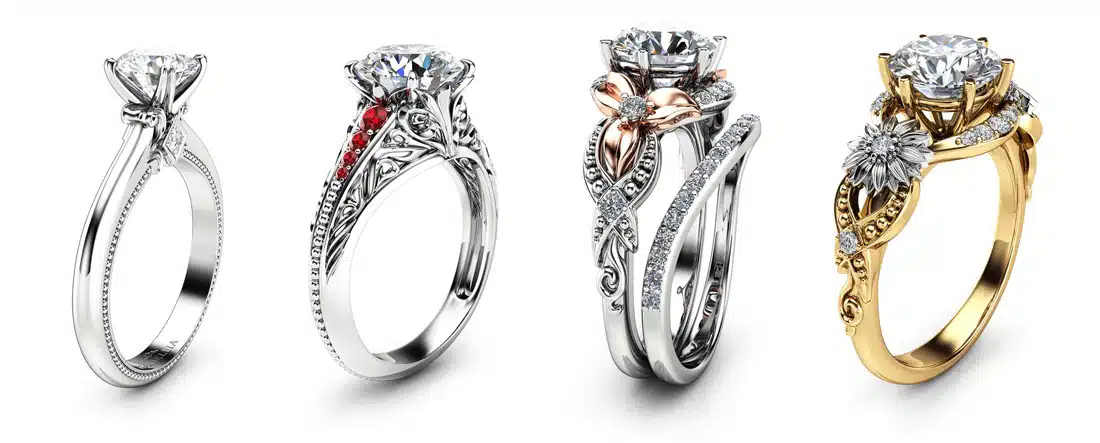
If you want the classy-diamond-ring look on your engagement ring, let us introduce you to the Moissanite stone. A stone that looks and feels exactly like a diamond, in a fraction of the cost and with no conflicts attached!
This precious stone was discovered back in 1893 by French chemist Henri Moissan, as he was examining mineral samples from a meteor crater. This is why moissanite is also known as “a gem born of the stars” and who can say “I don’t” to that?! Moissanite can be up to 90% less expensive per carat than a diamond of the same size, so you can allow yourself to go bigger on the stone and the ring design in your engagement ring.
Learn more about Moissanites vs. natural diamonds
Gemstone Engagement Ring
For a more colorful, modern, and unique style, the gemstone engagement ring could be the one!
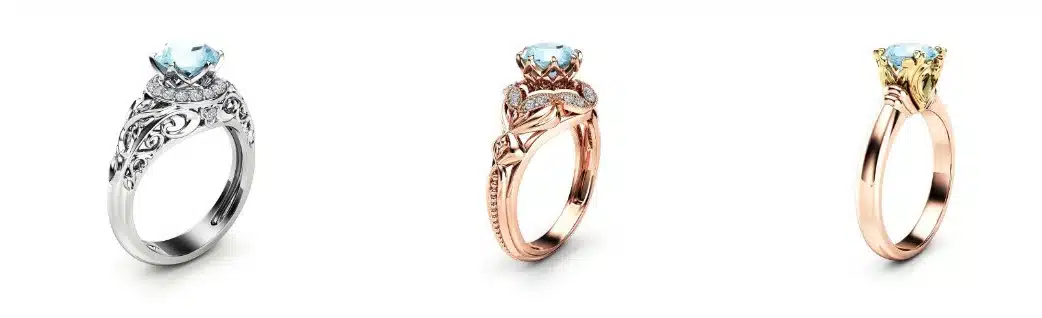
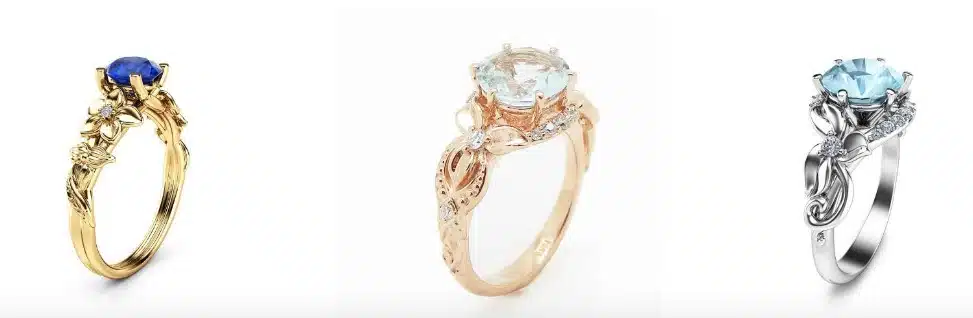
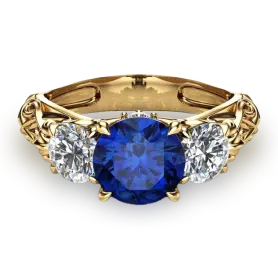
Sapphire, Ruby or Emerald, all are dazzling alternatives for diamonds. In a clear stone that looks just like a diamond, or in one of multiple color options and shapes. Every gemstone also has an ancient meaning, power, or belief attached to it, helping you to pick the gemstone that matched perfectly to your love story, your individual personality, or your magical future together.
Learn more about gemstones and semi-precious diamonds engagement rings
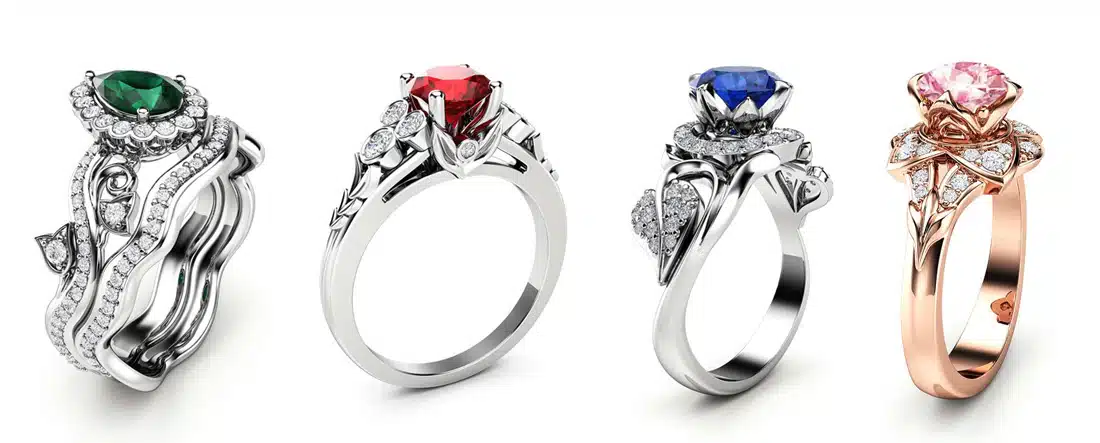
Lab-Created Diamond Engagement Ring
If you just want a diamond, but don’t want to take the risk with a non-ethical stone and also a more affordable option- lab-grown diamonds display the same physical, chemical, and optical characteristics as natural diamonds, and exhibit the exact same spark and style.
Learn more about Lab-Grown Diamonds
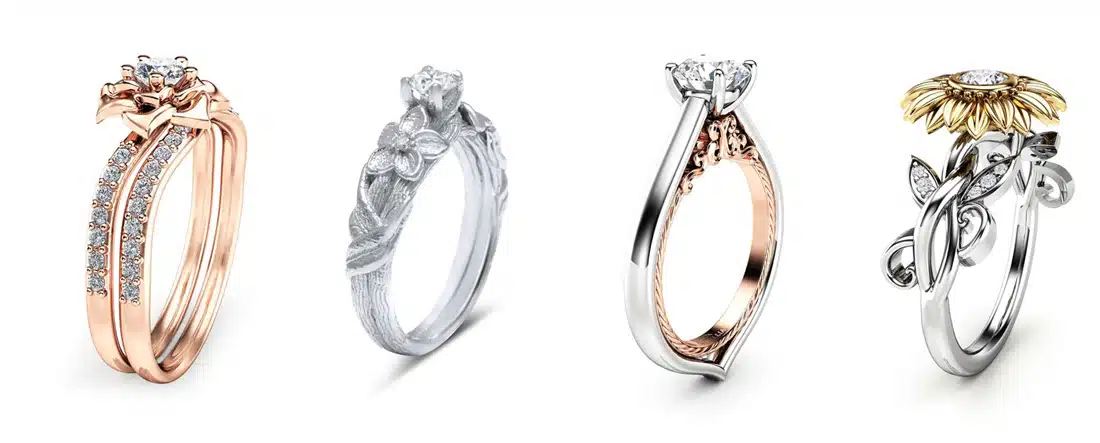
If you still can’t imagine your engagement ring with anything else but a diamond, we can guarantee you that all of our products are conflict-free, and have been certified by the Kimberley Process as being so.
Our team of Proposalists are here to answer any question you may have, or design the ring of your dreams together with you.
[Photo by Polina Tankilevitch from Pexels]


Everything to Know About Blue Diamonds
Blue, diamonds are some of the rarest stones out there, with lots of stories to tell. Here’s the lowdown on these big blue beauties!
The blue diamond is a precious stone with rare qualities. People consider this color to be a symbol of eternity, truth, devotion, peace, chastity and spirituality. If you’re more into Hollywood, one of the most expensive diamonds in the world was the grayish blue one owned by Elizabeth Taylor.
What are Blue Diamonds?
A blue diamond is everything the name tells you. It’s as rare as any colorful diamond – from pink, to violet and red – but its deep shade brings lots of popularity, as does its size. The darker and bigger, the higher the price.
This diamond is mysterious and has a lot of controversies around it. Some people think it’s not a natural diamond color, but nature creates blue diamonds. Like the rest of the diamonds, its value is set by color, intensity, size and cut.
It takes millions of years for heat and carbon to turn into this precious stone. The color is set by elements like boron and nitrogen. It is expensive and you can’t find it in a lot of places, some are in South Africa and Australia, with vintage ones coming from India.
Natural or man-made blue diamonds?
“Hope Diamond”, “The Imperial Blue” and the “Blue Moon of Josephine” are some of the most expensive diamonds ever bought. This color has broken a lot of records. And the prices will continue to rise as the demand increases and the supply decreases. And that’s where lab made and treated diamonds come into to play.
Don’t worry if you have a budget to respect. There are plenty of beautiful man-made blue diamonds that will still turn heads. In addition, being friendly with Mother Earth and also trying to deliver a special present has never been easier.
The Process of Man-Made Blue Diamonds
Man-made diamonds are actually white diamonds that have gone through a coloring treatment brought on by heat. They start out as white diamonds that some people don’t care for, because they aren’t actually white. As a result, they lose their value. But the coloring process can produce a variety of gorgeous shades. Lab made ones follow the natural process of creating diamonds. The only differences being that it’s faster, and safer for the environment.
Blue Diamonds & Alternatives
The blue diamond makes a wonderful center piece on an engagement ring, as well as on a wedding band. But, if you want something blue that isn’t a diamond, opt for gemstones like blue sapphire, blue topaz, blue spinel and aquamarine. By the way, they can also go well together if you want to mix and match on a friendly budget. Check out our collection and find the perfect fit for your shade of blue.