

Tag: diamond
Four Things You Should Know About Lab Created Diamonds
A perfect diamond piece should be pure, bright, with a clean history that cannot be questioned from origin to acquisition. If you were only familiar with the Natural diamond up until now, behold – for this is the day you’d meet its perfect alternative – the Lab created diamonds.
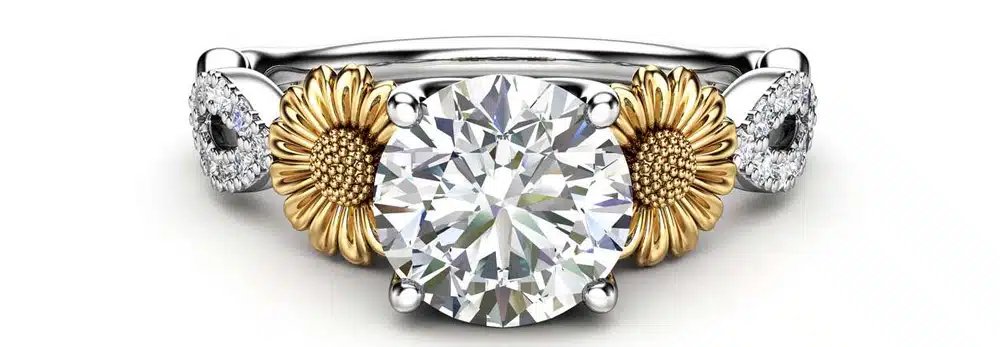
As their name suggests, Lab Created Diamonds are manufactured in laboratories under conditions that perfectly mimic the natural diamond-forming process. Lab Grown Diamonds have similar physical, chemical, and optical properties as mined diamonds. In fact, even industry experts can’t tell them apart without the aid of special equipment that scans for crystal patterns and impurities. They are technically natural diamonds without impurities, environmental degradation, and uncertainties. There are numerous reasons why lab made diamonds are a suitable replacement for natural diamonds. Here are a few of them:
Greater purity and improved quality
Say hello to the brighter twin!
Lab Grown Diamonds are purer than their natural counterparts due to the absence of impurities and dirt found in mined diamonds. They also have fewer blemishes since they were carefully prepared under favorable conditions. Hence, they are brighter and better than mined diamonds. Lab engineered diamonds are certified, giving you important information on Cut, Clarity, Carat Weight, and more.
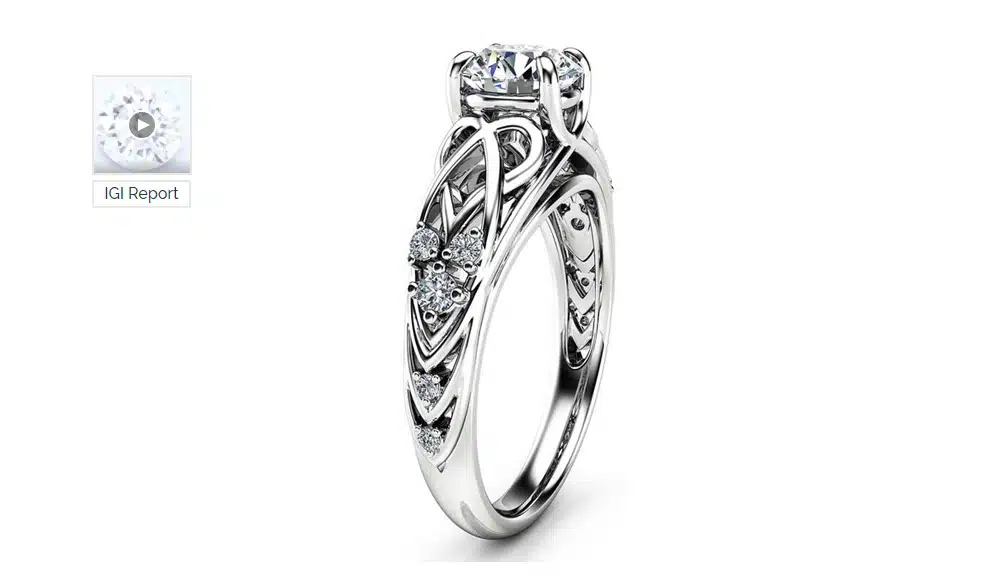
Click the ring to see it IGI Report Video
Guaranteed Origins
Often, a detailed journey path cannot be drawn for mined diamonds as the specific origin can be vague. We at Camellia Jewelry use only with conflict-free diamonds, but unfortunately, while shopping elsewhere, some diamonds have dark backgrounds, coming from conflict regions where they’ve been sold to fund war and promote chaos. But, the journey of lab-created diamonds from origin to acquisition can be known. Therefore, the only way to ascertain the origin of your diamonds is to purchase synthetic diamonds.
Affordable Diamond Jewelry
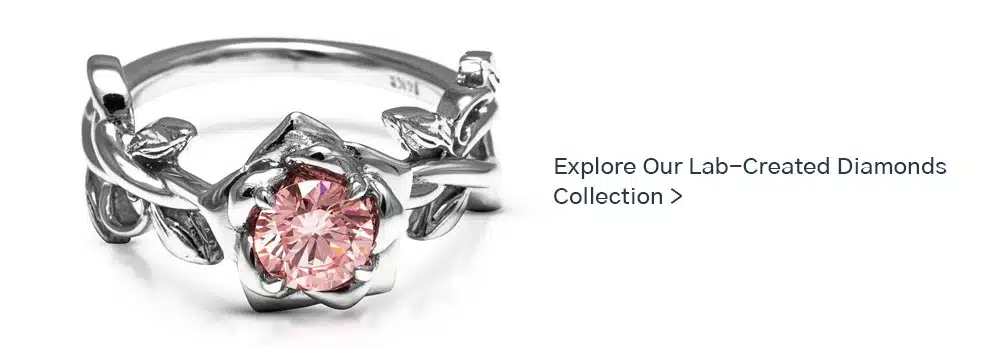
Lab made diamonds are not only purer than their natural counterparts but are also more affordable. Costing less than half the price of mined diamonds, they also come in a variety of natural-diamond colors, such as pink! This means you can really buy the ring of your dreams without having to compromise on the budget.
Environmentally-Friendly
Mining natural diamonds can damage the earth extensively. Diamond mines are some of the largest holes ever dug in the earth as enormous amounts of fossil fuels with heavy machinery are required to extract the gemstones. The Mirny Diamond Mine, the second largest hole in the earth, is almost a mile wide in diameter and about 525 meters deep. Lab diamonds, on the other hand, present none of these issues. With man-made diamonds, you could rock your diamond pieces and have Mother Nature smiling at you all day for conserving her resources.
With CVD diamonds, you can never go wrong. You have a natural diamond in its purer, brighter, Eco-friendly, and sustainable form for less than half its price. Synthetic diamonds are a girl’s better friends!


Three Striking Alternatives to Diamond Engagement Rings
Diamonds are a girl’s best friend. No doubt about it. Marilyn said so!
But… Most of us have more than one friend, right?
Many consumers now seek other options to fulfill their engagement ring dream and we are here to tell you about three alternatives you can explore, that are ethical and eco-friendly as well as have a lower price tag than natural diamonds.
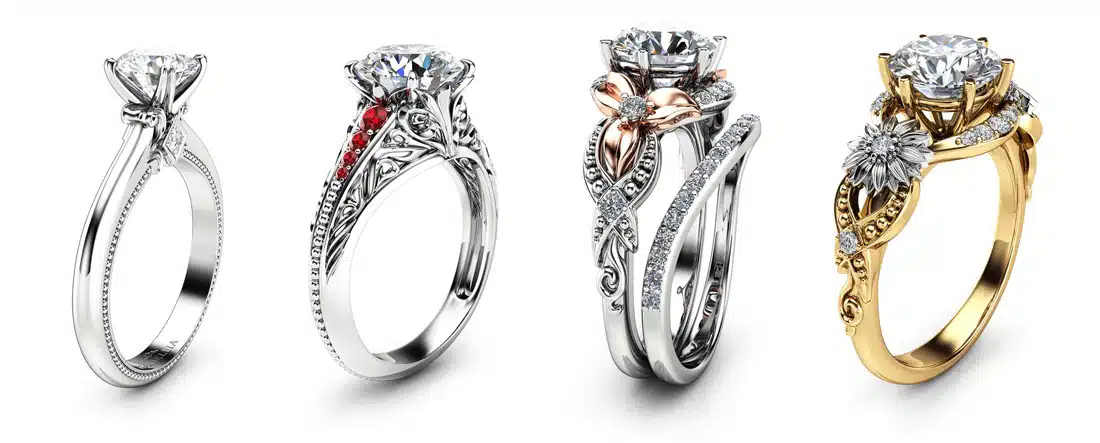
Moissanite Engagement Ring
If you want the classy-diamond-ring look on your engagement ring, let us introduce you to the Moissanite stone. A stone that looks and feels exactly like a diamond, in a fraction of the cost and with no conflicts attached!
This precious stone was discovered back in 1893 by French chemist Henri Moissan, as he was examining mineral samples from a meteor crater. This is why moissanite is also known as “a gem born of the stars” and who can say “I don’t” to that?! Moissanite can be up to 90% less expensive per carat than a diamond of the same size, so you can allow yourself to go bigger on the stone and the ring design in your engagement ring.
Learn more about Moissanites vs. natural diamonds
Gemstone Engagement Ring
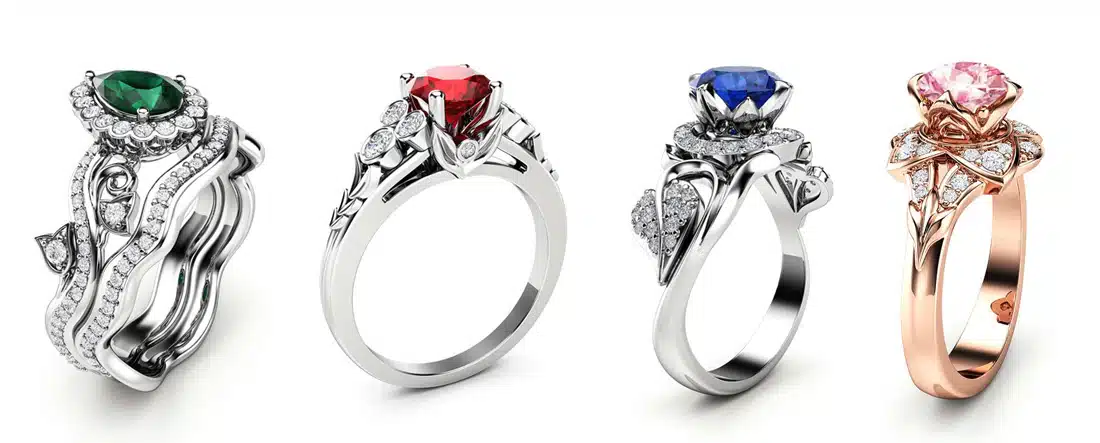
For a more colorful, modern, and unique style, the gemstone engagement ring could be the one!
Sapphire, Ruby or Emerald, all are dazzling alternatives for diamonds. In a clear stone that looks just like a diamond, or in one of multiple color options and shapes. Every gemstone also has an ancient meaning, power, or belief attached to it, helping you to pick the gemstone that matched perfectly to your love story, your individual personality, or your magical future together.
Learn more about gemstones and semi-precious diamonds engagement rings
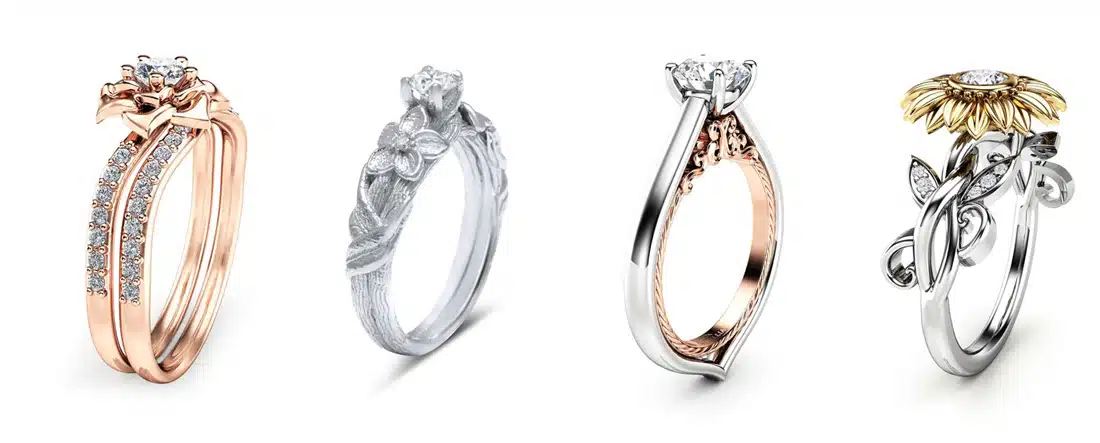
Lab-Created Diamond Engagement Ring
If you just want a diamond, but don’t want to take the risk with a non-ethical stone and also a more affordable option- lab-grown diamonds display the same physical, chemical, and optical characteristics as natural diamonds, and exhibit the exact same spark and style.
Learn more about Lab-Grown Diamonds
If you still can’t imagine your engagement ring with anything else but a diamond, we can guarantee you that all of our products are conflict-free, and have been certified by the Kimberley Process as being so.
Our team of Proposalists are here to answer any question you may have, or design the ring of your dreams together with you.
[Photo by Polina Tankilevitch from Pexels]
The Origin of Diamond Cuts- And How They Got Their Names
So by now, we all know the differences between LCD, diamonds, and moissanite. But what about the shapes and cuts? Let’s go back to the roots to discover the stories behind these cuts and how they got their names. The quick guide below gives the lowdown on the origin of diamond cuts.
Princess
This fancy shape was only introduced a few decades ago, but has since become one of the most popular shapes for engagement rings. When looking down on a princess-cut diamond, they can appear as a square, however, from the side, they resemble more of an inverted pyramid.
How long has this gorgeous cut been around? Well, there’s some confusion there. Many believe the history of the princess cut dates back to the 1970’s. This was also when a new shape, “the Barion Cut”, was introduced by Basil Watermeyer. This particular cut was actually more of a combination between an emerald cut and marquise cut. Princess diamonds actually date back to 1961 when a London based diamond cutter, Arpad Nagy, created what was known then as the “profile cut”. That same cut is now known as the princess cut. After a few years, Betzalel Ambar, Ygal Perlman, and Israel Itzkowitz popularized the new name, which is why we all know them now as “princess cuts”.
This square stone features 58 facets, which allows it to really show off the diamond’s unique sparkle. It offers a similar shine to the round brilliant diamond due to their similar facet positions.

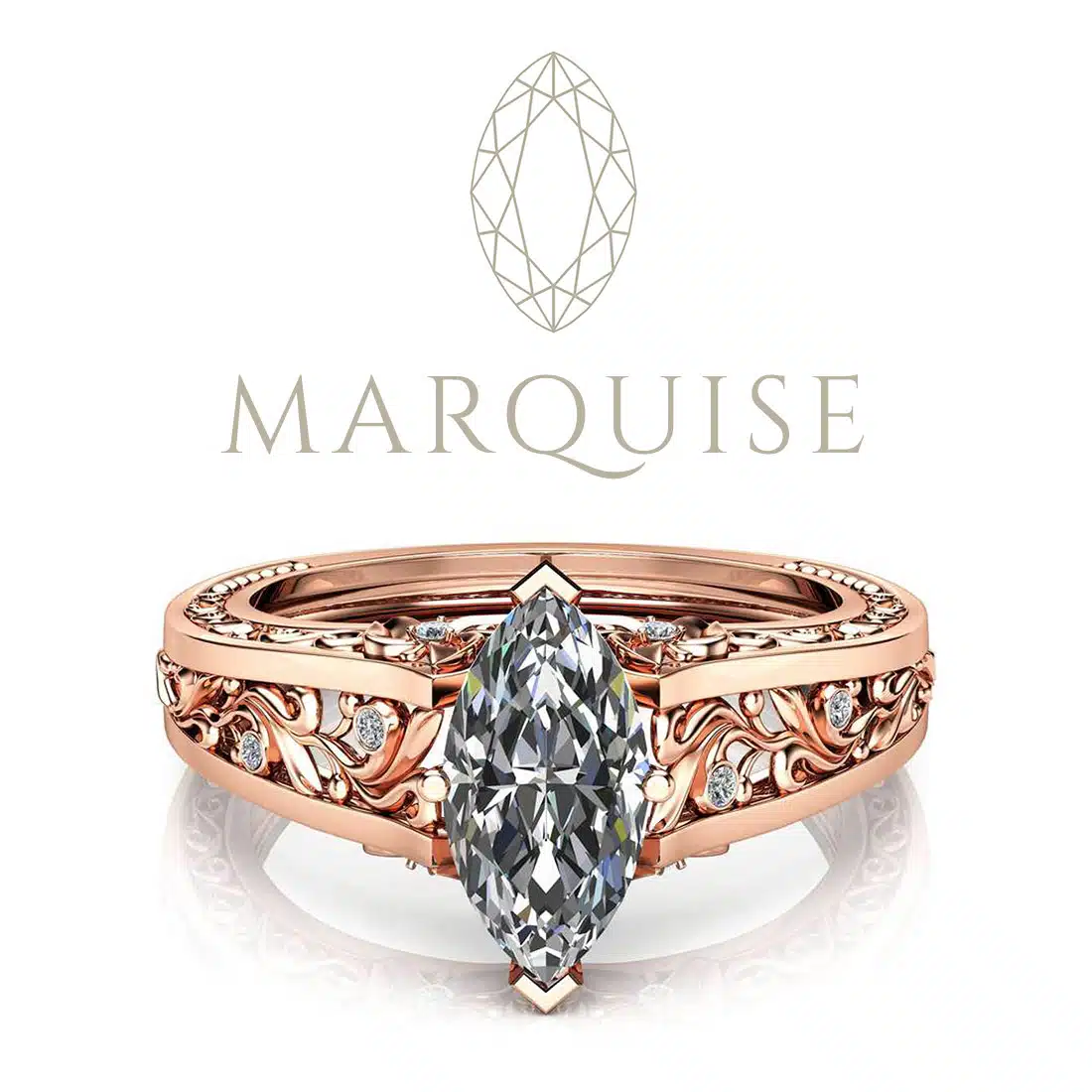
Marquise
A marquise-cut diamond features 58 facets and an elliptical shape with pointed ends. And this exquisite shape has an interesting history. In the mid-18th century, King Louis XV of France commissioned his court jeweler to cut a diamond in the shape of the lips of his favorite mistress Jean Antoinette Poisson. She was known as the Marquise de Pompadour (or more commonly referred to as Madame de Pompadour). Marquise cuts are also known as “navette” cuts, which means “little ship” in French. Along with a football-shaped cut (hmmm… where’s the romance?); and the eye-shaped cut.
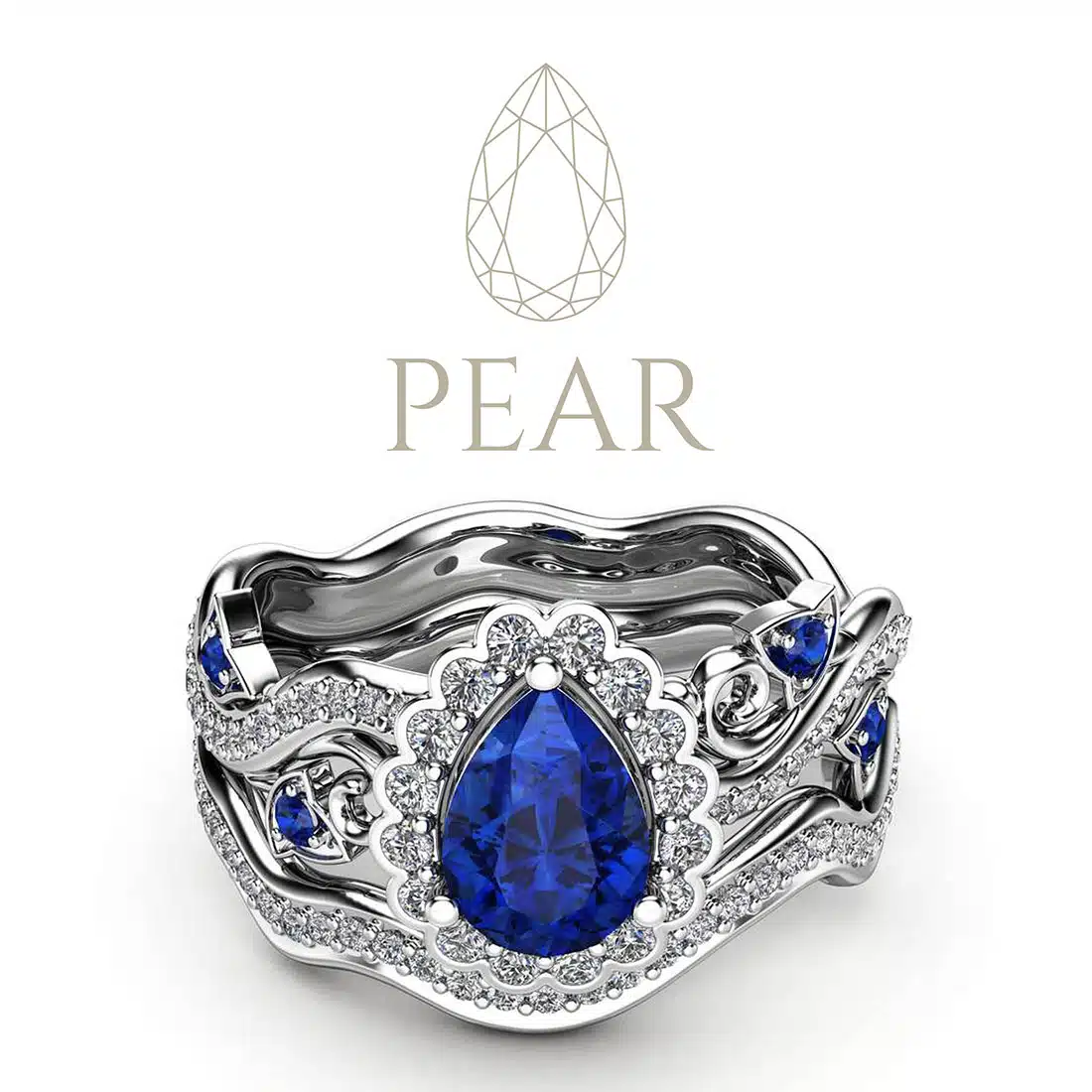
Pear
The pear shape, often referred to as the teardrop cut, was invented in 1458 by Flemish diamond polisher, Lodewyk van Bercken. He also invented the Scaife polishing wheel, which transformed the diamond trade. It enabled him to cut facets into diamonds with precision and opened the door to more complex diamond cuts.
This diamond combines the brilliance and design of the round and marquise cuts into one unique shape. Despite the positive response to the shape, when it first debuted many people were not happy with the amount of rough diamond lost during the cutting process. Over time, however, the pear shape grew in popularity.
Cushion
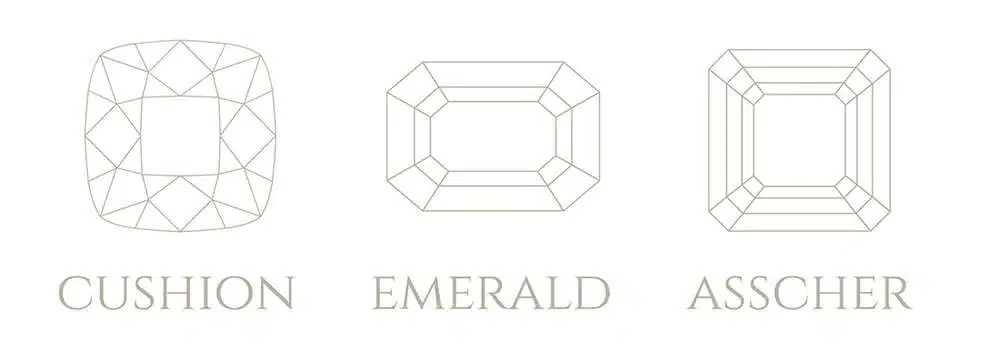
The cushion shape is almost like a rounded square. It gets its name for being shaped like a pillow. Its origins can be traced back to the 1800’s. At the time, the cut was referred to as the “mine cut,” named after the Brazilian diamond mines (called “old mine” once diamonds were found in South Africa as well). While similar in shape, today’s cushion cut has 64 facets while the “mine cut” had 58. The many facets that make up the cushion allow for more light to flow through the stone. Which makes it one of the most brilliant cuts compared to the rest.
Emerald cut
Emerald cuts have been around for thousands of years. Initially, it was used on emerald stones. But, diamond cutters eventually began to incorporate the cut into diamonds as well. The name “emerald cut” was not used until the 1920’s. This is when it reached the peak of its popularity. The emerald cut’s clean lines and symmetry fit in perfectly with the art deco style of the decade. An emerald shaped diamond is created by using step cuts, which, as the name suggests, resemble steps on a staircase.
Asscher
The Asscher cut is one of the first patented diamond cuts in the world. It was invented by Dutch master diamond cutter, Joseph Asscher of the Royal Asscher Diamond Company in 1902. Like the emerald shape but in square format, Joseph was able to create a more brilliant cut by giving the diamond larger step facets, a higher crown, and a smaller table. The classic looking Asscher has 58 facets and cropped corners that give it the appearance of an octagon.
After reviewing the origins of the infamous diamond cuts- Tell us which one’s your favorite? If you’re still not sure, you can visit our collection and browse for some inspiration.
Yellow! Sapphires and Diamonds
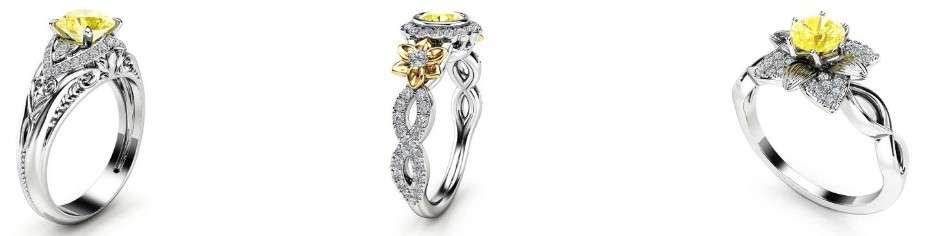
Yellow sapphires come in a wide range of yellows from light to dark and with varying levels of vibrancy. At first glance, yellow sapphire and a yellow diamond may look fairly similar. But there are some major differences between them. Your own preferences, budget, and personal style will be the ones to determine which one is the better option for the engagement ring of your dreams.
Here’s a quick guide to the unique qualities of each:
Shades & Features
We already know diamonds come in a range of colors. From blue to black, from pink to brown, and of course yellow! A yellow diamond (also known as a canary diamond) can range in color from a pale to deep vibrant shades. Yellow diamonds have an undeniable allure that has fueled their popularity for decades. Fortunately, yellow diamonds are also among the most widely encountered. Which typically makes them more affordable than other colored diamonds.
Sapphires (which are often associated with blue – and pink) also come in a range of yellow tones. From light to dark, some featuring orange undertones, or even intensive greenish tones. The one consistency is that the brighter and purer the yellow color, the more valuable the sapphire.
Durability
Both sapphires and diamonds are durable. Sapphires are rated a 9 out of 10 on the Mohs Scale of Hardness. While diamonds are rated a perfect 10. So, even though sapphires are resistant to scratches and other types of damage, diamonds are still the better choice when it comes to durability. You should also know that the color of some yellow sapphires may fade over time if exposed to heat and sunlight for long durations.
As we continue to see colors and personalized choices make the trends in engagement rings and bridal jewelry – yellow certainly makes its mark as a striking choice. Both in yellow diamonds and yellow sapphires.
Which do you prefer? Diamonds or Sapphires? Let us know on our Facebook or Instagram pages
Check Out Our Collection of Yellow Diamonds and Sapphires
Moissanite – An Eco-Friendly & Sustainable Alternative to Diamonds!
In today’s world, it’s more important than ever to find sustainable and ethical solutions, and jewelry should be no exception. Although it’s no secret that diamonds aren’t exactly the “poster gem” for being eco friendly, many of us still dream of that classic look and feel they bring. But what if there was a conflict-free alternative? A stone that looked and felt exactly like a diamond, and to top it off – a fraction of the cost. And no, we’re definitely NOT referring to cubic zirconia. We’re talking about Moissanite! An eco-friendly and sustainable alternative to diamonds.
Moissanite is also a precious stone. First discovered in 1893 by French chemist Henri Moissan, as he was examining mineral samples from a meteor crater. And, this is why moissanite is also sometimes commonly referred to as “a gem born of the stars.” At one time these beauties used to be quite scarce. But, are now made in the majority of jewelry laboratories.
And since they’re developed in labs it obviously has less impact on the environment. And likewise, it leaves a much smaller carbon footprint. Additionally, unlike diamonds, Moissanites are very eco-friendly. And their history is absent from many of the conflicts that remain a concern to those seeking ethical jewelry options.
Of course, if you still prefer diamonds but want to be friendly to Mother Earth, you can also opt for man-made diamonds, made in the lab and often known as LCD (Lab Created Diamonds) or LGD (Lab Grown Diamonds). These are made with the same base, but in a fast-forward process, vs. the slow and steady way nature usually makes them.
If you’re looking to be more sustainable with your jewelry this year, Moissanite rings are the best option. You can have them as the main stone, or you can add them to a mix with other colorful gems. And you could even take it a step further and use recycled gold too. There is an abundance of advantages when it comes to choosing Moissanite over diamonds. And if you want to learn more about how they differ, check out our Moissonaite Vs. Diamond post on our blog.
In the meantime be sure to look at the Moissanite collection from Camellia.
Moissanite Vs. Diamonds – What’s the Difference?
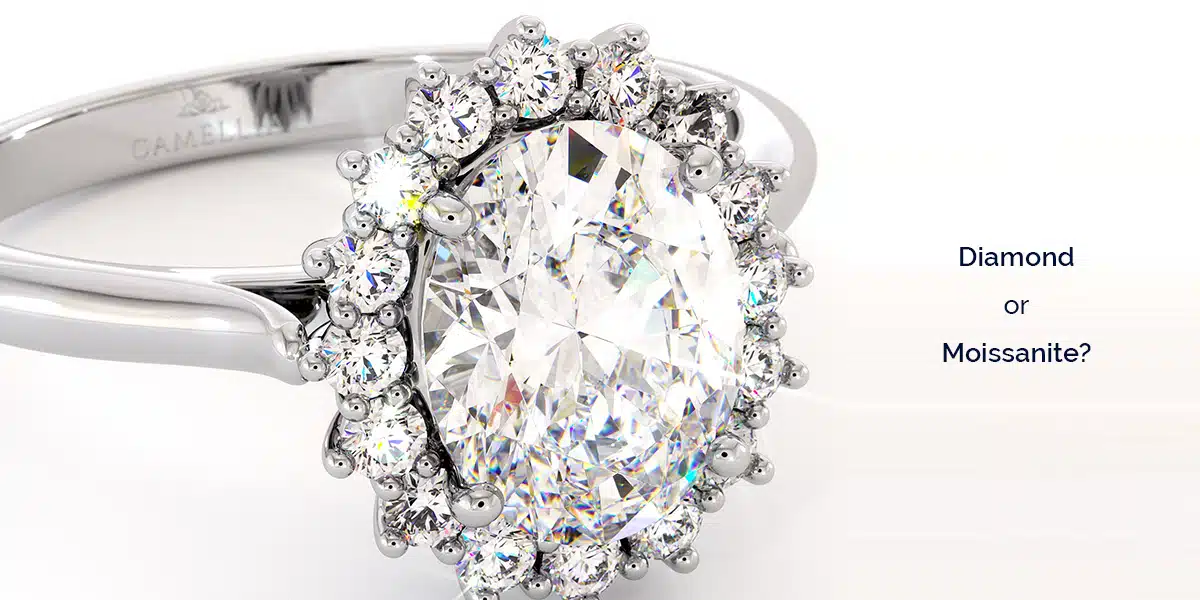
Today, there’s a multitude of options when it comes to engagement rings. And while we’re all familiar with the classic diamond ring, there’s one (not so little) stone out there that serves a great alternative and deserves some serious attention. But, if you’re still wondering what’s the difference between diamonds and moissanite, then look no further than the guide below.
When we think of a classic engagement ring we tend to think of one with diamonds. Although, in today’s economy being budget-savvy is a big trend when it comes to jewelry. No doubt, we all want something that’s kind to our wallets, but also something special and eye-catching, that will stand the test of time in terms of durability. In a few words, a diamond is a precious stone, clear, made of pure carbon, which is the hardest substance on Earth. While, moissanite is a natural mineral, a silicon carbide. It was discovered by Henri Moissan, a French chemist, in 1893.
Moissanite – the space rock
Finance & Style
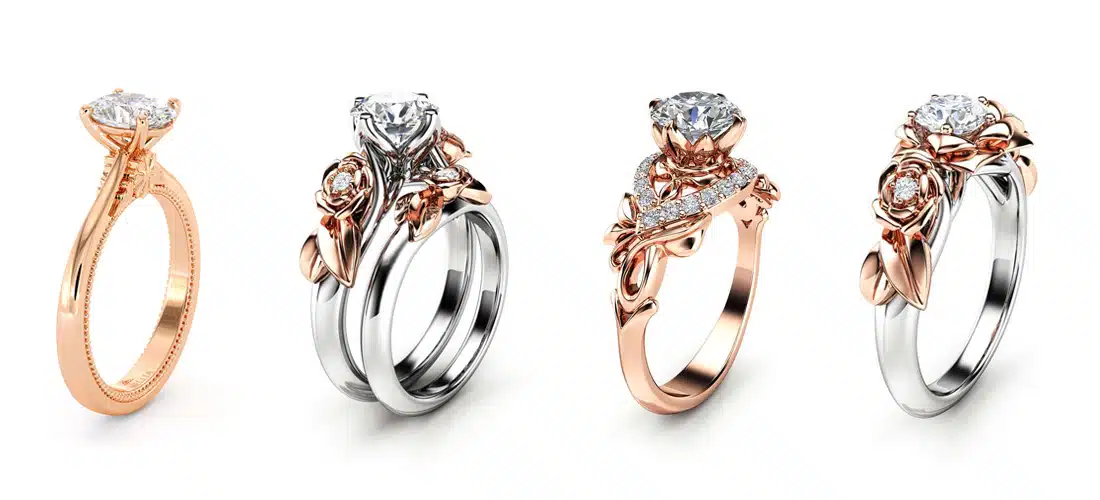
Moissanite gems are becoming a big trend among couples who may not have the money to invest in a standard engagement ring. Because, while moissanite and diamonds may look similar, they certainly don’t resemble each other’s prices. Depending on the cut and clarity moissanite can be up to 90% less expensive per carat than a diamond of the same size. In addition to them being a fraction of the cost, there’s also the added bonus of having the freedom to choose larger stones along with personalized designs. Thus, eliminating the worry that your wallet won’t match up to the final product.
Durability or “Toughness”
Although they’re all beautiful, not all gemstones are created equally. Certain gemstones like emeralds and sapphires are not ideal for daily wear (due to the fact that they tend to be brittle and most have tiny natural cracks that make them vulnerable to chipping and shattering). The Mohs scale of mineral hardness is a qualitative scale characterizing scratch resistance of various minerals – the higher the number is, the durable the material is. When it comes to toughness the only thing to come between diamonds and moissanite is boron. As Moissanite ranks 9.25 on the Mohs scale coming in 2nd only to diamonds, which rank as 10. This is great news because it means not only is Moissanite cost-effective but you can wear it or (show it off) on a daily basis.
Appearance
When comparing quartz, diamonds, and Moissanites, side by side, a lot of couples go for the Moissanite rings. Moissanites are actually more eye-catching and clearer. They have incredible brilliance, unlike the quartz, especially with the round shapes. Another advantage is that these gems have more dispersion. The stone breaks down light into spectral colors, so when you look at it against a light source, a rainbow appears. And finally, it goes without saying that the bigger the stone the more noticeable the dispersion. And thanks to the cost it means you can get a bigger stone at an even better price.
In conclusion, Moissanites are a fabulous alternative to diamonds. Not only are they cost-effective, but also durable and aesthetically-pleasing thanks to their dispersion levels that create even more sparkle! Last but certainly not least finally they are also extremely eco-friendly! Bottom line- moissanite gems are a great investment, considering both the budget and the lasting quality.
Check out some of our Moissanite rings and let us know what you think!
Everything to Know About Blue Diamonds
Blue, diamonds are some of the rarest stones out there, with lots of stories to tell. Here’s the lowdown on these big blue beauties!
The blue diamond is a precious stone with rare qualities. People consider this color to be a symbol of eternity, truth, devotion, peace, chastity and spirituality. If you’re more into Hollywood, one of the most expensive diamonds in the world was the grayish blue one owned by Elizabeth Taylor.
What are Blue Diamonds?
A blue diamond is everything the name tells you. It’s as rare as any colorful diamond – from pink, to violet and red – but its deep shade brings lots of popularity, as does its size. The darker and bigger, the higher the price.
This diamond is mysterious and has a lot of controversies around it. Some people think it’s not a natural diamond color, but nature creates blue diamonds. Like the rest of the diamonds, its value is set by color, intensity, size and cut.
It takes millions of years for heat and carbon to turn into this precious stone. The color is set by elements like boron and nitrogen. It is expensive and you can’t find it in a lot of places, some are in South Africa and Australia, with vintage ones coming from India.
Natural or man-made blue diamonds?
“Hope Diamond”, “The Imperial Blue” and the “Blue Moon of Josephine” are some of the most expensive diamonds ever bought. This color has broken a lot of records. And the prices will continue to rise as the demand increases and the supply decreases. And that’s where lab made and treated diamonds come into to play.
Don’t worry if you have a budget to respect. There are plenty of beautiful man-made blue diamonds that will still turn heads. In addition, being friendly with Mother Earth and also trying to deliver a special present has never been easier.
The Process of Man-Made Blue Diamonds
Man-made diamonds are actually white diamonds that have gone through a coloring treatment brought on by heat. They start out as white diamonds that some people don’t care for, because they aren’t actually white. As a result, they lose their value. But the coloring process can produce a variety of gorgeous shades. Lab made ones follow the natural process of creating diamonds. The only differences being that it’s faster, and safer for the environment.
Blue Diamonds & Alternatives
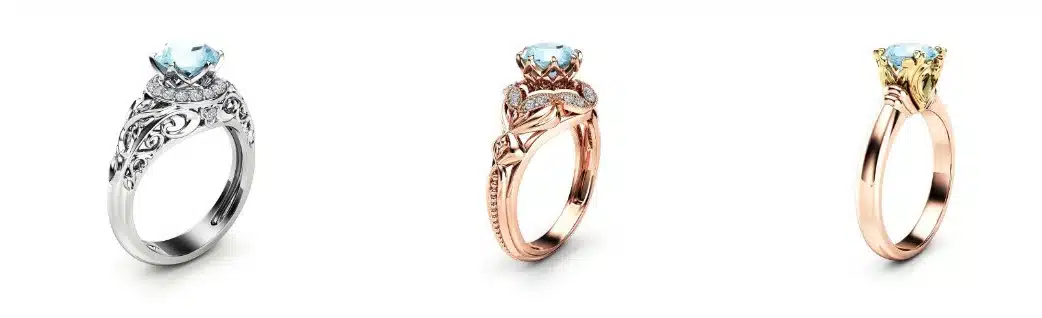
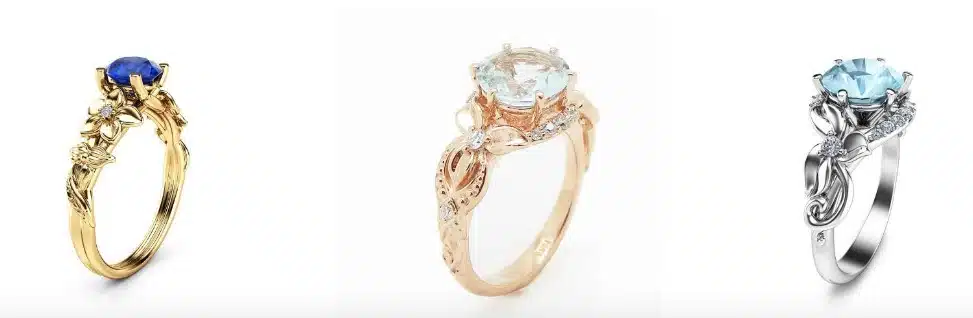
The blue diamond makes a wonderful center piece on an engagement ring, as well as on a wedding band. But, if you want something blue that isn’t a diamond, opt for gemstones like blue sapphire, blue topaz, blue spinel and aquamarine. By the way, they can also go well together if you want to mix and match on a friendly budget. Check out our collection and find the perfect fit for your shade of blue.
5 Unique Engagement Rings
So you’re going to pop the question? Congratulations! Other than plucking up the courage, finding the ideal location and ringing up the future parents-in-law, you also need to find a ring that will make them fall in love a second time! This doesn’t mean a rock the size of a fist, but you can find unique and interesting rings that they won’t have seen anywhere else – something that will make the moment even more special.
A Black Diamond
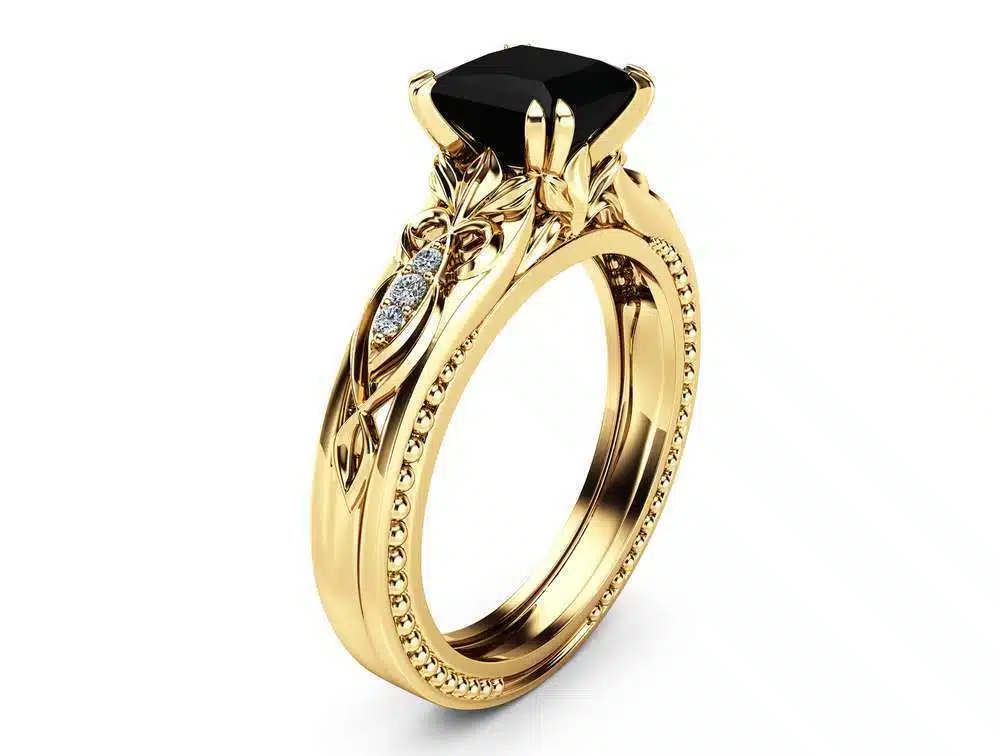
It is very rare to find someone wearing an engagement ring with a black diamond – but why not? The way it hits the light and glistens still makes it a glorious ring to wear to celebrate the life-changing moment. Opt for a gold band – black and gold make a powerful duo and will make for a stunning engagement ring. If their vibe is a bit edgy and rock and roll, and they’re not one to follow the crowd, then this could be THE ring for them!
Vintage Vibes
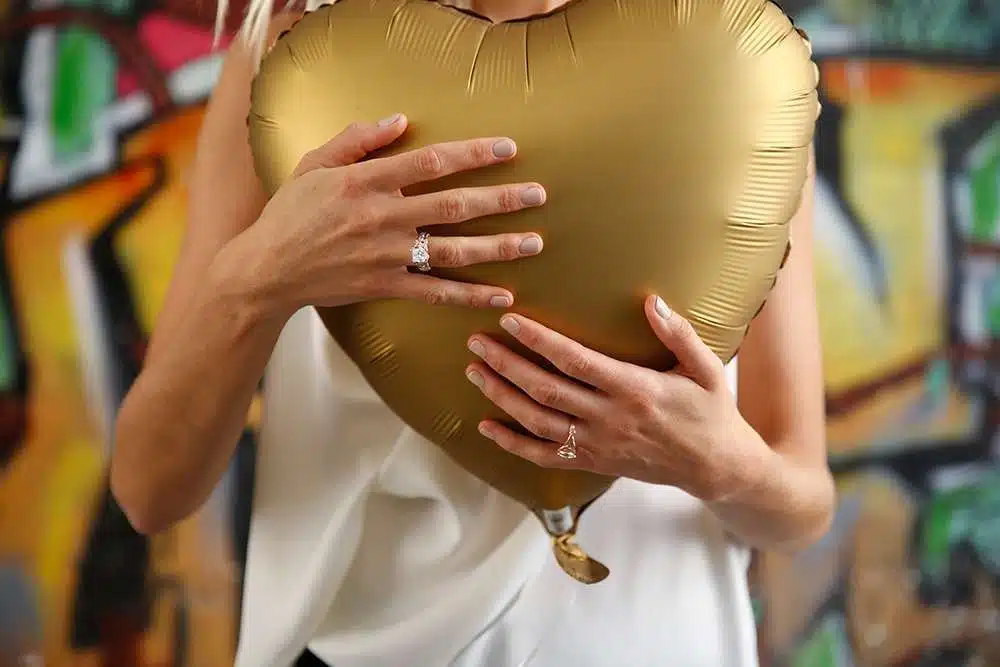
Vintage is in, so a vintage ring could be the perfect and trendy touch to your proposal. They will stand the tests of time and have an even more romantic aspect to them. They also have a distinctive feel to them, we personally love ones that are inspired by the Art Deco movement like this one. So much extravagance in a simple ring!
Raw Stone Rings
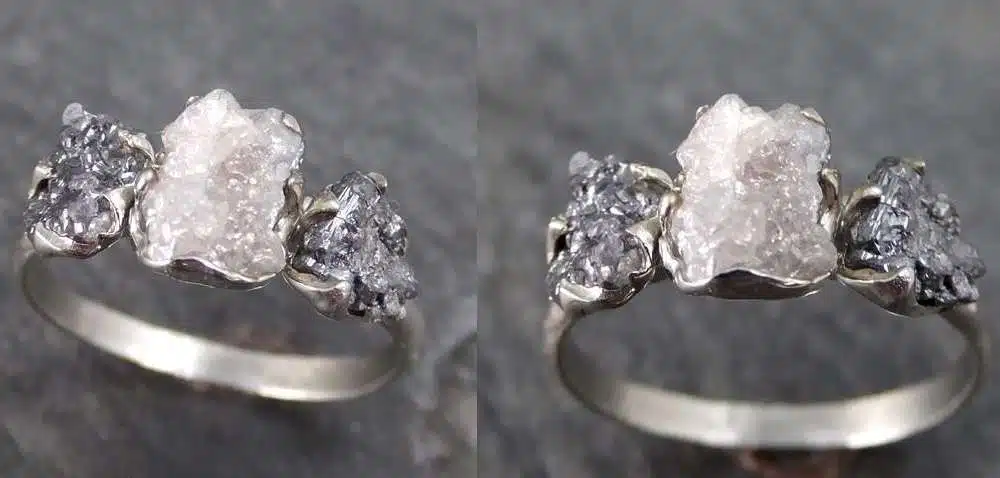
[image: by angeline]
Who said everything had to be absolutely perfect? Raw stone engagement rings allow you to see the stone just how nature made it, it provides a beautiful ring and interesting shapes – with this type, no two rings are the same, so it is well and truly unique. Just pick their favorite stone and allow its simplicity to do the talking.
Ornate Rings
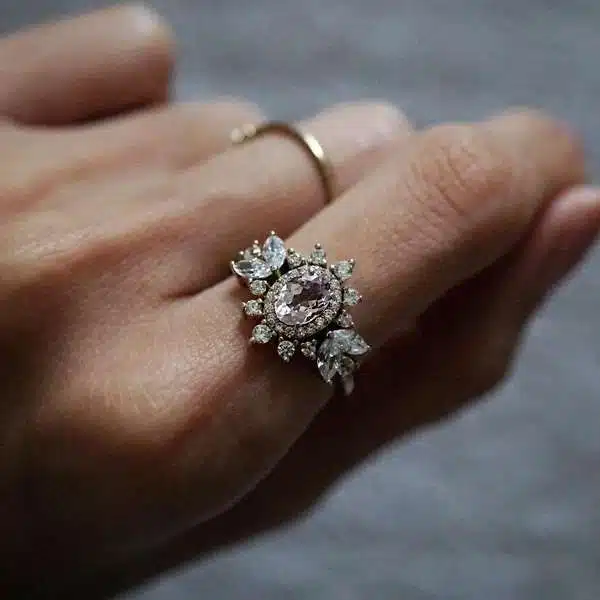
[image: melroso]
Ornate rings are the latest trend but still are a unique way for you to express your love. It is a different way to display the stones and will allow you to find a show-stopper they will never have seen before. Vintage meets modernity with these kinds of engagement rings. The designs are truly breath-taking!
Splash of Color
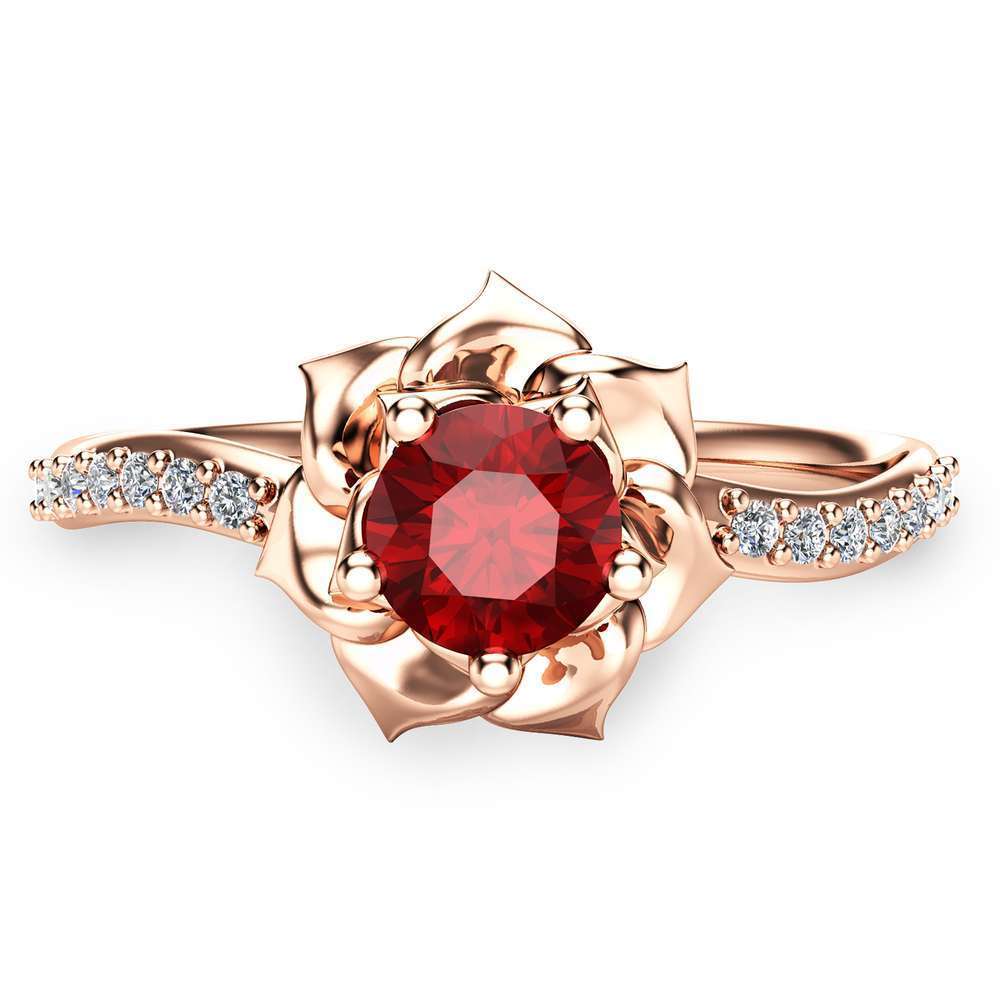
Don’t be afraid to step out of traditions and explore the world of colorful engagement rings. A bold stone shade is the way to win their heart – sapphire or emeralds make a stunning change to the norm, and play with gold and rose gold bands to help them shine all the more.