

White Gold vs. Platinum: Which is Best for Your Engagement Ring?
Deciding between White Gold vs. Platinum is one of the biggest debates when buying an engagement ring. At first glance, they look almost identical—both are shiny, silvery-white metals. So, why does one cost significantly more than the other?
The truth is, while they look similar when new, they age very differently.
The right choice for White Gold vs. Platinum depends on your budget and how much maintenance you are willing to do. In this guide, we break down the pros and cons of each.

The Main Difference: Composition & Purity
To understand the price gap in White Gold vs. Platinum, we need to look at what they are made of.
-
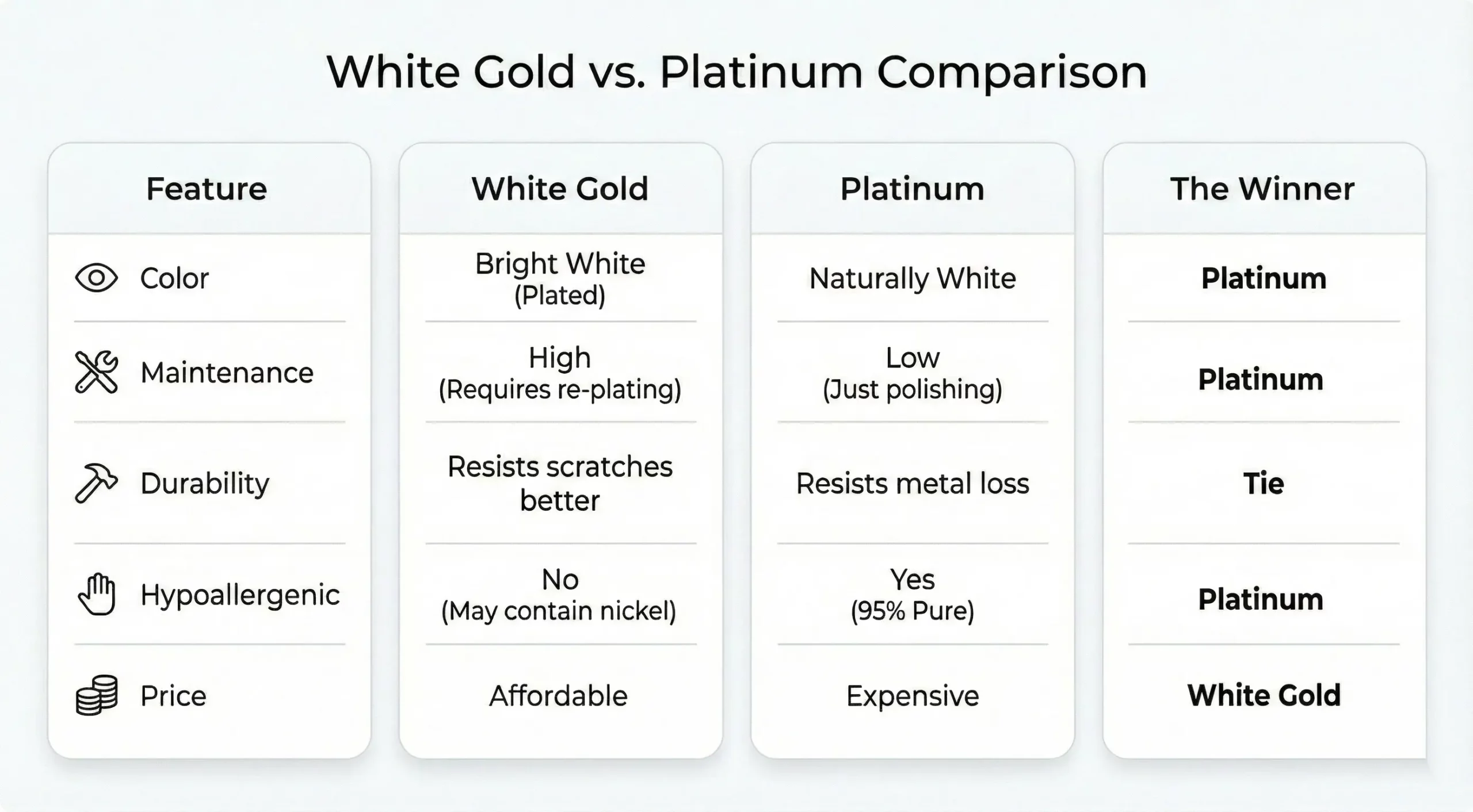
Platinum is a naturally white metal. It is usually used in jewelry at 95% purity (PT950). Because it is so dense and pure, it is hypoallergenic and heavier on the finger.
-
White Gold is not naturally white. It is an alloy made of yellow gold mixed with durable white metals (like nickel or silver) and plated with Rhodium to give it a bright white finish.
Durability: How Do They Age?
This is where the White Gold vs. Platinum battle gets interesting. They handle wear and tear in opposite ways.
White Gold (The “Harder” Metal)
White gold is harder than platinum, meaning it resists deep scratches better. However, as we explained in our guide on Why is My White Gold Turning Yellow?, the white Rhodium plating will eventually wear off, revealing a yellowish tint. It requires “dipping” every year or two to stay bright.
Platinum (The “Denser” Metal)
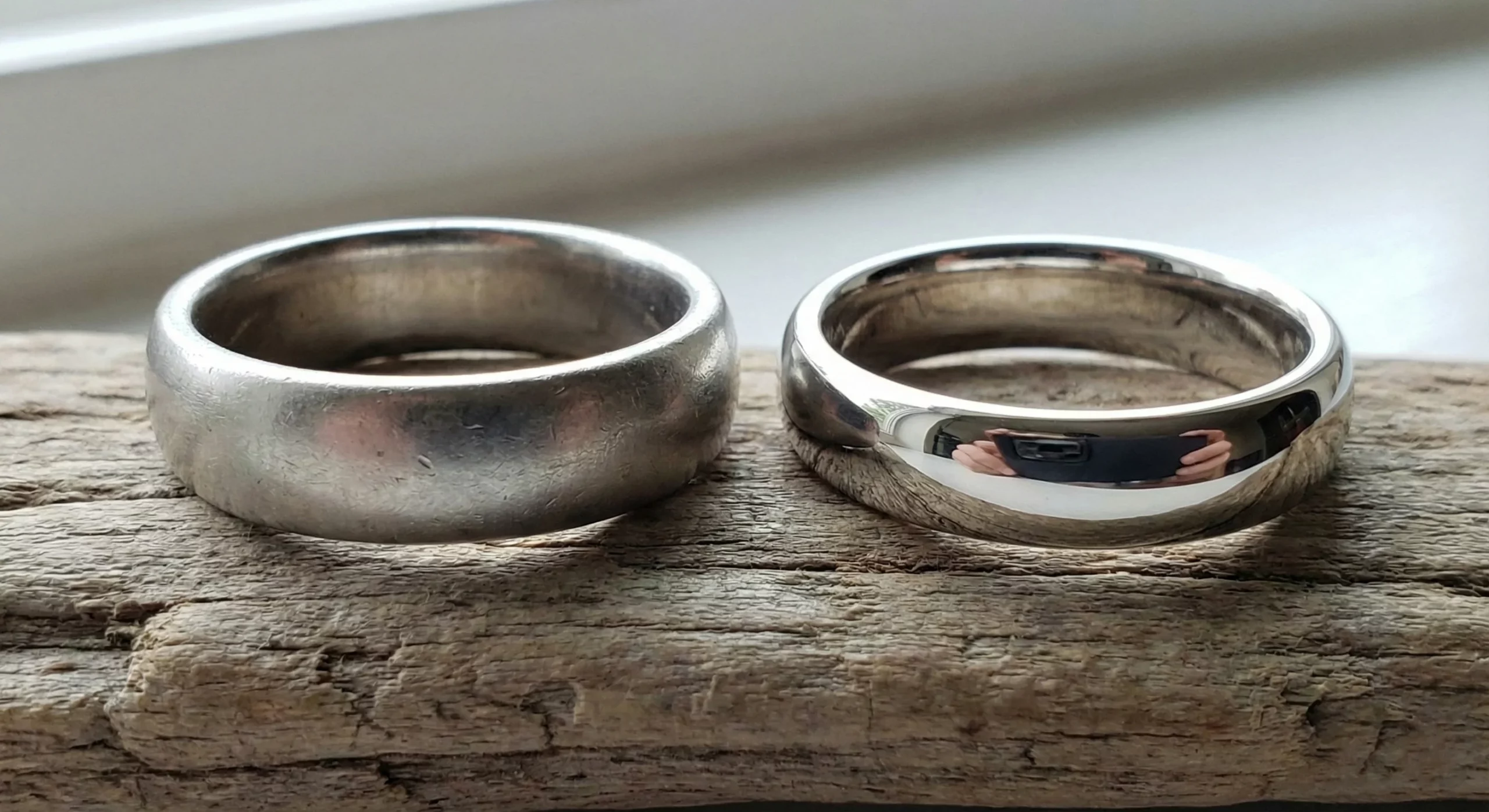
Platinum is softer on the surface but much denser. When scratched, the metal doesn’t chip away; it just moves slightly. Over time, platinum develops a soft, satin finish known as a “Patina.” Some people love this vintage look, while others prefer to polish it out.
-
Advantage: Platinum never fades or changes color. It will always be white.
Price Comparison: Is Platinum Worth It?
When comparing White Gold vs. Platinum, Platinum is almost always more expensive (often 30-50% more). Why?
-
Density: Platinum is denser, so the same ring requires more grams of metal.
-
Purity: You are paying for 95% pure metal versus 58% (14k) or 75% (18k) gold.
-
Difficulty: Platinum is harder for jewelers to work with, requiring higher labor costs.
(Read more about gold value in our article: 14k vs. 18k Gold).
Comparison Table
The Verdict: Which Should You Choose?
Choose White Gold If:
-
Budget is a priority: You want to save money on the setting to spend more on the diamond.
-
You like the shiny look: You prefer the high-polish mirror finish of fresh Rhodium over the matte look of aged platinum.
Choose Platinum If:
-
You hate maintenance: You don’t want to visit the jeweler every year for re-plating.
-
You have sensitive skin: Platinum is the safest metal for allergies.
-
You want an heirloom: Platinum’s density makes it the most secure metal for holding diamonds in place for decades.
Summary
In the White Gold vs. Platinum debate, there is no wrong answer. If you want a zero-maintenance ring that stays white forever, invest in Platinum. If you prefer a cost-effective option and don’t mind occasional upkeep, White Gold is a stunning choice.