

14k vs 18k Gold: Which is Better for Your Jewelry?
Choosing between 14k vs 18k gold is often the first and most confusing decision you face when buying fine jewelry. Many assume that a higher karat is automatically better, but is it really? The answer isn’t simple, as the right choice depends entirely on your lifestyle, budget, and skin sensitivity. In this guide, we break down the pros and cons to help you decide.
What is the Main Difference?
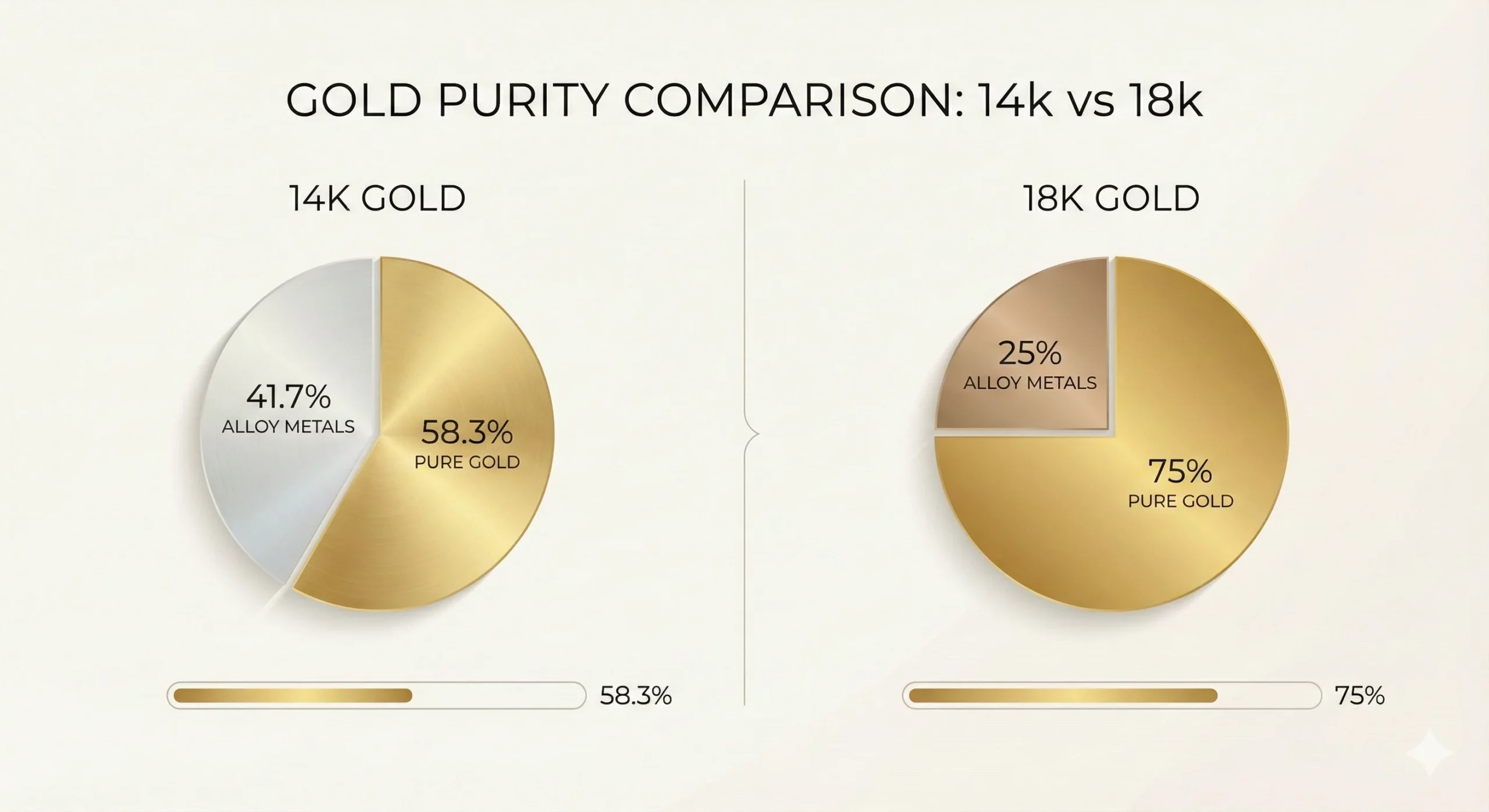
To understand the battle between these two metals, we first need to look at the composition. Gold is measured in “Karats,” which indicates purity.
-
18k Gold: Contains 75% pure gold and 25% alloy metals.
-
14k Gold: Contains 58.3% pure gold and 41.7% alloy metals.
Since pure gold (24k) is too soft for everyday jewelry, it is mixed with metals like copper, silver, and zinc. You can read more about gold purity standards on authoritative sites like the World Gold Council to understand the global grading system.
Durability: 14k vs 18k Gold for Daily Wear
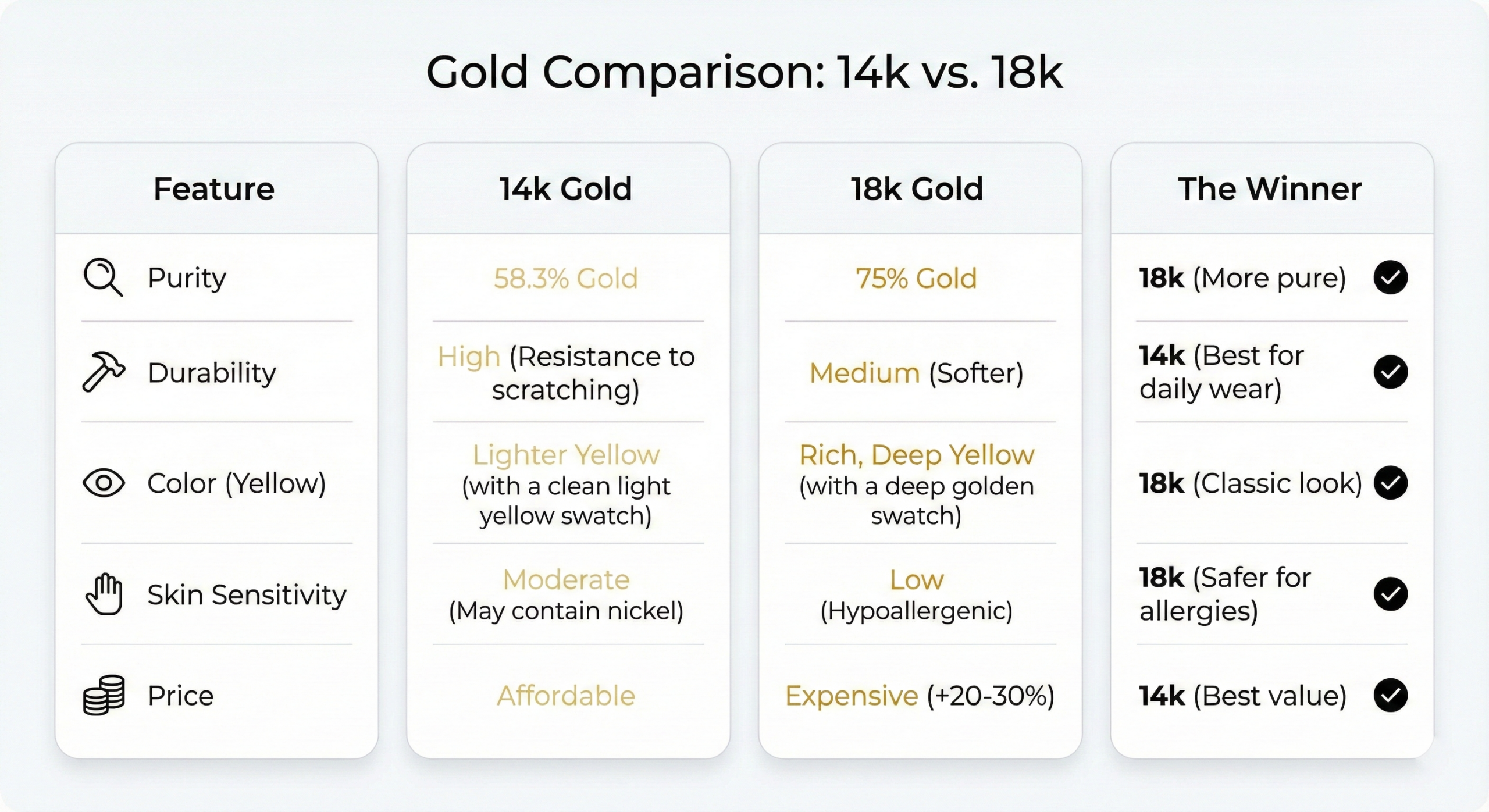
When it comes to strength, the lower karat actually wins. Because 14k gold has a higher percentage of alloy metals, it is significantly harder and more resistant to scratches, bending, and warping compared to the softer 18k gold.
If you are looking for an engagement ring that you plan to wear at the gym or while working with your hands, 14k is often the smarter, more robust choice.
Appearance: Can You See the Difference?
Do they look different to the naked eye? It depends on the gold color:
Yellow Gold
Yes, there is a visible difference.
-
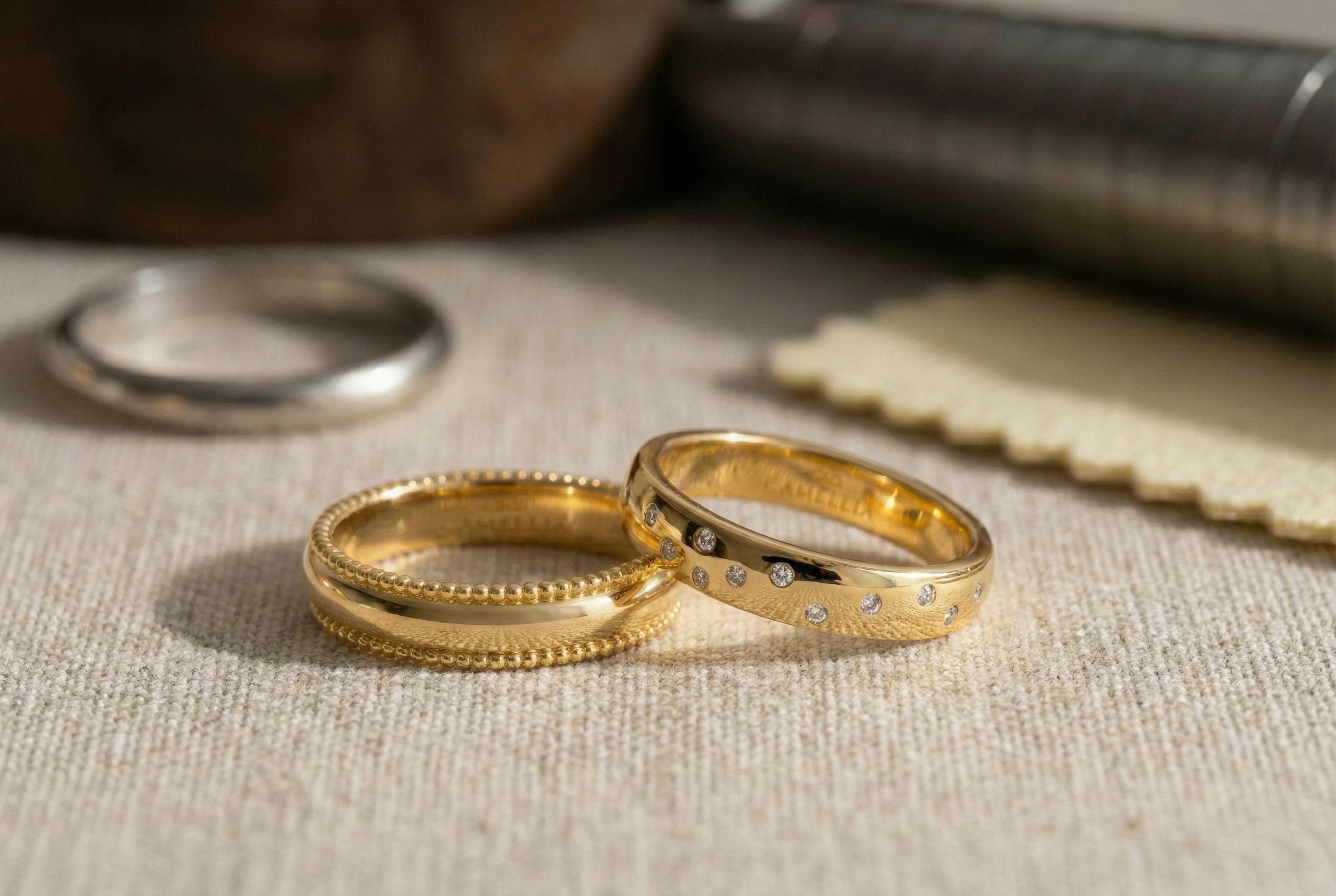
18k Yellow Gold: Has a deep, buttery, and intense yellow-orange tone.
-
14k Yellow Gold: Has a slightly lighter, more subtle yellow color.
White Gold
No, they look almost identical. Since both 14k and 18k white gold are plated with Rhodium to give them that bright white finish, it is nearly impossible to tell them apart. (Note: If your white gold starts losing its color, check out our guide on Why is My White Gold Turning Yellow? .
Rose Gold
There is a slight difference in the rose tones.
-
14k Rose Gold: More pink/coppery (due to more copper alloy).
-
18k Rose Gold: A softer, peachier pink.
Comparison Table
Skin Allergies & Hypoallergenic Properties
If you have sensitive skin, this choice becomes critical. 14k gold contains more base metals, and sometimes nickel is used in the mix. The higher gold content in 18k gold means fewer impurities that could trigger a reaction, making it the safer option for allergy sufferers.
The Verdict: Which Should You Buy?
Choose 14k Gold If:
-
You want the best value for your money.
-
You are active and need a durable ring.
-
You prefer White Gold (since the color difference is minimal).
Choose 18k Gold If:
-
You love the rich, deep color of traditional yellow gold.
-
You have sensitive skin or metal allergies.
-
You view jewelry as a long-term investment.