



Oval vs Round Diamond: Which Engagement Ring Shape Wins?
When it comes to choosing a classic center stone, the oval vs round diamond debate is one couples wrestle with most. Both shapes are brilliant cuts that deliver exceptional sparkle, yet they flatter the hand differently and carry different price tags. This guide compares size appearance, sparkle, cost, durability and finger flattery in plain English. We will also look at the best settings for each and how value really stacks up. By the end, you will know exactly which silhouette suits your style and budget.
Quick answer: In the oval vs round diamond comparison, an oval looks larger per carat and tends to cost less, while a round brilliant delivers the most fire and timeless symmetry. Choose oval for an elongating, modern look and round for maximum sparkle and resale stability.
Key takeaways
- Size: An oval appears roughly 8–10% larger than a round of equal carat weight.
- Sparkle: The round brilliant returns the most light and fire of any cut.
- Price: Ovals usually cost 10–25% less per carat than comparable rounds.
- Flattery: The oval’s elongated outline slims and lengthens the finger.
Oval vs round diamond: how they look on the hand
Shape changes everything about how a diamond reads on the finger. The round brilliant is perfectly symmetrical, so it draws the eye to a tidy, sparkling circle that feels classic and complete. The oval, by contrast, is elongated. That extra length stretches across more of the finger, creating a slimming, elegant line that many people find flattering. If you have shorter fingers, the oval can make them appear longer and more graceful. Round stones suit almost everyone and never look dated, which is part of their universal charm. Both shapes sit beautifully in solitaire, halo and three-stone designs, so personal taste and hand shape should guide your final choice more than any rule. Try each on before deciding, since the same carat can feel entirely different across the two outlines.
Which looks bigger per carat?
Carat is weight, not size, and that distinction matters here. Because an oval spreads its weight across a longer surface, it presents a larger face-up area than a round of the same carat. The visual gain is roughly 8 to 10 percent. So a 1.00 ct oval often looks like a 1.10–1.15 ct round from above. For shoppers who prioritize presence, this is the oval’s headline advantage. Round brilliants concentrate weight beneath the table, which boosts sparkle but trades away a little surface spread. If looking big for the budget is your goal, the elongated shape wins.
Sparkle, fire and brilliance compared
The round brilliant was engineered over a century to maximize light return, and it still sets the benchmark for sparkle. Its 57 or 58 facets are optimized for both brilliance (white light) and fire (colored flashes). Ovals are a modified brilliant cut, so they sparkle generously too, though slightly less uniformly. Some ovals show a faint dark band across the center called the bow-tie effect.
Watch for the bow-tie
A mild bow-tie is normal, but a heavy one dulls the stone. Always view an oval in person or on video. A well-cut oval keeps the bow-tie subtle and scatters light evenly from end to end, rivaling a round’s liveliness.
Oval vs round diamond price difference
Budget is often the deciding factor in the oval vs round diamond question. Round brilliants are the most in-demand shape and require more rough to cut, so they command a premium. Ovals retain more of the rough and sell for less per carat, typically 10 to 25 percent below a comparable round. Pairing that saving with the oval’s larger look means real value, since you gain visible size while spending less. The gap widens as carat increases, so at one carat and above the savings can fund a higher color or clarity grade. Understanding the 4 Cs of diamonds helps you spend wisely on either shape, since cut quality affects both beauty and cost more than carat alone. Always prioritize an excellent cut, because a poorly cut stone of either shape looks dull no matter how large.
At-a-glance comparison
| Feature | Oval Diamond | Round Diamond |
|---|---|---|
| Face-up size | Looks ~8–10% larger | Compact, true to carat |
| Sparkle | Brilliant, slight bow-tie risk | Maximum fire and brilliance |
| Price per carat | 10–25% lower | Highest demand, premium |
| Finger effect | Elongating, slimming | Universally flattering |
| Durability | Pointed ends need protection | No vulnerable points |
Choosing the right setting for each shape
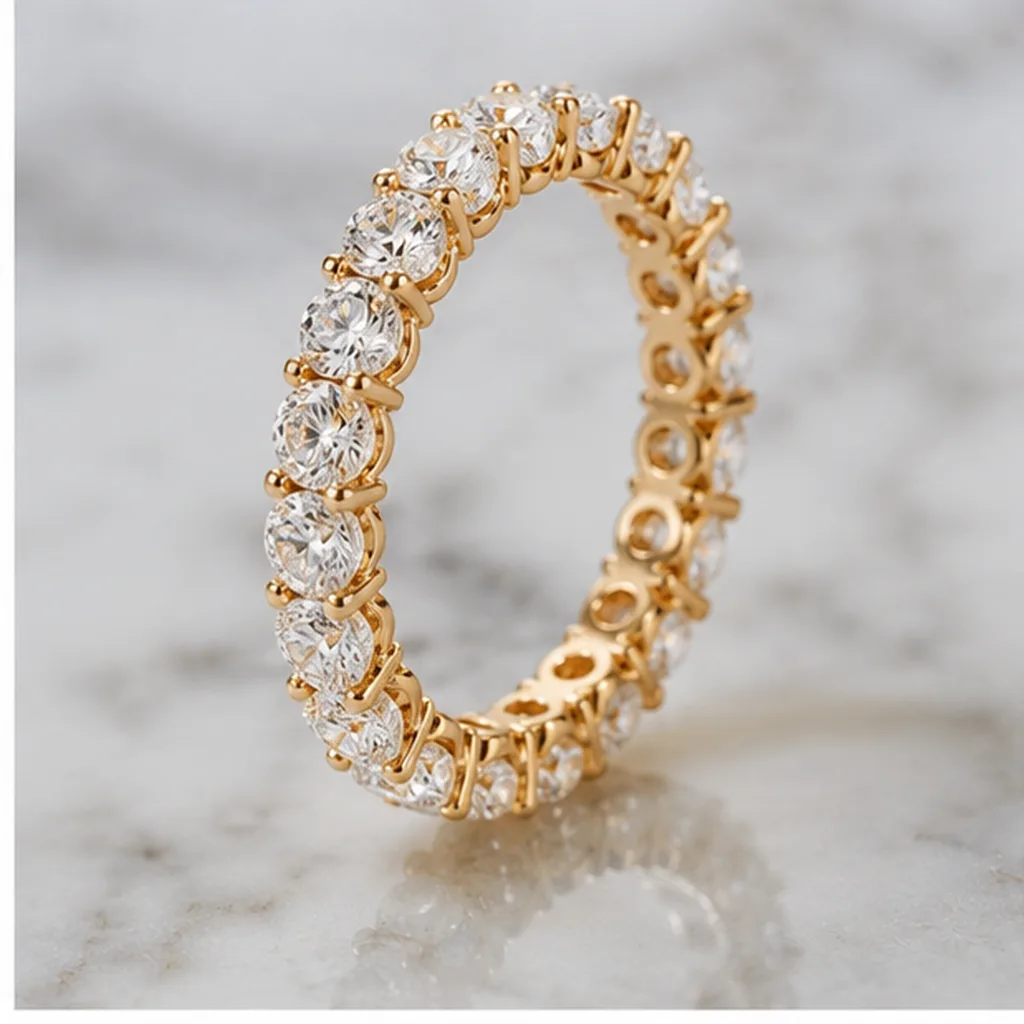
Settings can enhance or protect each shape. Ovals have two gently pointed ends, so prongs or a bezel at the tips guard against chips. East-west settings, where the oval lies horizontally, give a fresh, modern twist. Round brilliants are the most versatile of all, sitting comfortably in solitaire, pavé, halo and vintage-style mounts alike. A halo amplifies either shape’s perceived size and adds extra sparkle. Whatever you choose, secure prongs and a comfortable profile matter for daily wear. Explore mounts in our engagement rings collection to see how each silhouette comes to life.
Which shape should you choose?
There is no universally correct answer, only the right choice for you. Weighing the trade-offs makes it clearer. The round brilliant’s strengths are unmatched sparkle, a foolproof shape with no fragile points and the strongest resale demand, though you pay a premium and lose a little face-up size. The oval’s advantages are a larger look per carat, a flattering elongated line and meaningful savings, with the only cautions being a possible bow-tie and two gently pointed ends. So pick a round brilliant if you want the most sparkle, the best resale value and a look that never goes out of style. Pick an oval if you love an elongated, contemporary silhouette, want maximum face-up size and prefer to stretch your budget further. Consider your partner’s wardrobe, hand shape and lifestyle. Both shapes are timeless in their own way, so trust your instincts and choose the diamond that makes you smile every time you glance down.
Does an oval or round diamond look bigger?
An oval looks bigger. Because its weight spreads across a longer surface, an oval appears roughly 8 to 10 percent larger face-up than a round diamond of the same carat weight, making it a popular choice for maximizing visual size.
Is an oval diamond cheaper than a round?
Yes. Ovals typically cost 10 to 25 percent less per carat than round brilliants because they waste less rough during cutting and have lower market demand, giving you more size and savings for the same budget.
What is the bow-tie effect in oval diamonds?
The bow-tie is a dark, bow-shaped shadow across the center of an oval caused by light leakage. A faint bow-tie is normal, but a strong one dulls sparkle, so always inspect an oval in person or on video.
Which shape sparkles more?
The round brilliant sparkles most. Its 57 to 58 facets are precision-engineered for maximum light return. Ovals are also very brilliant as a modified brilliant cut, but their sparkle is slightly less uniform than a round’s.
Are oval diamonds harder to keep clean?
Slightly. The elongated shape and pointed ends can collect debris near the prongs. A quick soak in warm water with mild dish soap and a soft brush once a week keeps either shape sparkling beautifully.
Which shape holds its value better?
Round brilliants hold value best. As the most popular and liquid diamond shape, they enjoy steady demand and easier resale. Ovals are increasingly sought after but remain a slightly more fashion-driven, trend-sensitive choice.
Educational guide by Camellia Jewelry — handcrafted vintage & nature-inspired engagement rings since 2010.
Sources & references