






Diamond Magic Sizes: Why 0.90 Carat Can Be the Smart Buy
Diamond prices do not climb in a smooth line as weight goes up. They tend to jump at certain popular weights, and knowing where those jumps fall is one of the simplest ways to get more for your budget. Those thresholds are known as diamond magic sizes, and buying a stone just below one can give you nearly the same look for noticeably less.
Quick answer: Diamond magic sizes are popular round weights such as 0.50, 0.70, 0.90, 1.00, 1.50 and 2.00 carats where prices tend to jump because of demand. A well-cut stone just below one of these thresholds, such as 0.90 to 0.99 carat, usually looks almost the same size on the hand and is often priced at a lower rate per carat.
What diamond magic sizes are
Magic sizes are the round-number weights that buyers ask for most often. The usual ones are:
- 0.50 carat (the half carat)
- 0.70 and 0.75 carat
- 0.90 carat
- 1.00 carat
- 1.50 carat
- 2.00 carat, and further whole numbers above that
At each of these points, the price per carat for otherwise similar diamonds often steps up. A stone weighing 1.00 carat is frequently priced at a higher rate per carat than one weighing 0.96, even though the difference in weight is tiny.
The jump is usually largest at 1.00 carat, with other noticeable steps at 0.50, 1.50 and 2.00. Smaller steps around 0.70 and 0.90 also show up in many price lists. Exactly how big each step is varies by color, clarity, origin and seller, so treat these as places to look rather than fixed rules.
Why prices jump at round weights
The jump is driven by demand. Many people want to say they have a one-carat or a half-carat diamond, and a ring described as “1 carat” carries symbolic weight that a 0.95 does not. Because so many shoppers aim for those exact figures, stones that reach them are in higher demand and command a higher rate.
The cutting side plays a role too. When a cutter can choose between keeping a stone at 1.01 carats or polishing it a little further for better proportions at 0.97, the market price difference encourages keeping the weight. That is one reason it is worth checking cut quality carefully on stones that sit just over a magic number. If you need a refresher on why carat is weight rather than size, GIA’s carat weight overview is a clear explanation.
Want to see your ring before you decide? Book a Virtual Appointment
Why just under looks almost the same
Here is the good news for buyers: the visible difference between a stone just below a magic size and one at it is very small. Size on the hand is about face-up diameter, and diameter grows much more slowly than weight.
| Instead of | Consider | Visible difference (well-cut round) |
|---|---|---|
| 0.50 ct | 0.45–0.49 ct | A fraction of a millimeter in diameter |
| 0.75 ct | 0.70–0.74 ct | Very hard to see without measuring |
| 1.00 ct | 0.90–0.99 ct | Roughly a few tenths of a millimeter |
| 1.50 ct | 1.40–1.49 ct | Barely noticeable face up |
| 2.00 ct | 1.80–1.99 ct | Small; cut quality matters more |
For a sense of typical diameters at each weight, our guide to the 4 Cs of diamonds covers the basics, and you can always compare the millimeter measurements printed on two reports. A well-cut 0.92-carat round can face up larger than a poorly cut 1.00-carat stone that is too deep.
Why 0.90 carat is often the smart buy
The 0.90 to 0.99 range gets a lot of attention because it sits right below the most popular threshold of all. Diamonds in this range can look very much like a one-carat stone when set, while often being priced at a lower rate per carat. Here is why that range works so well:
- Nearly identical size: the diameter difference compared with a 1.00-carat round is small enough that most people cannot see it on the hand.
- Budget flexibility: money saved can go toward a better cut, a higher color grade, a more detailed setting, or simply staying on budget. Our guide on how much to spend on an engagement ring may help you plan.
- Same sparkle: beauty comes mainly from cut quality, not from crossing a weight line.
A practical way to test this is to ask for two stones, one at 0.92 and one at 1.00, photographed or filmed side by side on the same hand. Most people struggle to say which is which, and that is the clearest proof the saving is real.
The trade-off is purely about the number. If saying “one carat” matters deeply to you or to the person you are proposing to, that is a legitimate preference, and you may decide the threshold is worth paying for.
When paying for the magic size makes sense
Buying just under a threshold is not right for everyone. Paying for the round number can be the better choice when:
- The number itself carries meaning. If “one carat” was a promise or a long-held wish, that sentiment is worth something real.
- The ideal stone happens to sit there. If the best-cut diamond in your search is a 1.01, do not pass it over just to stay below the line.
- You want a specific fit. A custom setting designed around a certain diameter may call for a stone at or above a threshold.
- You are comparing at different budgets. At smaller sizes the savings may be modest; at larger sizes the gap tends to be more noticeable, so the trade-off shifts.
What the FTC says about stating diamond weight
Because weight affects price so directly, US rules address how it may be described. Under the FTC’s Jewelry Guides, sellers should not misrepresent a diamond’s weight. When weight is given as a decimal, it should be accurate to the last decimal place stated. When it is given as a fraction, the seller should make clear that the figure is approximate and disclose the range it represents. You can read the wording in 16 CFR 23.18.
In practice, this is a good reason to read the grading report rather than a product title. A ring described as “1 ct tw” (total weight) may combine a center stone and several side stones, which is very different from a single one-carat center diamond.
Watch fractional descriptions in the same way. A ring sold as “3/4 carat” may cover a range of weights, so check the decimal weight on the report for the exact figure. Rounding is normal, but you should always know what you are paying for.
How to shop around diamond magic sizes
- Set a target look, not a target number. Decide the face-up size you want in millimeters.
- Search slightly below the threshold. Include weights such as 0.90 to 0.99 or 1.40 to 1.49 in your search.
- Prioritize cut. A great cut just under the line usually beats an average cut just over it.
- Compare measurements. Look at diameter on the report, not only carat weight.
- Consider the setting. A halo or thin band can make the center look larger still.
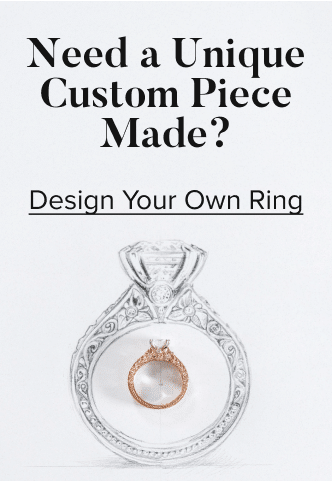
- Plan the setting with the stone. If you are designing a ring, the setting is built around the stone’s actual measurements, so share the report early. Our page on custom ring design explains how that works.
Common mistakes around magic sizes
- Overpaying for a deep 1.01. Stones kept heavy to clear a threshold can face up smaller than a well-cut 0.95. Always compare diameters.
- Going too far below. A 0.80 is not a near-match for a 1.00. The sweet spot is usually just under the line, not well under it.
- Ignoring the report. Listings sometimes round weights up in the title. The report’s decimal figure is the one that counts.
- Forgetting the rest of the 4Cs. Savings are only useful if they go somewhere meaningful, such as a better cut or a setting you love.
If you want help comparing a shortlist, a jeweler can walk you through stones on video during a virtual appointment.
The same approach works whether you are choosing a natural or a lab-grown diamond; our comparison of lab-grown vs natural diamonds covers the differences between the two.
Frequently asked questions
Can people tell the difference between a 0.90 and a 1-carat diamond?
Usually not by eye once the diamond is set. The diameter difference between well-cut stones is small, and cut quality has a bigger effect on how they look.
Do magic sizes apply to lab-grown diamonds?
Buyer demand for round numbers exists for lab-grown diamonds too, so it is worth comparing stones just below popular weights in either category.
Is a 0.99-carat diamond a good idea?
It can be, as long as the cut is excellent. Make sure the stone was not cut deep to retain weight, and compare its diameter with other options.
Will a just-under diamond be worth less later?
Diamond resale is unpredictable for any size, so it is best to choose a stone you love wearing rather than buying with resale in mind.
What are the most common magic sizes?
The weights buyers ask for most are 0.50, 0.70 or 0.75, 0.90, 1.00, 1.50 and 2.00 carats, and whole numbers above that. Prices often step up at each one.
Does a just-under diamond need a different setting?
Not usually. Settings are made for a range of sizes, and a custom setting is built to the stone’s exact measurements anyway, so a 0.92 sits just as securely as a 1.00.


