



Halo vs Solitaire Engagement Rings: Which Style Is Right for You?
Halo vs solitaire is one of the most common engagement-ring setting decisions couples face. A solitaire engagement ring showcases a single diamond on a clean band, while a halo engagement ring surrounds the center stone with a ring of smaller pavé diamonds for extra sparkle and a larger visual footprint. Both are timeless, but they suit different priorities when it comes to budget, sparkle, maintenance and long-term style.
Quick answer: Choose a solitaire for timeless simplicity, easy upkeep and the best long-term resale value. Choose a halo to make the center stone look bigger and add maximum sparkle. A halo can make a smaller, more affordable center stone appear noticeably larger — often up to a half-carat larger to the eye — which makes it a smart choice for shoppers who want the most visual impact per dollar.
The solitaire setting
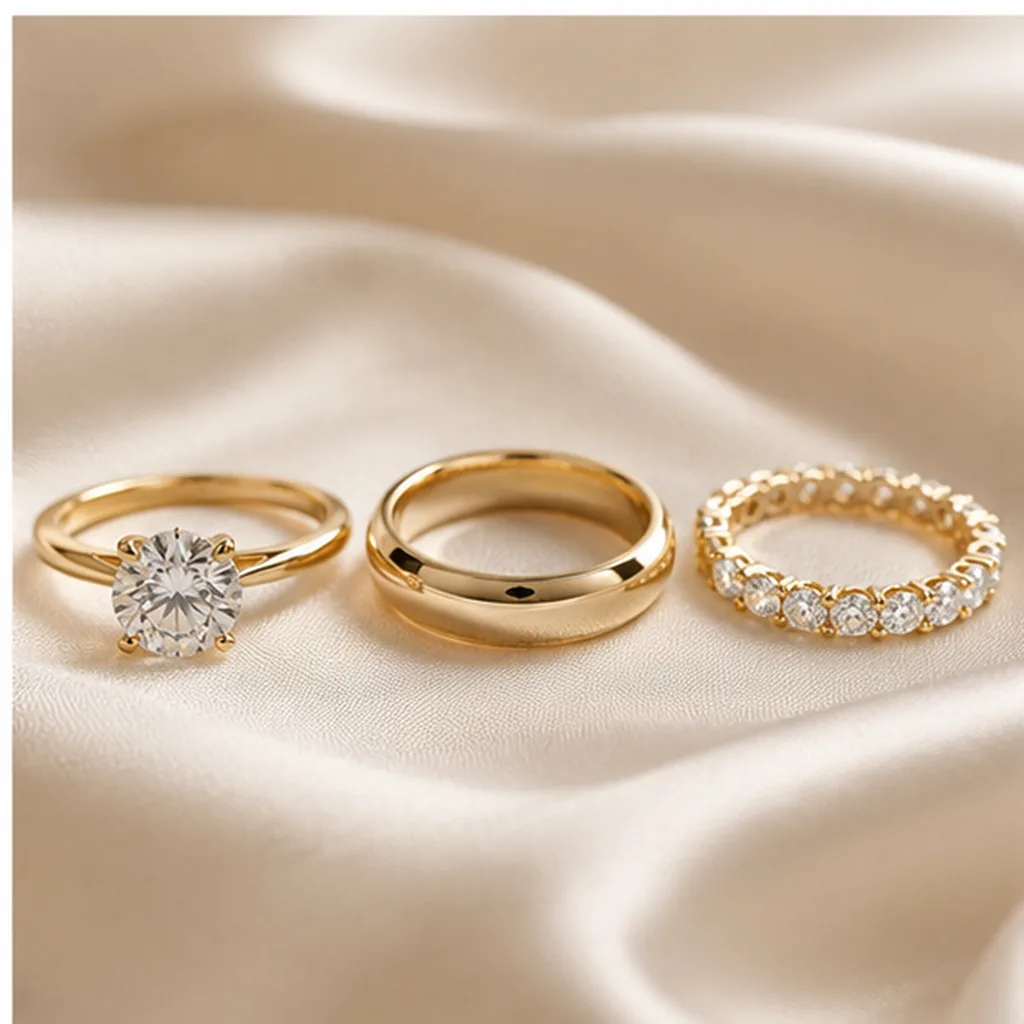
A single diamond on a simple band, the solitaire is the most enduring engagement-ring style. It puts all the focus on the center stone, is easy to clean, and pairs effortlessly with virtually any wedding band. Because there are no accent stones to inspect or replace, a solitaire is also the lowest-maintenance option over a lifetime of daily wear.
Solitaires are typically set with four or six prongs. Four prongs expose more of the diamond and look sleeker, while six prongs add security and a slightly rounder silhouette. If you love a minimalist, classic aesthetic — the kind of look that never dates — the solitaire is hard to beat. It is also the easiest setting to upgrade later, since the center stone can be reset without reworking a surrounding halo.
The halo setting
A halo of pavé diamonds frames the center stone, boosting its apparent size and overall brilliance. It is an efficient way to maximize visual impact on a budget, since the small accent diamonds cost far less per carat than a single larger center stone. A well-cut halo also reflects extra light back into the middle of the ring, giving the whole setting a bright, sparkling presence.
Halos come in many variations, including single halos, double halos and hidden halos that sit beneath the center stone. They pair beautifully with round, oval and cushion-cut diamonds. The trade-off is maintenance: with more small stones set close together, a halo benefits from periodic professional checks to make sure none of the accent diamonds work loose over time.
Halo vs solitaire: things to weigh
When comparing the two settings side by side, a few clear patterns emerge:
- Perceived size: the halo wins — the frame of accent diamonds makes the center stone read larger.
- Simplicity and resale: the solitaire wins — classic styling holds value and appeals to the widest range of buyers.
- Sparkle: the halo adds extra fire from its surrounding stones, while a solitaire relies entirely on the cut quality of the single diamond.
- Maintenance: the solitaire wins — halos have more small stones to keep clean and inspect.
- Budget flexibility: the halo wins for shoppers who want maximum size for the price, since a smaller center stone still looks substantial.
If you are still weighing the finer details of how each style holds a diamond, our guide to engagement ring setting types breaks down prong, bezel, pavé and more. For an independent overview of the four Cs that drive a diamond’s sparkle, the GIA diamond quality guide is an excellent, unbiased reference.
Which setting is right for you?
Match the ring to your lifestyle and priorities. If you value a look that will feel just as right in forty years as it does today, and you want the simplest possible care routine, a solitaire is the natural choice. If your goal is the biggest, brightest ring for your budget — and you do not mind an occasional professional check-up — a halo delivers more sparkle and size for the money. Many couples also consider hybrid designs, such as a solitaire with a hidden halo, to enjoy a little of both. You can explore ready-made options among our engagement rings or start a fully custom design.
FAQ
Does a halo make a diamond look bigger?
Yes. The surrounding diamonds extend the sparkle outward and can make the center stone look roughly a half-carat larger or more, depending on the halo design.
Are solitaires out of style?
No. The solitaire is the most timeless setting and never goes out of fashion. Its clean lines make it the safest long-term choice.
Which is cheaper, a halo or a solitaire?
For the same center stone, a solitaire is usually cheaper. However, a halo lets you use a smaller, less expensive center stone while still achieving big visual impact, so a halo can lower your overall spend for a given “look.”
Is a halo or solitaire better for an active lifestyle?
A low-set solitaire tends to be more practical for hands-on daily wear, as there are fewer small stones to snag or loosen. If you want extra sparkle but an active routine, a low-profile halo or a bezel-accented design is a good compromise.
Can you add a halo to a solitaire later?
Yes. A jeweler can often add a halo jacket around an existing solitaire, which is one reason many shoppers start with a solitaire and keep the option open.
Educational guide by Camellia Jewelry — handcrafted vintage & nature-inspired engagement rings since 2010.
Related guides
Sources & references